OEM/ODM MANUFACTURING FOR GLOBAL BRANDS
- View Our Alibaba Store
- info@huhumahjong.com
- +86 13326907761
Mahjong Production Lead Time: What Buyers Should Know Before Ordering
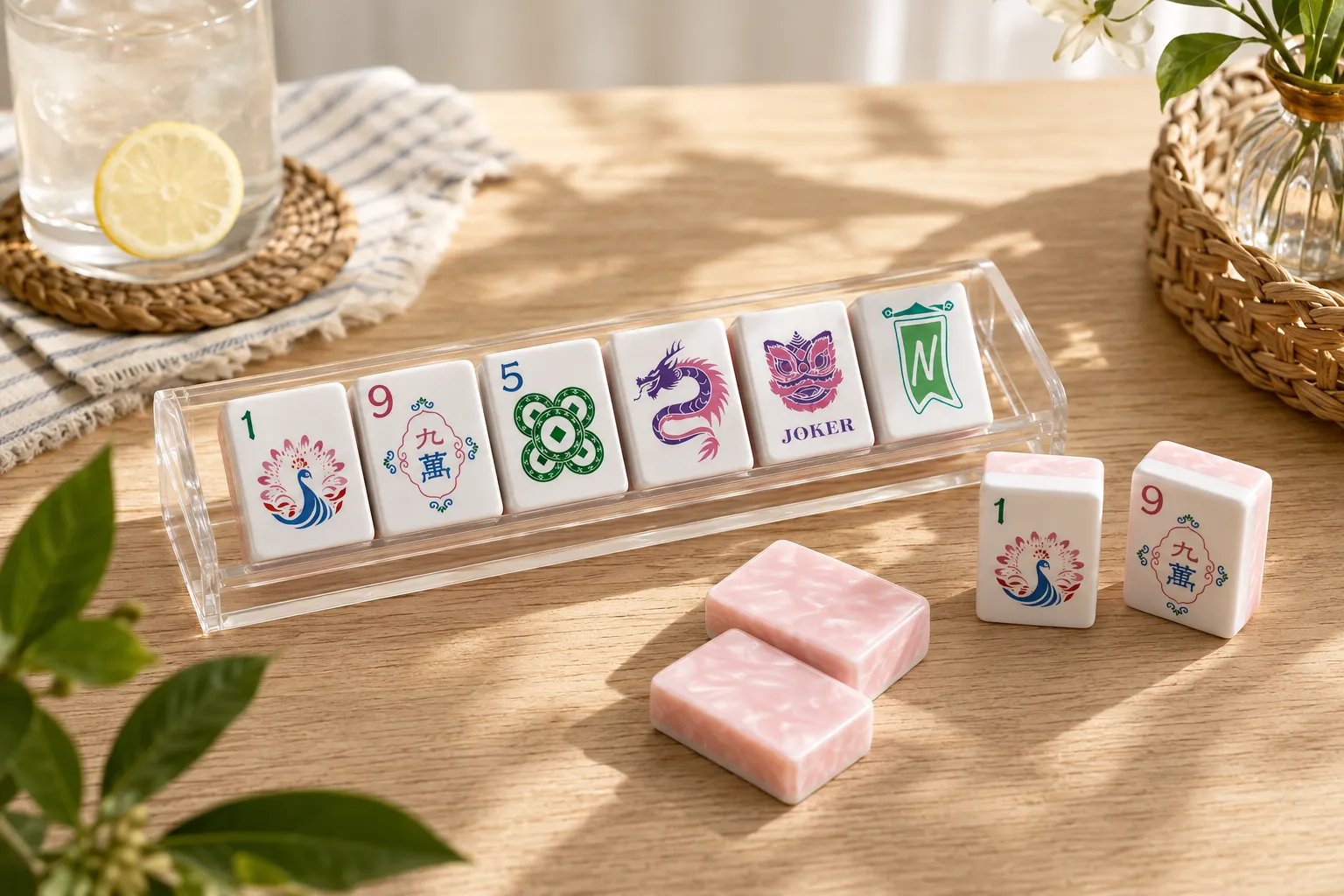
For brands, retailers and clubs planning a Mahjong order, timing is often just as important as price.
A product may look perfect on paper, but if production finishes too late for a launch, seasonal campaign or retail delivery date, the project can still become difficult to manage.
That is why understanding Mahjong Production Lead Time is important before placing an order.
Production time can vary depending on the product, quantity, artwork, colour requirements, packaging and factory schedule.
This guide explains what influences Mahjong Production Lead Time and how buyers can plan more accurately before manufacturing begins.
What Is Mahjong Production Lead Time?
Mahjong Production Lead Time refers to the time required to prepare and manufacture a Mahjong order after the necessary project details have been confirmed.
Depending on the project, this may include:
- artwork review
- colour confirmation
- sample preparation
- material preparation
- mass production
- quality inspection
- packing
It is important to understand that production lead time is not always the same as total delivery time.
Shipping normally needs to be considered separately.
Why Mahjong Production Lead Time Matters
Brands often work around specific schedules.
For example:
- retail launches
- seasonal collections
- trade shows
- corporate events
- gifting campaigns
- wholesale delivery dates
If a project starts too late, even a successful manufacturing process may not meet the required launch date.
Understanding Mahjong Production Lead Time early helps buyers create a more realistic timeline.
1. Standard and Custom Products May Have Different Timelines
Existing products are generally simpler to produce because the basic manufacturing specifications are already established.
Custom Mahjong projects may require additional preparation.
This can include:
- new artwork
- new colours
- custom tile faces
- layered structures
- special engraving
- custom packaging
Because of this, Mahjong Production Lead Time may be longer for a highly customised order than for a standard product.
Buyers should confirm the expected timeline for the specific project rather than assuming every Mahjong set takes the same amount of time.
2. Artwork Confirmation Comes Before Production
For custom projects, production cannot begin efficiently until the artwork is clear.
Customers should provide:
- final tile artwork
- colour references
- layout information
- logo files
- packaging artwork if required
- special instructions
If files are incomplete or revised repeatedly, the project timeline can become longer.
A clear artwork approval process can help reduce unnecessary delays in Mahjong Production Lead Time.
3. Revisions Can Affect the Schedule
Design changes are common during custom product development.
However, each revision may require additional review.
For example, changing:
- tile artwork
- colours
- numbers
- Joker designs
- packaging
- layer structure
after approval can affect the production schedule.
Buyers should try to finalise major decisions before mass production begins.
A stable design helps keep Mahjong Production Lead Time more predictable.
4. Colour Matching Can Add Preparation Time
Custom colours may require additional confirmation before production.
Colour preparation can involve:
- checking references
- comparing samples
- adjusting tones
- confirming final colour direction
This is especially important for brands using specific corporate or collection colours.
If colour accuracy is critical, buyers should allow enough time for confirmation before production.
Colour preparation is one factor that can influence Mahjong Production Lead Time.
5. Sample Preparation Is Separate From Mass Production
Buyers should distinguish between sample time and mass production time.
A sample may be used to review:
- tile appearance
- artwork
- colour
- size
- structure
- finish
Once the sample is reviewed, additional changes may still be requested.
Only after the final requirements are confirmed can mass production proceed efficiently.
For this reason, Mahjong Production Lead Time should be planned together with the sample stage rather than treating them as the same process.
6. Sample Costs Should Be Confirmed Separately
Buyers should also remember that samples are not automatically free.
Depending on the project, there may be costs related to:
- sample production
- custom setup
- shipping
- special materials
These details should be confirmed before sample preparation begins.
Clear expectations help avoid unnecessary delays before mass production.
7. Order Quantity Affects Production Time
A larger order usually requires more production time than a smaller one.
For example, manufacturing:
- 300 sets
- 1,000 sets
- 5,000 sets
- 10,000 sets
will involve different production workloads.
Large orders may also need to be scheduled across multiple production stages.
This means Mahjong Production Lead Time should always be confirmed together with the expected quantity.
8. Material Availability Can Influence Timing
Different Mahjong products may require different materials.
If the required material is already available, preparation may be straightforward.
If a project requires:
- special colours
- specific layered materials
- unusual components
additional preparation may be needed.
Buyers should confirm material requirements early because material availability can affect Mahjong Production Lead Time.
9. Layered Mahjong Tiles May Require More Preparation
Two-layer and three-layer Mahjong tiles can create distinctive visual effects.
However, layered products may require additional control over:
- layer order
- colour consistency
- thickness
- alignment
Complex structures may therefore require more preparation than simpler tiles.
Brands planning layered products should discuss the structure before confirming the delivery schedule.
10. Engraving Can Affect Production Complexity
Engraved Mahjong tiles may involve:
- artwork preparation
- engraving setup
- colour filling
- inspection
The complexity of the artwork can also influence production efficiency.
Simple symbols may be easier to reproduce consistently than highly detailed illustrations.
For engraved products, Mahjong Production Lead Time should reflect the actual production method.
11. Packaging Can Add Time to the Project
Custom packaging may have its own production schedule.
This can include:
- box manufacturing
- printing
- inserts
- labels
- instructions
- assembly
In some cases, packaging and tiles may be produced on different timelines.
A buyer should therefore confirm whether packaging production is included in the quoted Mahjong Production Lead Time.
This is especially important for retail-ready products.
12. Packaging Artwork Needs to Be Finalised Early
If packaging artwork is still being revised while the tiles are already in production, the final packing stage may be delayed.
Customers should prepare:
- final logo files
- box artwork
- barcode information
- required text
- product labels
as early as possible.
Clear packaging files can help keep the overall schedule on track.
13. Quality Inspection Takes Time Too
Production is not finished the moment the tiles come off the production line.
Products may still need inspection for:
- tile size
- artwork clarity
- colour consistency
- surface finish
- engraving
- layer alignment
- quantity
- set completeness
A reliable schedule should include time for final inspection.
Quality checks are part of Mahjong Production Lead Time, not an unnecessary delay.
14. Peak Seasons Can Affect Factory Scheduling
Manufacturing schedules can become busier during certain periods.
Brands planning:
- Christmas collections
- holiday gifting
- Lunar New Year products
- seasonal retail campaigns
should place orders early.
Factory capacity is shared across multiple projects, so waiting until the last minute can reduce scheduling flexibility.
For seasonal products, Mahjong Production Lead Time should be planned with extra buffer time.
15. Shipping Time Is Not the Same as Production Time
One of the most common planning mistakes is confusing manufacturing time with delivery time.
After production is complete, the goods may still need:
- final packing
- export preparation
- freight booking
- customs handling
- transportation
- destination clearance
- local delivery
These steps happen after manufacturing.
So if a supplier quotes a Mahjong Production Lead Time, buyers should ask whether shipping is included or separate.
16. Air Freight and Sea Freight Have Different Timelines
Shipping method can significantly change the total delivery schedule.
Air Freight
Usually faster, but generally more expensive.
Suitable for:
- urgent orders
- smaller shipments
- launch deadlines
Sea Freight
Usually more suitable for larger bulk shipments, but requires more time.
Brands should plan the production and shipping timeline together.
The fastest Mahjong Production Lead Time does not necessarily mean the fastest final delivery if the shipping method is slow.
17. Customs Can Affect Final Delivery
International shipments may also require customs clearance.
The exact time can vary depending on:
- destination country
- documentation
- product classification
- inspection requirements
- local customs workload
Manufacturers can prepare export documentation, but final customs timing may not always be fully predictable.
Buyers should leave some buffer between expected delivery and the actual launch date.
18. Always Build in Extra Time
A good project schedule should include contingency time.
Unexpected delays can happen because of:
- artwork revisions
- colour adjustments
- material preparation
- quality checks
- shipping changes
- customs
Instead of planning delivery for the exact day a campaign begins, brands should aim to receive inventory earlier.
A realistic Mahjong Production Lead Time plan should include a safety margin.
19. How Early Should Brands Start?
The ideal starting point depends on the complexity of the project.
A simple existing product may require less preparation.
A custom product involving:
- unique artwork
- custom colours
- layered tiles
- engraving
- custom packaging
should be started earlier.
For major launches, buyers should contact the manufacturer before the final artwork deadline whenever possible.
This gives both sides more time to evaluate the project.
20. What Buyers Should Prepare Before Asking for Lead Time
A supplier can provide a more useful timeline when the buyer gives complete information.
Before asking about Mahjong Production Lead Time, prepare:
- Product type
- Order quantity
- Tile material
- Tile size
- Artwork status
- Colour requirements
- Layer structure
- Packaging requirements
- Target delivery date
- Destination country
A request such as:
“How long does production take?”
is difficult to answer accurately without project details.
A better request would be:
“We are planning 1,000 custom Mahjong sets using our own artwork and custom packaging. We need delivery to the U.S. before November. What production schedule would you recommend?”
This gives the supplier useful information for planning.
Questions Buyers Should Ask About Lead Time
Before confirming an order, buyers can ask:
- When does the production clock officially start?
- Does lead time begin after artwork approval?
- Is sample time included?
- Is packaging included?
- How long does final inspection take?
- What happens if artwork changes?
- Is shipping included in the quoted timeline?
- Are there seasonal factory delays?
- How much buffer time do you recommend?
These questions help buyers understand the real Mahjong Production Lead Time rather than relying on one simple number.
Working With HUHU Mahjong
HUHU Mahjong works with brands, retailers and clubs producing Mahjong products based on customer-provided designs and specifications.
Customers provide their artwork, colour references, quantities and product requirements, while HUHU focuses on manufacturing and production execution.
Because every project can involve different specifications, Mahjong Production Lead Time varies depending on the order.
Providing complete project information early helps the manufacturing team evaluate the schedule more accurately.
Final Thoughts
Mahjong Production Lead Time depends on more than the number of days spent manufacturing tiles.
Artwork confirmation, colour matching, sample preparation, material availability, order quantity, packaging and quality inspection can all influence the schedule.
Buyers should also remember that shipping time usually needs to be added separately.
The best way to avoid delays is to:
- prepare artwork early
- confirm specifications clearly
- minimise late revisions
- plan packaging in advance
- allow time for inspection
- include shipping and customs in the schedule
For brands planning important product launches, starting early is usually safer than trying to compress every stage at the end.
About the Author
HUHU Team
We share industry insights, product knowledge, and manufacturing updates to help global clients better understand mahjong production and OEM solutions.