OEM/ODM MANUFACTURING FOR GLOBAL BRANDS
- View Our Alibaba Store
- info@huhumahjong.com
- +86 13326907761
Mahjong Retail Pricing Guide for Wholesale Buyers
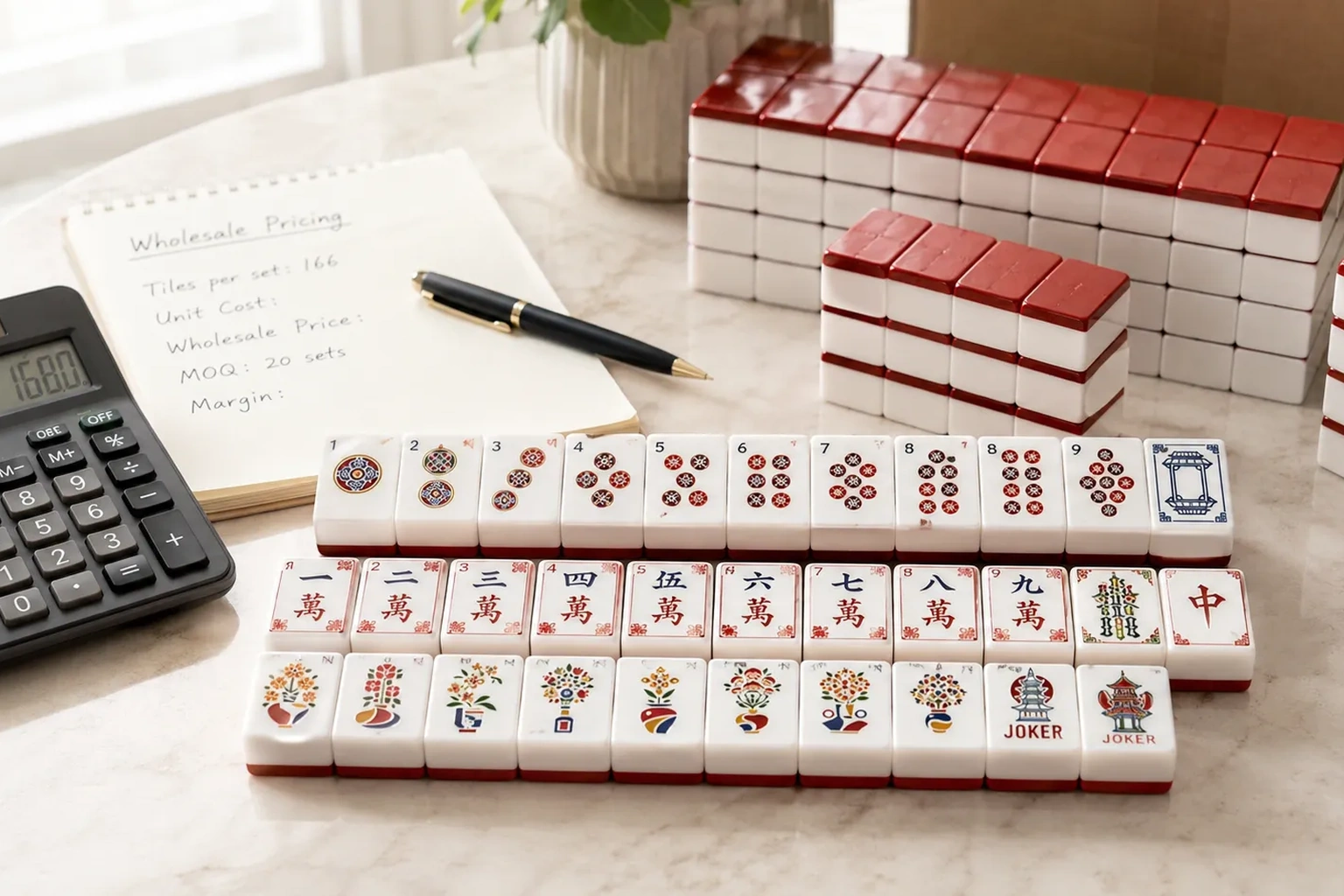
Buying Mahjong products at a good wholesale price is only the first step.
For retailers, the next challenge is deciding how much to charge customers while still leaving enough room for shipping, fulfilment, marketing, discounts and profit.
A clear Mahjong Retail Pricing strategy helps retailers understand whether a product can remain profitable after all selling costs are included.
This guide explains how to build a practical retail price after purchasing Mahjong products wholesale.
Why Mahjong Retail Pricing Matters
Retail pricing affects more than profit per sale.
It can influence:
- Customer perception
- Conversion rate
- Discount flexibility
- Advertising budget
- Inventory turnover
- Long-term profitability
If the price is too low, the product may sell but leave very little margin.
If the price is too high, customers may hesitate unless the product clearly offers enough value.
Good Mahjong Retail Pricing should therefore balance cost, customer expectations and brand positioning.
1. Start With the Wholesale Product Cost
The first number to confirm is the supplier’s unit price.
For example:
500 Mahjong sets × $22 per set = $11,000
This gives you the basic wholesale product cost.
However, the supplier price should not be used as your final pricing base because there are still other expenses to include.
2. Calculate the Landed Cost
Landed cost is the real cost of getting the product into your warehouse or fulfilment centre.
It may include:
- Product cost
- Packaging
- International freight
- Insurance
- Import duties
- Customs clearance
- Local delivery
For example:
Wholesale cost: $22 per unit
Freight and import: $5 per unit
Warehouse receiving: $2 per unit
Your approximate landed cost is:
$29 per unit
This is a much better starting point for Mahjong Retail Pricing.
3. Include Payment Processing Fees
Online stores normally pay transaction fees whenever a customer places an order.
These may include:
- Credit card processing fees
- PayPal fees
- Shopify payment fees
- Marketplace commissions
For example, if your payment processor charges around 3% and your selling price is $80, the transaction fee is approximately $2.40.
That cost reduces your real margin.
4. Add Fulfilment Costs
If you sell online, each order may also involve:
- Picking
- Packing
- Shipping materials
- Labour
- Warehouse handling
If your fulfilment centre charges $5 per order, that amount needs to be considered before deciding the final price.
For online retailers, fulfilment expenses should always be included when reviewing Mahjong Retail Pricing.
5. Consider Customer Shipping
Mahjong products can be relatively heavy, so delivery costs can have a noticeable impact on profitability.
Retailers may:
- Charge customers for shipping
- Offer a flat shipping fee
- Offer free shipping above a certain amount
- Include shipping in the product price
If you offer free shipping, the expected delivery cost should be included in your pricing calculation.
Shipping policy can have a direct impact on Mahjong Retail Pricing, especially for heavier Mahjong products.
6. Decide Your Target Gross Margin
Gross margin helps show how much money remains after the direct product cost is deducted.
A simple formula is:
Gross Margin = (Retail Price − Cost) ÷ Retail Price × 100
For example:
Retail price: $80
Landed cost: $30
Gross profit:
$50
Gross margin:
62.5%
This does not mean you keep the full $50 as profit.
Marketing, payment fees, fulfilment and overhead still need to be paid.
7. Leave Room for Discounts
Retailers often use promotions such as:
- 10% first-order discounts
- Seasonal sales
- Holiday promotions
- Influencer codes
- Email offers
- Bundle discounts
Your normal Mahjong Retail Pricing should leave enough margin to support occasional promotions.
For example:
Normal price: $80
15% discount: $12
Discounted price:
$68
If your total product cost is $30, you still have $38 remaining before other operating expenses.
If the normal price is set too low, the same discount may remove most of your margin.
8. Include Marketing Costs
Many online retailers spend money to acquire customers.
Common marketing expenses include:
- Meta Ads
- Google Ads
- Influencers
- Email marketing
- Product photography
- Content creation
If the average cost to acquire one customer is $10, this should be considered when evaluating the profitability of the product.
A strong Mahjong Retail Pricing strategy should leave enough room for customer acquisition.
9. Compare Similar Products in the Market
Before setting your final price, review products aimed at similar customers.
Compare:
- Material
- Tile size
- Design
- Finish
- Packaging
- Accessories
- Brand positioning
If similar American Mahjong products sell around $70–$100, this gives you useful market context.
Market positioning is an important part of Mahjong Retail Pricing, not just a comparison of wholesale costs.
10. Price Different Products Differently
Not every Mahjong style needs the same retail price.
Different products may have different:
- Wholesale costs
- Materials
- Finishes
- Packaging
- Customer demand
A retailer might create:
Core Range
Reliable styles at the main retail price.
Design Range
More decorative colours or finishes at a slightly higher price.
Premium Range
Higher-end materials or presentation at a premium price.
This makes the product range easier for customers to understand.
11. Think About Psychological Pricing
Retailers often use prices such as:
- $69
- $79
- $89
- $99
instead of round numbers.
This can make the product feel slightly more affordable.
Premium brands may prefer cleaner prices such as:
- $95
- $120
- $150
The best choice depends on your brand positioning.
12. Match Price With Perceived Value
Customers judge a product by more than its physical cost.
Perceived value can come from:
- Product design
- Materials
- Packaging
- Photography
- Customer reviews
- Gift presentation
- Brand reputation
- Customer service
If the product looks premium and the buying experience feels polished, customers may accept a higher retail price.
Good Mahjong Retail Pricing should match the value the customer sees.
13. Plan Free Shipping Carefully
Free shipping can help increase conversions, but it should not destroy your margin.
For example:
Retail price: $79
Average delivery cost: $9
Instead of giving free shipping on every order, you may offer:
Free shipping over $100
This can encourage customers to add another product or accessory.
14. Calculate Profit Before Running Promotions
Before launching a discount, calculate what happens to your margin.
Example:
Retail price: $85
Landed cost: $30
Fulfilment: $5
Payment fee: $3
Amount remaining before marketing:
$47
Now apply a 20% discount:
Sale price:
$68
Amount remaining:
$30
The promotion may still be profitable, but the margin has changed significantly.
This is why Mahjong Retail Pricing should always be tested against planned discounts.
15. Consider Bundles
Bundles can help increase perceived value without heavily discounting the main product.
For example:
- Mahjong tiles + rack
- Mahjong tiles + mat
- Mahjong tiles + storage case
- Mahjong tiles + accessories
Bundles can increase average order value while giving customers a stronger offer.
16. Review Pricing by Sales Channel
The same product may need different pricing depending on where it is sold.
Your Own Website
You control the customer experience and may have lower platform fees.
Marketplaces
Higher commissions can reduce margin.
Physical Retail
Rent, staff and store costs may affect pricing.
Wholesale Resale
Your retail customers need enough margin to resell the product themselves.
A flexible Mahjong Retail Pricing strategy should consider the sales channel.
17. Review Pricing After Launch
Pricing should not remain unchanged forever.
After launch, monitor:
- Conversion rate
- Units sold
- Discount usage
- Profit per order
- Customer feedback
- Return rate
- Competitor pricing
If a product sells consistently at full price, the pricing may be working well.
If nearly every sale requires a discount, the normal price or product positioning may need to be reviewed.
Regularly reviewing Mahjong Retail Pricing allows retailers to respond to changes in costs, demand and customer behaviour.
18. Do Not Compete Only on Price
Being the cheapest seller is not always the best strategy.
Very low prices can lead to:
- Smaller margins
- Less marketing budget
- Less room for promotions
- Greater financial pressure
Retailers can also compete through:
- Product quality
- Design
- Service
- Branding
- Availability
- Customer experience
A sustainable retail business needs enough margin to keep operating and improving.
A Simple Mahjong Retail Pricing Example
Imagine a Mahjong product with the following costs:
Wholesale product: $24
Freight and import: $6
Warehouse and fulfilment: $5
Payment fees: $3
Approximate cost per sale:
$38
If the retail price is:
$89
the amount remaining before advertising and overhead is approximately:
$51
If you later offer 10% off:
Sale price:
$80.10
Amount remaining:
$42.10
This kind of calculation makes Mahjong Retail Pricing easier to understand.
Mahjong Retail Pricing Checklist
Before deciding the final selling price, confirm:
- Wholesale unit cost
- Packaging cost
- Freight
- Import duty
- Customs charges
- Warehouse receiving
- Fulfilment
- Payment fees
- Customer shipping
- Marketing cost
- Planned discounts
- Target margin
- Competitor pricing
Once these figures are clear, pricing decisions become much more reliable.
Working With HUHU Mahjong
HUHU Mahjong works with wholesalers, retailers, clubs and brands purchasing Mahjong products for international markets.
Wholesale buyers can select existing products and confirm:
- Quantity
- Wholesale price
- Packaging
- Lead time
- Shipping requirements
Once the complete purchasing cost is understood, retailers can build a more accurate Mahjong Retail Pricing strategy for their market.
Final Thoughts
The best retail price is not simply the wholesale price multiplied by two or three.
Effective Mahjong Retail Pricing should consider:
- Landed product cost
- Fulfilment
- Payment fees
- Shipping
- Marketing
- Discounts
- Customer expectations
- Profit margin
A well-planned Mahjong Retail Pricing model gives retailers more flexibility to run promotions while still protecting profit margins.
Understanding the full cost before launching a product can help retailers price more confidently, protect profitability and make better wholesale purchasing decisions.
About the Author
HUHU Team
We share industry insights, product knowledge, and manufacturing updates to help global clients better understand mahjong production and OEM solutions.