OEM/ODM MANUFACTURING FOR GLOBAL BRANDS
- View Our Alibaba Store
- info@huhumahjong.com
- +86 13326907761
How to Prepare AI Files to Customise Mahjong Tiles
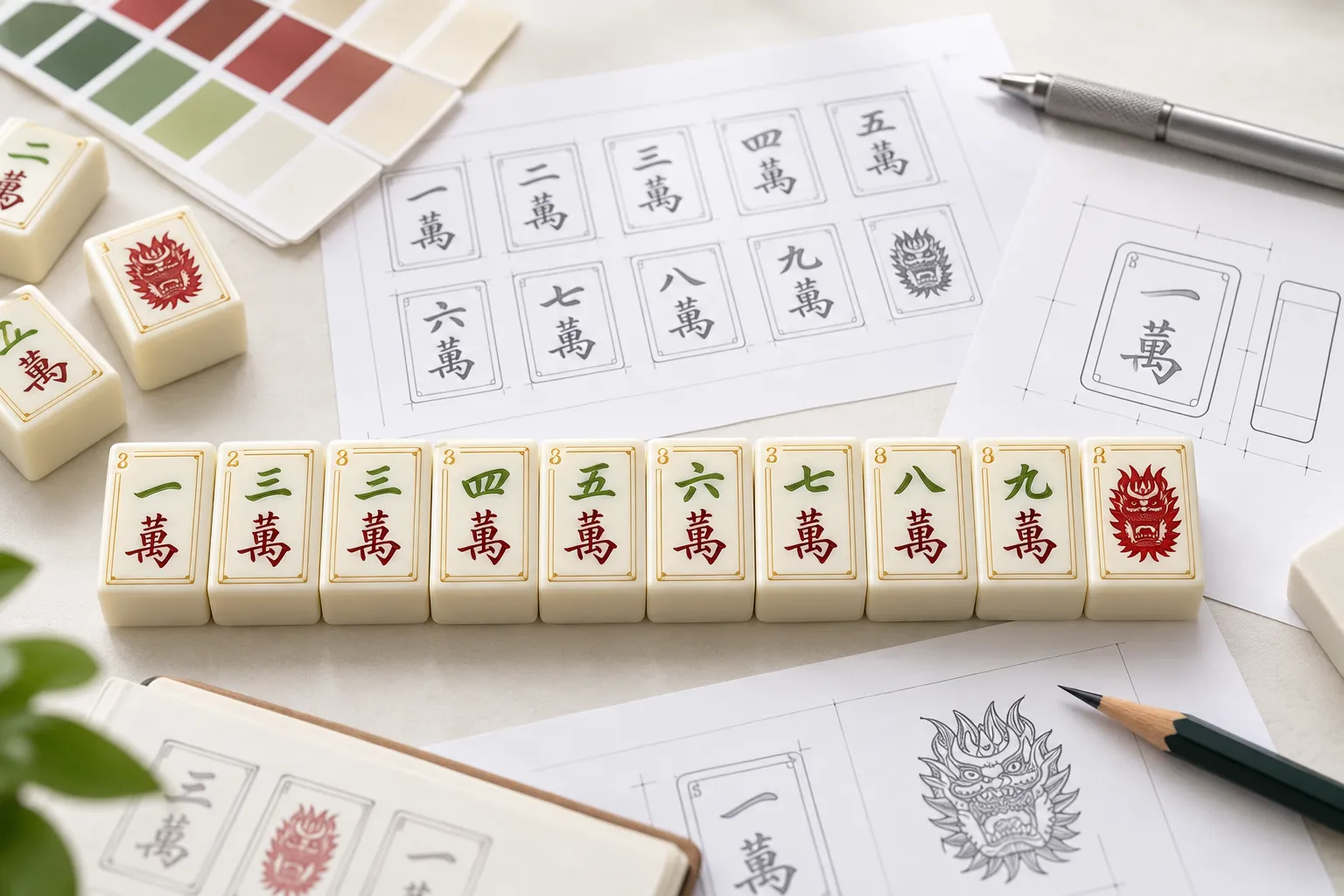
For retailers, distributors and private-label brands, creating a custom Mahjong collection starts with accurate artwork.
If you want to Customise Mahjong Tiles for wholesale production, the design file needs to clearly show every tile, colour, symbol and artwork element that will appear in the finished set.
For HUHU Mahjong custom projects, final production artwork should be provided in Adobe Illustrator .AI format. Customisation is also a paid service, and the final cost depends on the artwork, materials, production process, packaging and order quantity.
This guide explains how to prepare your files correctly before you Customise Mahjong Tiles for sampling and mass production.
Why AI Files Are Important for Custom Mahjong Production
Adobe Illustrator files contain vector artwork.
Unlike low-resolution JPG or screenshot files, vector graphics can be resized without becoming blurry.
When manufacturers Customise Mahjong Tiles, artwork often needs to be adjusted precisely to match the tile dimensions and production area.
An .AI file makes it easier to control:
- Artwork size
- Number placement
- Borders
- Colours
- Symbols
- Line thickness
- Logo placement
- Engraving or printing areas
A clear production file can reduce unnecessary revisions later.
1. Prepare the Final Artwork in AI Format
Before sending your designs, make sure the final file is saved as:
Adobe Illustrator .AI
For final production, JPG, PNG or screenshots should not replace the required .AI design file.
A screenshot can be useful as a visual reference, but the production artwork should still be prepared properly in Illustrator.
If you want to Customise Mahjong Tiles, preparing the correct file format from the beginning can make the quotation and sampling process much smoother.
2. Use Clear File Names
Avoid sending several files called:
- final.ai
- final-new.ai
- final2.ai
- final-final.ai
Instead, use a clear version system.
For example:
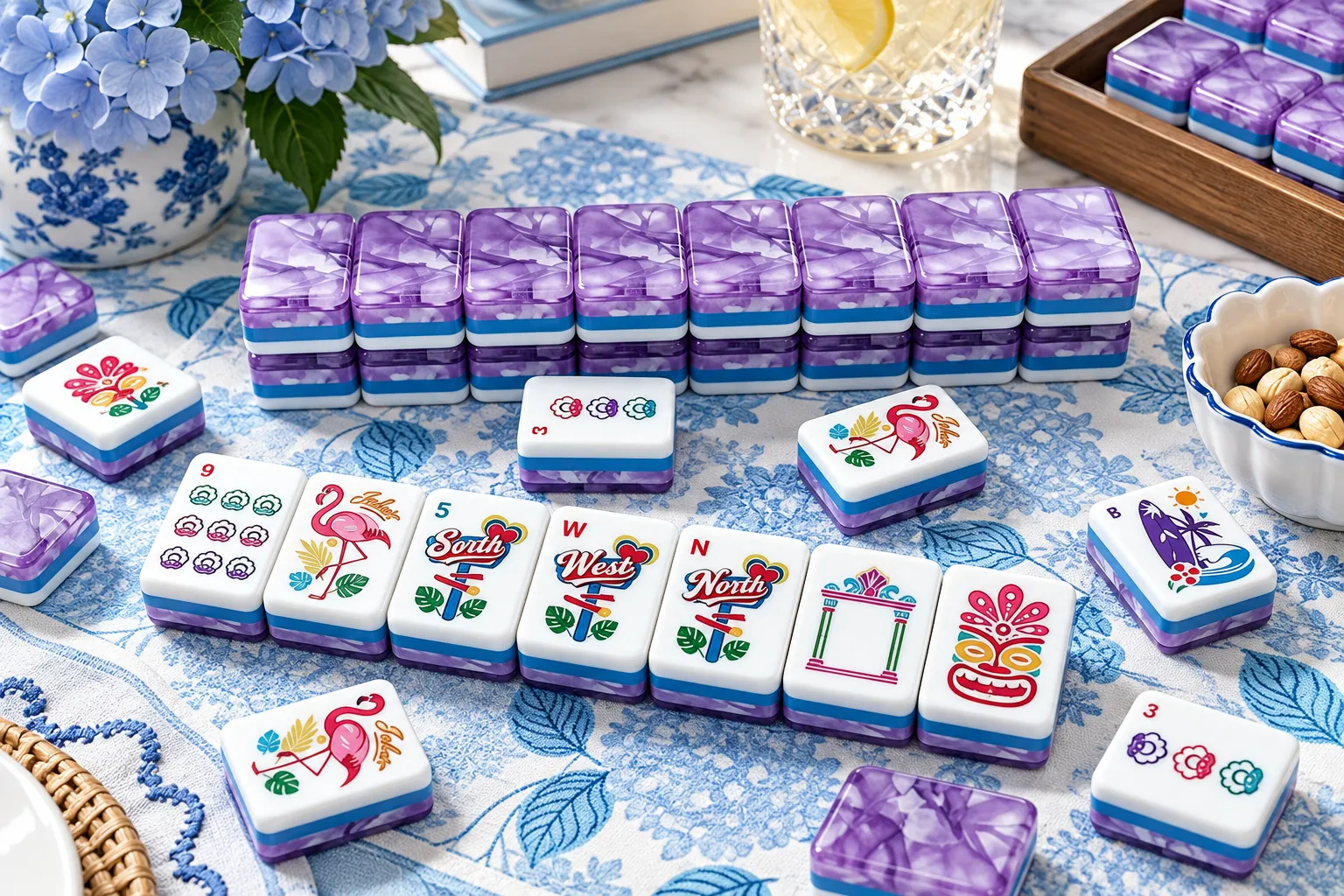
Tropical-Mahjong-V1.ai
Tropical-Mahjong-V2.ai
Tropical-Mahjong-FINAL.ai
If revisions are required, update the version number.
This helps both the buyer and manufacturer know exactly which artwork should be used.
3. Organise the Artwork by Tile Category
When you Customise Mahjong Tiles, every category should be easy to identify inside the AI file.
For an American Mahjong set, organise the artwork into groups such as:
- Dots
- Bams
- Craks
- Winds
- Dragons
- Flowers
- Jokers
- Blanks
- Special tiles
Separate artboards are often useful.
For example:
Artboard 1 – Dots 1–9
Artboard 2 – Bams 1–9
Artboard 3 – Craks 1–9
Artboard 4 – Winds and Dragons
Artboard 5 – Flowers
Artboard 6 – Jokers
A well-organised file reduces the chance of artwork being placed on the wrong tile.
4. Label Every Tile Clearly
Do not rely only on the artwork to identify a tile.
Label each design clearly inside the production file.
For example:
- Dot 1
- Dot 2
- Bam 1
- Bam 2
- Crak 1
- Crak 2
- East
- South
- West
- North
- Joker 1
- Flower 1
Clear labels are especially important when you Customise Mahjong Tiles with completely original artwork.
5. Make Sure Numbers Match the Tile Design
This is one of the most important checks.
If a tile is labelled 5 Dot, the artwork should contain the correct five Dot elements.
If it is 8 Bam, the artwork should represent the intended eight Bam symbols.
Check every numbered tile carefully before sending the file.
Incorrect numbers or duplicated artwork can be repeated throughout mass production if they are not found during the artwork stage.
6. Keep Every Tile the Same Size
Standard tiles within the same set should use the same dimensions and proportions.
When preparing artwork to Customise Mahjong Tiles, make sure one tile is not accidentally:
- Wider
- Taller
- Smaller
- Using different margins
- Using a different border size
Use one standard tile template throughout the file.
This helps the entire set look consistent when produced.
7. Keep Artwork Inside the Safe Area
Important design elements should not sit too close to the tile edge.
Leave enough space around:
- Numbers
- Symbols
- Borders
- Text
- Illustrations
- Logos
This reduces the risk of artwork appearing cramped or too close to the physical edge.
If you are unsure about the production area, the manufacturer can review the AI file before sampling.
8. Convert Fonts to Outlines
If the design includes text, convert fonts to outlines before sending the final .AI file.
This is particularly important for:
- JOKER
- Wind letters
- Brand names
- Decorative lettering
- Custom phrases
If the manufacturer does not have the same font installed, the appearance could change.
Outlined text preserves the intended design.
9. Use Vector Artwork Where Possible
Vector graphics are preferable for important design elements.
These may include:
- Numbers
- Icons
- Borders
- Flowers
- Logos
- Geometric patterns
When you Customise Mahjong Tiles, vector artwork creates cleaner edges and is easier to resize or adjust accurately.
10. Avoid Low-Resolution Images
Placing a small JPG inside an Illustrator file does not automatically make it vector artwork.
If low-resolution images are embedded, they can still appear blurry when produced.
For illustrated designs, use:
- Vector artwork where possible
- High-resolution raster artwork only when necessary
Always review image quality at the actual production size.
11. Prepare Accurate Colour References
Colour can look different on different computer screens.
When you Customise Mahjong Tiles, important colours should have clear references wherever possible.
These may include:
- Pantone colours
- Physical colour samples
- Approved swatches
- Previous production samples
For example:
Tile Back: Pantone XXX C
Middle Layer: Pantone XXX C
This is much clearer than simply writing “dark blue” or “light pink”.
12. Keep Colour Naming Consistent
Do not call the same colour “Sage” on one page and “Light Green” on another unless they are intentionally different.
Use one consistent naming system throughout the project.
For example:
Colour A – Sage Green
Colour B – Dusty Pink
Colour C – Navy
Consistent references make customised Mahjong production easier to manage.
13. Prepare Joker Designs Carefully
Jokers are often one of the most creative parts of an American Mahjong set.
They may include:
- Animals
- Travel
- Food
- Fashion
- Architecture
- Flowers
- Lifestyle illustrations
When you Customise Mahjong Tiles, Jokers can help establish a strong visual identity.
However, the tiles should still be clearly recognisable as Jokers.
If the word JOKER is required, include it clearly in the AI artwork.
14. Make Flower Tiles Feel Like One Collection
Flower tiles can use different illustrations, but they should still share the same design language.
Keep consistency in:
- Colour palette
- Illustration style
- Scale
- Border treatment
- Number positioning
For example, if one Flower tile uses detailed botanical artwork, the other Flowers should not suddenly use unrelated cartoon graphics unless that contrast is intentional.
15. Check Winds and Dragons Carefully
For American Mahjong, make sure the Winds are correct:
- North
- East
- West
- South
If letters such as N, E, W and S are used, check that they match the correct tile.
Dragons should also be clearly identified according to the final design.
This is especially important when brands Customise Mahjong Tiles using non-traditional artwork.
16. Confirm the Tile Back Design
Customisation can also include the back of the tile.
Possible options may include:
- Solid colours
- Marble effects
- Transparent backs
- Pearlescent effects
- Decorative patterns
- Multi-layer colour combinations
Include a clear visual reference and written description.
The back design is highly visible during play, so it should work with the front artwork.
17. Confirm Two-Layer or Three-Layer Construction
If your product uses multiple layers, clearly state the structure.
For example:
Face: White
Middle Layer: Blue
Back: Purple Marble
When you Customise Mahjong Tiles, the side view is also part of the overall product design.
Do not focus only on the front artwork.
18. Include Blank Tiles in the File
If blank tiles are part of the set, include them in the design specification.
Do not simply leave them out of the AI file.
The manufacturer needs to know that the blank tile is intentional.
The same applies to any special or spare tiles.
19. Confirm the Full Tile Configuration
Along with the .AI artwork, provide the full tile count.
This allows the supplier to check that every required design has been included.
For example, confirm quantities for:
- Dots
- Bams
- Craks
- Winds
- Dragons
- Flowers
- Jokers
- Blanks
Artwork and tile configuration should always be reviewed together before you Customise Mahjong Tiles for production.
20. Prepare Packaging Artwork Separately
If you need customised packaging, prepare separate AI files for packaging.
These may include:
- Retail box
- Storage case
- Product insert
- Care card
- Barcode label
- Logo
- Outer packaging artwork
Clearly label packaging files so they are not confused with tile artwork.
21. Customisation Is a Paid Service
It is important to understand that customisation is not free.
The cost can vary depending on the project.
Customisation charges may relate to:
- Artwork preparation
- Sample development
- Colour matching
- Printing or engraving setup
- Special materials
- Custom backs
- Custom packaging
- Tooling where applicable
A simple logo change will not necessarily cost the same as a completely original set.
Before you Customise Mahjong Tiles, send the full requirements so the manufacturer can calculate the customisation cost accurately.
22. Provide Your Estimated Order Quantity
Quantity affects both MOQ and wholesale pricing.
When requesting a custom quote, provide an estimated quantity.
For example:
- 200 sets
- 500 sets
- 1,000 sets
This allows the manufacturer to evaluate the production requirements properly.
Custom pricing cannot be calculated accurately from artwork alone.
23. Provide Your Destination
For wholesale enquiries, it is also useful to provide:
- Country
- City
- Postal code if available
- Destination port for larger shipments
This allows production and logistics to be discussed together.
24. Request a Physical Sample
Before mass production, a physical sample is strongly recommended.
The sample allows you to check:
- Artwork
- Colours
- Tile dimensions
- Material
- Weight
- Surface finish
- Tile back
- Layer construction
When you Customise Mahjong Tiles, digital artwork alone cannot show exactly how the final physical product will look and feel.
25. Compare the Sample With the AI File
When the sample arrives, compare it directly with the final production artwork.
Check every tile category.
Look for:
- Incorrect numbers
- Missing symbols
- Colour differences
- Misaligned artwork
- Incorrect text
- Wrong tile designs
Any required corrections should be completed before mass production begins.
26. Keep the Final Approved File
Once the sample is approved, keep the final .AI file safely stored.
Use a clear final name such as:
Garden-American-Mahjong-FINAL-V4.ai
Also keep:
- Approved sample photos
- Colour references
- Packaging files
- Product specification
These records make future reorders much easier.
27. Do Not Change Artwork After Mass Production Starts
Once mass production begins, avoid changing the design unless absolutely necessary.
Late changes may cause:
- Extra customisation costs
- Production delays
- Material waste
- Inconsistent products
The artwork should be genuinely final before production approval.
What Should You Send to Customise Mahjong Tiles?
Before contacting a manufacturer, prepare:
- Final
.AIfiles - Full tile configuration
- Tile dimensions
- Material preference
- Layer colours
- Tile back design
- Colour references
- Packaging requirements
- Estimated quantity
- Destination
- Target delivery date
Providing these details helps the manufacturer evaluate MOQ, sampling, customisation cost and production lead time.
Can You Customise Mahjong Tiles From a JPG or PNG?
JPG and PNG files may be useful for discussing an idea, but HUHU Mahjong requires final custom production artwork in Adobe Illustrator .AI format.
If your current artwork is only:
- JPG
- PNG
- Screenshot
- Hand drawing
it may need to be recreated as suitable production artwork first.
This preparation should be included in your customisation budget and project timeline.
Working With HUHU Mahjong
HUHU Mahjong works with retailers, wholesalers, distributors, clubs and private-label brands sourcing Mahjong products for international markets.
Buyers who want to Customise Mahjong Tiles should provide final artwork in .AI format together with their tile configuration, dimensions, material, colours, packaging and estimated quantity.
Customisation is charged according to the requirements of each project.
After the files and specifications are confirmed, a sample can be produced for review before mass production.
Final Thoughts
Good custom Mahjong production begins with accurate artwork.
When you Customise Mahjong Tiles, the .AI file should function as a production document rather than simply a visual concept.
Before submitting the artwork, check:
- Every number
- Every symbol
- Every tile category
- Colours
- Artwork dimensions
- Tile configuration
- Packaging requirements
Clear preparation can reduce revisions, improve sample accuracy and make mass production much easier.
For retailers and private-label brands, taking the time to prepare proper AI files is one of the most important steps when you Customise Mahjong Tiles.
About the Author
HUHU Team
We share industry insights, product knowledge, and manufacturing updates to help global clients better understand mahjong production and OEM solutions.