OEM/ODM MANUFACTURING FOR GLOBAL BRANDS
- View Our Alibaba Store
- info@huhumahjong.com
- +86 13326907761
Mahjong Rack Guide for Wholesale Buyers
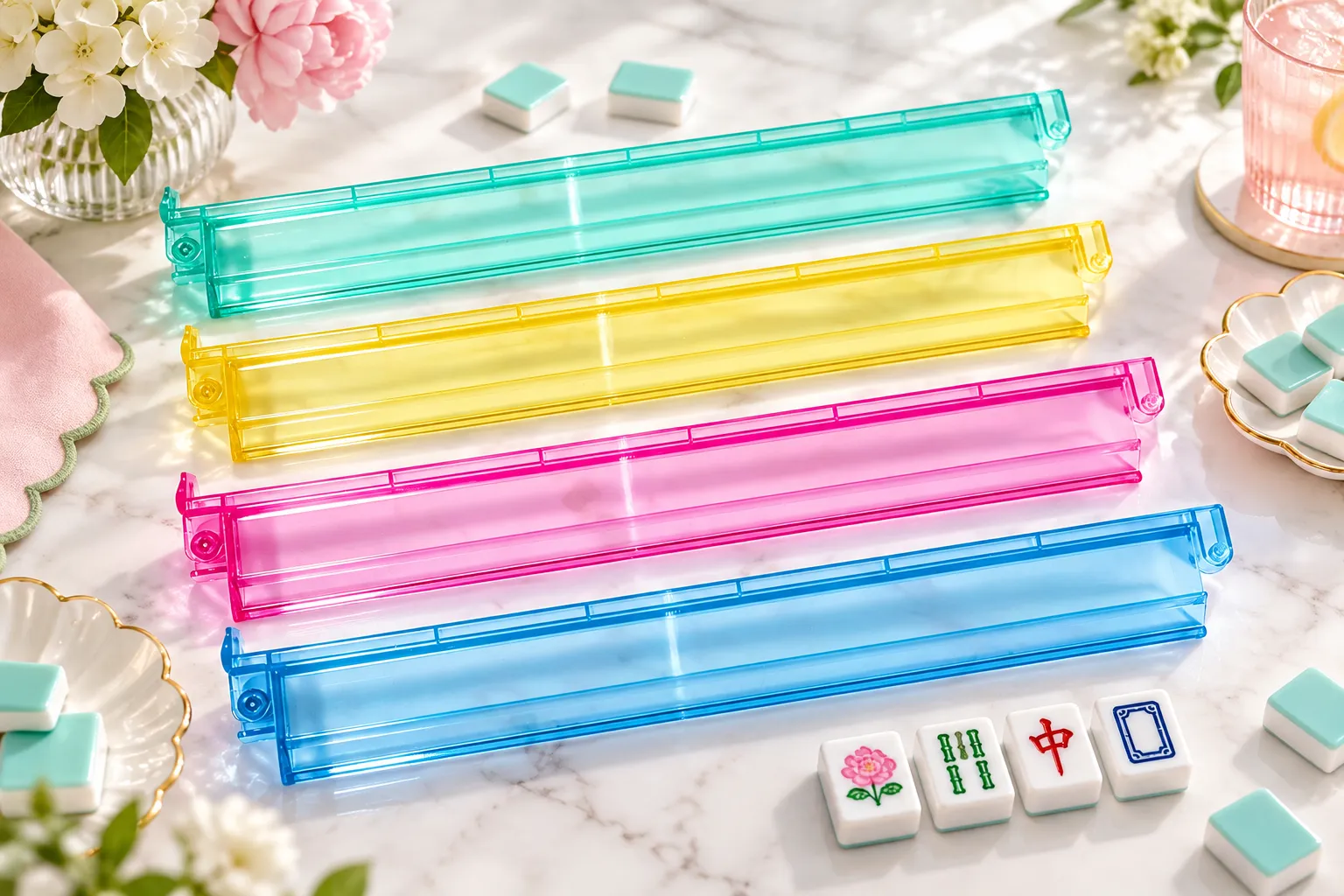
For retailers, distributors and private-label brands, choosing the right mahjong rack is an important part of building a complete Mahjong product range.
A rack may look like a simple accessory, but its length, groove width, material, pusher design and compatibility with tile size can directly affect the playing experience.
This guide explains what B2B buyers should check before ordering a mahjong rack for wholesale or custom production.
Why Mahjong Rack Selection Matters
A good mahjong rack should make tiles easy to organise, easy to read and stable during play.
For wholesale buyers, rack selection can also affect:
- Product compatibility
- Packaging size
- Shipping volume
- Product positioning
- Customer satisfaction
- Bundle value
This is especially important for American Mahjong products, where racks and pushers are commonly used.
1. Confirm the Tile Size First
Before selecting a mahjong rack, confirm the exact tile dimensions.
You should know:
- Tile height
- Tile width
- Tile thickness
The rack groove needs to work with the actual tiles.
If the groove is too narrow, tiles may not fit properly.
If it is too wide, tiles may lean or feel unstable.
2. Check Rack Length
Rack length determines how many tiles can fit comfortably.
A rack should provide enough space for a full hand without forcing the tiles too tightly together.
Wholesale buyers should test:
- Standard hand size
- Larger tile sizes
- Extra spacing between tiles
A very short mahjong rack may make it difficult for players to reorganise their hand.
3. Check Groove Width
The groove is one of the most important parts of a mahjong rack.
It should hold the tiles securely without gripping them too tightly.
Check whether:
- Tiles can be inserted easily
- Tiles remain upright
- Tiles can be moved along the rack
- Tile edges are not scratched
Testing with the final production tile is better than relying only on measurements.
4. Check Groove Depth
Groove depth affects how much of the tile sits inside the rack.
If the groove is too shallow, the tiles may fall forward.
If it is too deep, too much of the tile face may be hidden.
A good mahjong rack should support the tile while keeping the design easy to see.
5. Test the Viewing Angle
Some racks hold tiles almost vertically, while others tilt them slightly towards the player.
The viewing angle should feel comfortable during normal play.
For beginner-friendly products, a clear viewing angle can make tile identification easier.
6. Check Rack Stability
Place the rack on a flat surface and test whether it moves or rocks.
A stable mahjong rack should:
- Sit flat
- Not wobble
- Stay in place during normal tile movement
An unstable rack can make even a premium Mahjong set feel lower quality.
7. Choose the Right Rack Material
Common rack materials may include:
Plastic
Suitable for practical and entry-level sets.
Advantages may include:
- Lightweight
- Easy to clean
- Lower cost
- Multiple colour options
Acrylic
Often used for more decorative products.
Acrylic racks may provide:
- Transparent finishes
- Bright colours
- Premium appearance
Wood
Wooden racks can create a more traditional or premium look.
They may work well with:
- Premium Mahjong sets
- Gift sets
- Natural-material product collections
The best material depends on the target customer and retail price.
8. Match the Rack Style to the Mahjong Set
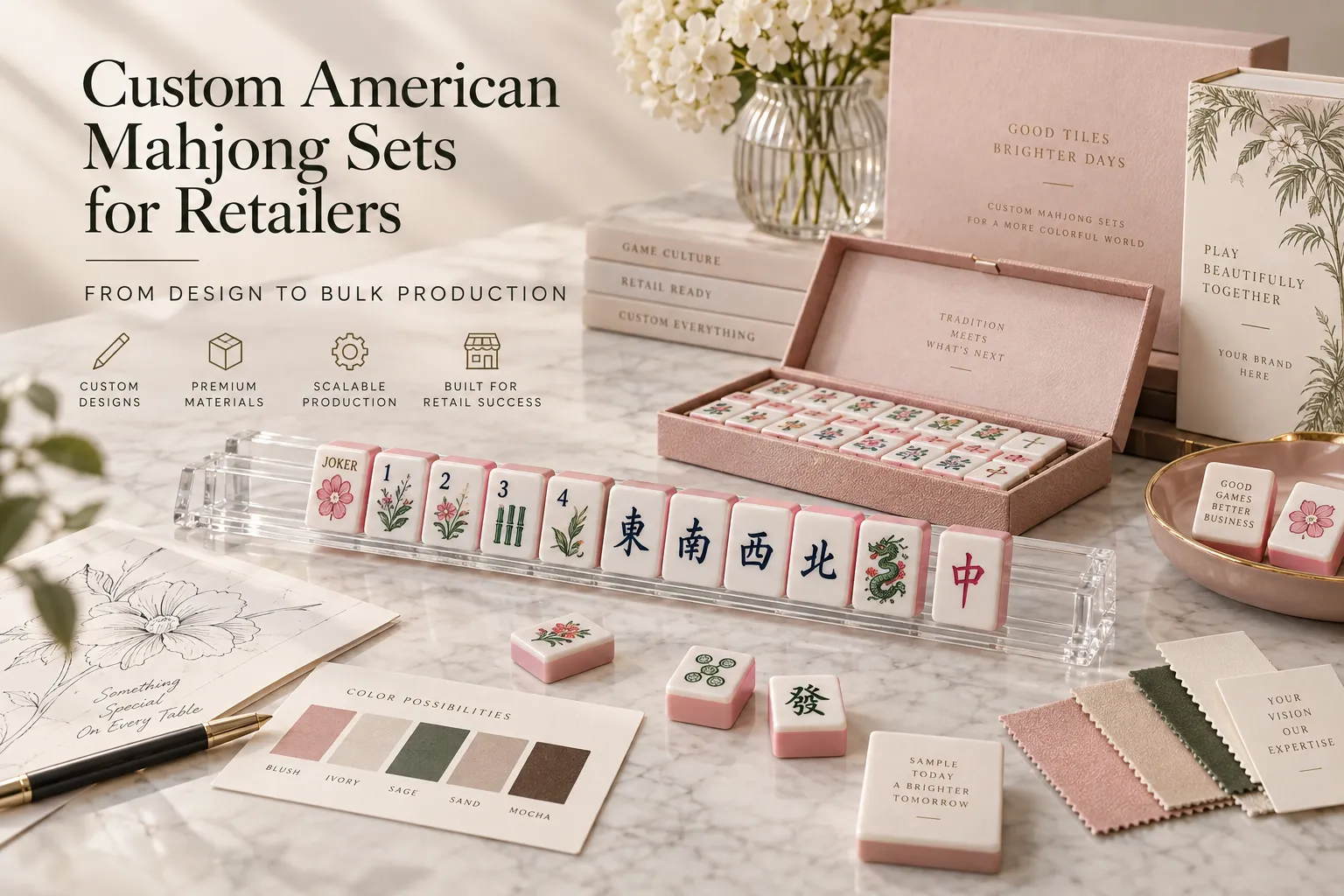
The mahjong rack should visually match the rest of the product.
Consider:
- Tile back colour
- Case colour
- Mahjong mat
- Packaging
- Brand style
A coordinated rack can make the entire set feel more complete.
9. Check Pusher Compatibility
American Mahjong racks often include pushers.
The pusher should:
- Attach securely
- Move smoothly
- Be easy to remove
- Not interfere with the tile groove
A rack and pusher should be tested together before mass production.
10. Check Pusher Length
The pusher length should suit the rack.
If it is too short, it may not move the full tile wall effectively.
If it is too long, it may be difficult to store.
For custom products, rack and pusher dimensions should be specified together.
11. Test How the Pusher Attaches
Different systems may use:
- Clips
- Sliding connections
- Hooks
- Magnetic designs
The attachment should feel secure but not difficult to use.
Wholesale buyers should test repeated attachment and removal.
12. Avoid Sharp Edges
A mahjong rack should feel comfortable when handled.
Check for:
- Sharp corners
- Rough edges
- Plastic flashing
- Splinters on wooden racks
These small details can have a big effect on perceived quality.
13. Check Surface Finish
The finish should match the intended product level.
Possible finishes include:
- Glossy
- Matte
- Transparent
- Painted
- Natural wood
A premium set should have consistent surface quality across all four racks.
14. Consider Rack Colour
Rack colour can help create a stronger visual identity.
Possible options include:
- Clear acrylic
- White
- Green
- Blue
- Pink
- Wood tones
- Custom brand colours
For private-label projects, the mahjong rack can be coordinated with tile backs and packaging.
15. Confirm Custom Colour MOQ
Custom colours may require a higher MOQ than standard colours.
Before selecting a custom rack colour, ask:
- MOQ per colour
- Colour matching cost
- Sample cost
- Lead time
Do not assume a custom colour is included in standard pricing.
16. Consider Logo Placement
Private-label buyers may want to add branding to the rack.
Possible logo positions include:
- Rack end
- Side panel
- Pusher
- Underside
- Printed insert
Branding should remain subtle enough that it does not interfere with gameplay.
17. Confirm Logo Production Method
Logo options may include:
- Printing
- Engraving
- Laser marking
- UV printing
- Metal badge
The best method depends on the rack material.
A wooden mahjong rack may use a different branding method from acrylic or plastic.
18. Check Rack Compatibility With Larger Tiles
Some American Mahjong tiles are larger or thicker than traditional sets.
If the rack is being sourced separately, always test it with the final tile dimensions.
Do not assume that every American Mahjong rack fits every American Mahjong tile.
19. Test the Full Hand
Do not test only one or two tiles.
Place a full hand on the mahjong rack and check:
- Available space
- Tile movement
- Stability
- Viewing angle
This gives a much more realistic impression of the final product.
20. Test Multiple Racks
If the set includes four racks, inspect all four.
Check that they are consistent in:
- Length
- Groove width
- Colour
- Finish
- Pusher fit
Small differences can become noticeable when all four are placed on the same table.
21. Think About Packaging
Racks are long accessories and can increase packaging dimensions.
Before finalising the box, confirm:
- Rack length
- Pusher length
- Stacking method
- Number of racks
- Internal tray design
A poorly planned mahjong rack layout can create unnecessary empty packaging space.
22. Consider Stacking
If the rack design allows safe stacking, packaging can become more compact.
However, check whether stacking may:
- Scratch surfaces
- Bend pushers
- Damage decorative finishes
Protective dividers may be useful.
23. Consider Shipping Volume
Although racks are relatively light, their length can increase carton size.
For wholesale buyers, ask for:
- Individual rack dimensions
- Packed set dimensions
- Units per carton
- Master carton size
This helps calculate landed cost more accurately.
24. Request a Physical Sample
Before mass production, request a mahjong rack sample.
Test it with the actual tiles.
Check:
- Fit
- Stability
- Pusher movement
- Colour
- Surface finish
- Logo
- Packaging compatibility
A physical sample can reveal problems that drawings cannot.
25. Compare the Sample With Specifications
The approved sample should match the final specification sheet.
Confirm:
- Rack length
- Groove width
- Groove depth
- Material
- Colour
- Logo position
- Pusher type
Keep the approved sample as a production reference where possible.
26. Consider Replacement Availability
Retailers may occasionally receive customer requests for replacement racks.
Ask whether the supplier can provide:
- Individual replacement racks
- Replacement pushers
- Matching colours
This can improve after-sales service.
27. Create Rack and Tile Bundles
A mahjong rack can also be sold separately or bundled with other products.
Possible bundles include:
- Four racks
- Four racks + pushers
- Tiles + racks
- Tiles + racks + Mahjong mat
Accessory bundles can increase average order value.
28. Position Different Rack Levels
Retailers can offer different product levels.
Basic
Simple plastic racks with practical pushers.
Mid-Range
Acrylic racks with coordinated colours.
Premium
Wooden or custom-branded racks with upgraded finish.
This gives customers more choice.
29. Include Rack Specifications in Product Listings
Retail product pages should clearly show:
- Rack length
- Material
- Colour
- Pusher included or not
- Recommended tile size
Clear information can reduce compatibility questions.
30. Inspect Racks Before Shipping
Quality inspection should include:
- Cracks
- Scratches
- Warping
- Colour consistency
- Groove dimensions
- Pusher attachment
- Packaging
A damaged rack can affect the usability of an otherwise complete Mahjong set.
Mahjong Rack Wholesale Checklist
Before placing an order, confirm:
- Tile dimensions
- Rack length
- Groove width
- Groove depth
- Viewing angle
- Material
- Colour
- Surface finish
- Pusher design
- Logo
- MOQ
- Packaging
- Sample approval
- Replacement availability
Working With HUHU Mahjong
HUHU Mahjong works with retailers, distributors, clubs and private-label brands sourcing Mahjong products and accessories for international markets.
Buyers can discuss:
- Mahjong racks
- Pushers
- Tile dimensions
- Custom colours
- Logo branding
- Mahjong mats
- Packaging
- MOQ
- Samples
Custom rack requirements should be confirmed together with the final tile specifications.
Final Thoughts
Choosing the right mahjong rack requires more than selecting a colour or material.
Wholesale buyers should consider:
- Tile compatibility
- Groove dimensions
- Stability
- Pusher design
- Material
- Packaging
- Customisation
A well-matched mahjong rack can make the Mahjong set easier to use and improve the overall customer experience.
The best approach is to test the rack with the actual production tiles before approving a bulk order.
About the Author
HUHU Team
We share industry insights, product knowledge, and manufacturing updates to help global clients better understand mahjong production and OEM solutions.