OEM/ODM MANUFACTURING FOR GLOBAL BRANDS
- View Our Alibaba Store
- info@huhumahjong.com
- +86 13326907761
Mahjong Tile Finish Guide for Wholesale Buyers
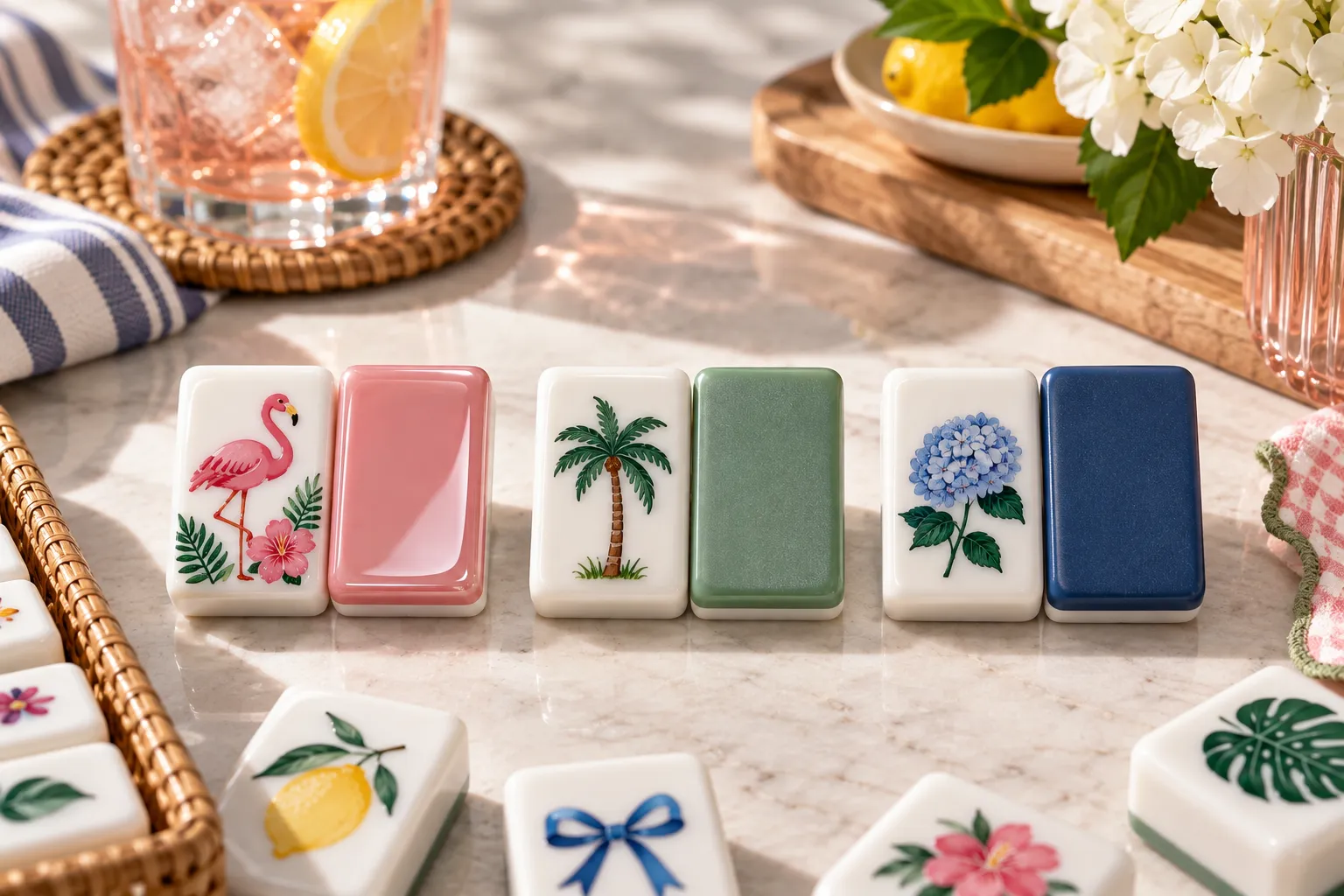
For retailers, distributors and private-label brands, the surface finish of a Mahjong tile can have a noticeable effect on both appearance and customer experience.
A glossy tile may look brighter and more polished, while a matte or satin finish can reduce reflections and create a softer feel. The right choice depends on the target market, artwork, material and product positioning.
This guide explains what B2B buyers should consider when choosing a mahjong tile finish for wholesale or custom orders.
Why Mahjong Tile Finish Matters
The mahjong tile finish affects more than appearance.
It can influence:
- How colours look
- How much light reflects from the tile
- Surface feel
- Scratch visibility
- Fingerprint visibility
- Photography
- Perceived product quality
For custom and private-label products, the finish should be confirmed before mass production.
1. Glossy Mahjong Tile Finish
A glossy finish creates a smooth, reflective surface.
It can make colours appear:
- Brighter
- Deeper
- More saturated
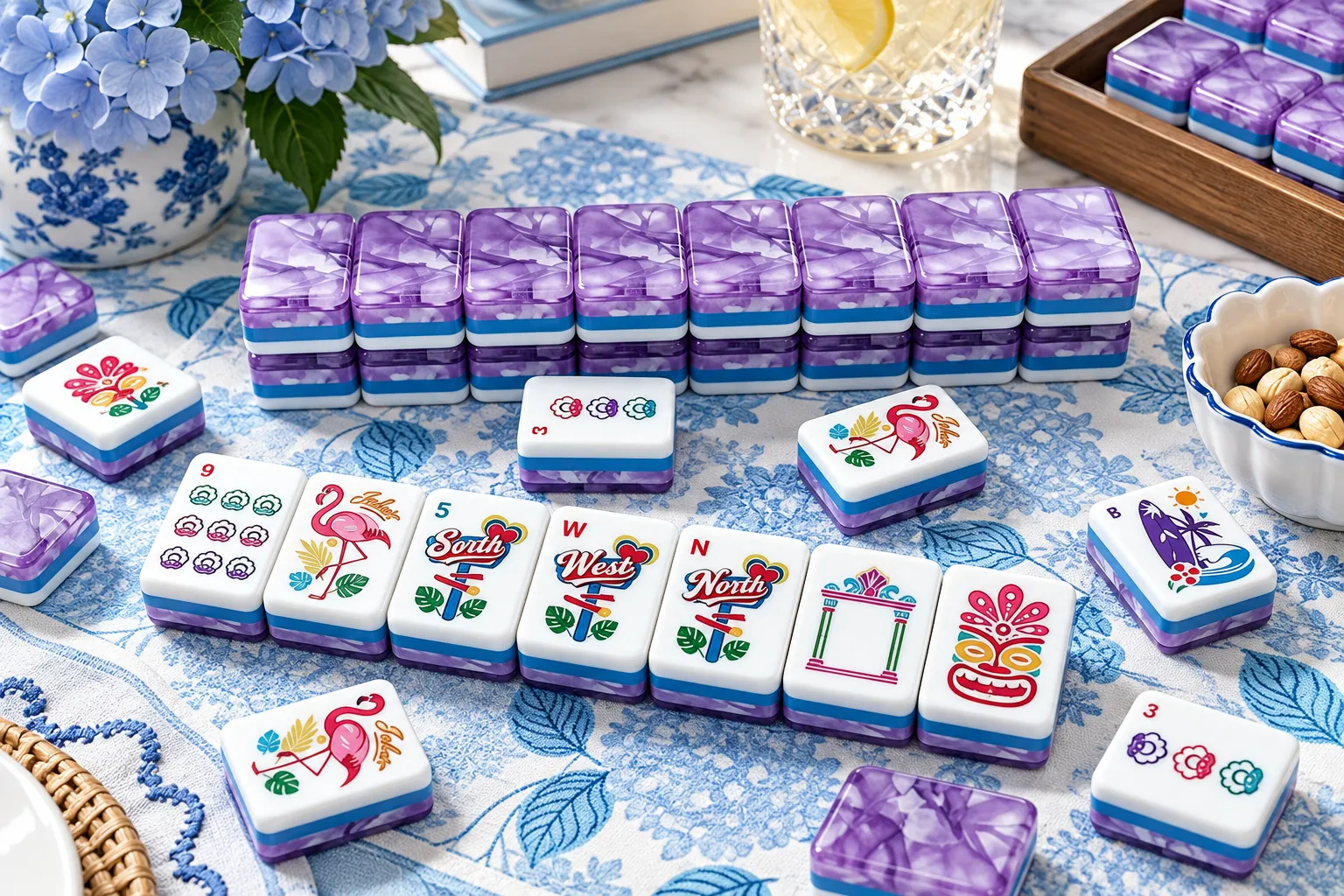
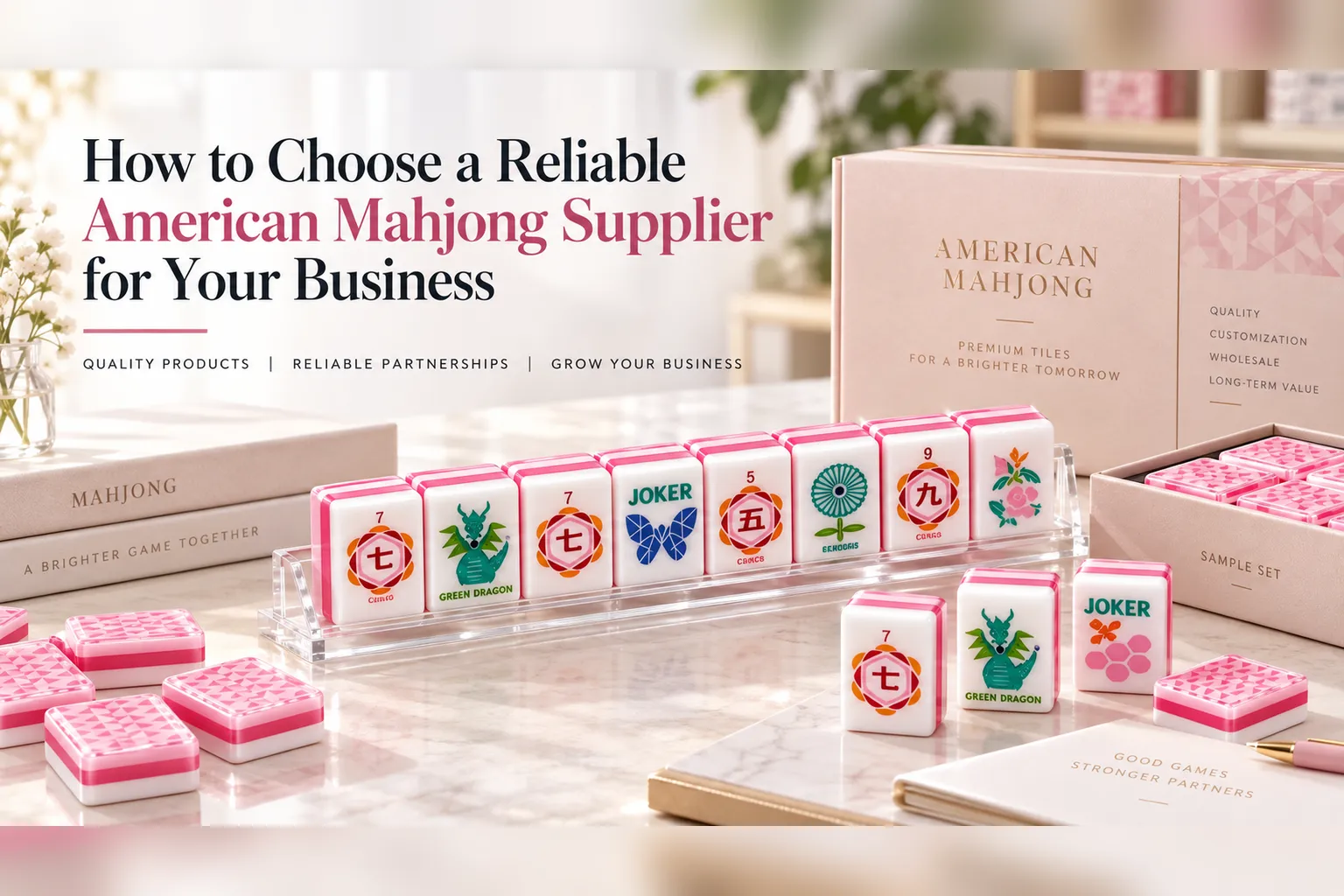
Glossy tiles often work well for colourful American Mahjong sets, decorative tile backs and gift-focused products.
However, strong lighting can create reflections on the tile face.
2. Matte Mahjong Tile Finish
A matte mahjong tile finish reflects less light.
This can create a softer and more understated appearance.
Possible advantages include:
- Reduced glare
- Less visible fingerprints
- Softer visual effect
- More subtle premium feel
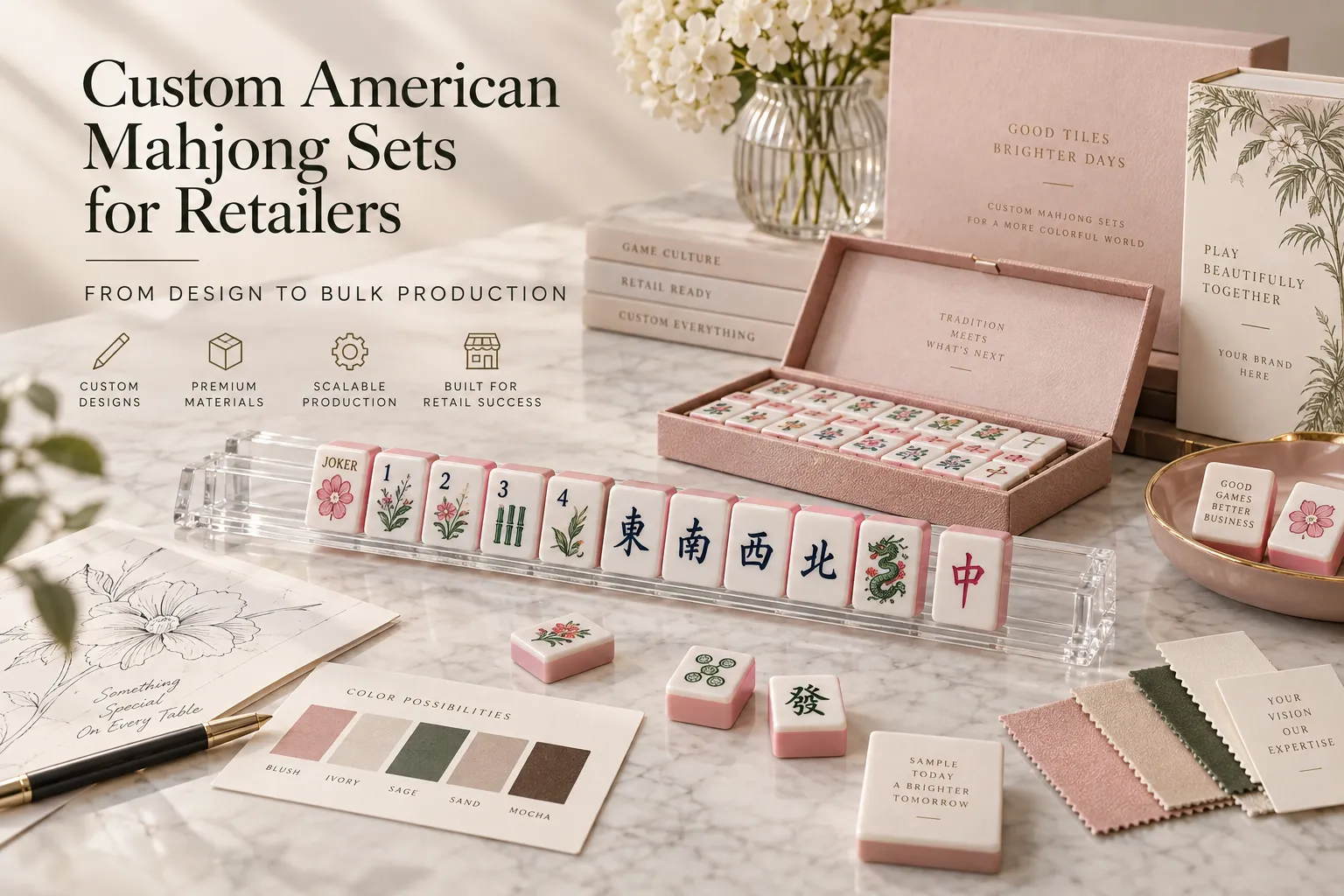
Matte finishes can work well for minimalist or neutral designs.
3. Satin or Semi-Gloss Finish
Some buyers prefer something between glossy and matte.
A satin or semi-gloss finish can provide:
- Moderate shine
- Smooth touch
- Less reflection than full gloss
This can be useful for products that need a polished appearance without excessive glare.
4. Match the Finish to the Artwork
The artwork and finish should work together.
For example, detailed floral artwork may appear more vivid with a glossy mahjong tile finish.
Minimal line artwork may work particularly well with matte or satin surfaces.
Before choosing, review the artwork on a physical tile sample rather than judging only from a digital image.
5. Consider American Mahjong Products
American Mahjong products often use:
- Bright colours
- Decorative Flowers
- Custom Jokers
- Colourful tile backs
A glossy finish can help these elements stand out.
However, readability should still be considered.
If reflections make numbers or symbols difficult to see, a softer finish may be more practical.
6. Check Readability Under Light
One important test is to place the tile under normal playing conditions.
Check the mahjong tile finish under:
- Daylight
- Ceiling lights
- Warm indoor lamps
A surface that looks excellent in a studio photo may behave differently during real gameplay.
7. Check Fingerprint Visibility
Glossy tiles may show fingerprints more easily.
This is especially noticeable on:
- Dark tile backs
- Transparent acrylic backs
- Highly polished surfaces
For some premium products, this is acceptable.
For products intended for frequent club use, a lower-gloss surface may require less visible maintenance.
8. Check Scratch Visibility
Different finishes can make scratches more or less noticeable.
Glossy surfaces may reveal fine scratches under strong light.
Matte surfaces may hide some marks better, although they can develop their own wear patterns.
A good mahjong tile finish should be tested for realistic everyday use.
9. Material Affects the Finish
The same finish may look different depending on the tile material.
Possible materials include:
- Melamine
- Acrylic
- Resin
For example, glossy acrylic can create a very different visual effect from polished melamine.
Buyers should review the actual material-and-finish combination.
10. Consider Tile Back Finish
The front and back do not always need exactly the same finish.
A set might use:
- Smooth tile face
- Glossy marbled back
or:
- Matte tile face
- Translucent polished back
For private-label products, the front and back should still feel visually coordinated.
11. Consider Colour Accuracy
Finish can influence how colour appears.
Glossy surfaces may make colours look deeper.
Matte surfaces can make the same colour appear softer.
If brand colour accuracy is important, approve the colour together with the final mahjong tile finish.
Do not approve colour and finish separately.
12. Request Physical Colour Samples
Screens cannot accurately reproduce every finish.
For custom orders, review a physical sample for:
- Colour
- Gloss level
- Transparency
- Surface texture
This is especially important when matching Pantone or brand colours.
13. Check Surface Consistency
Every tile in the set should have a reasonably consistent finish.
Look for:
- Uneven shine
- Cloudy areas
- Rough spots
- Surface marks
- Different gloss levels
Inconsistent finishing can make a set look lower quality.
14. Inspect Tile Edges
The mahjong tile finish should also look clean around the edges.
Check for:
- Rough edges
- Excess material
- Uneven polishing
- Visible seams
The edge quality becomes particularly noticeable on premium sets.
15. Consider the Feel During Handling
Customers interact with Mahjong tiles constantly.
The surface should feel comfortable when:
- Picking up tiles
- Shuffling
- Moving tiles
- Arranging them on racks
A finish that looks premium but feels unpleasant may not be the right choice.
16. Test Shuffling
Place a full set on a Mahjong mat or table and shuffle the tiles.
Check whether the surface is:
- Too slippery
- Too sticky
- Comfortable to move
A practical mahjong tile finish should balance appearance with usability.
17. Test Rack Compatibility
Finish itself usually does not dramatically change tile dimensions, but surface texture can affect how easily tiles slide inside a rack groove.
Test the final tile sample with the intended rack.
This is especially important for American Mahjong sets.
18. Think About Product Photography
Glossy tiles can create attractive highlights in product photography.
However, reflections can also make artwork difficult to photograph.
Matte tiles are often easier to light evenly.
Retailers planning extensive ecommerce photography should consider this during product development.
19. Think About Video Content
If the product will be promoted through:
- TikTok
- Product videos
the finish can affect how the tiles appear on camera.
Highly reflective surfaces may require more controlled lighting.
20. Match the Finish to Product Positioning
Different finishes can support different product styles.
Entry-Level
A practical, durable standard finish.
Mid-Range
Improved polishing or semi-gloss appearance.
Premium
Carefully controlled gloss, matte or specialty surface treatment.
The mahjong tile finish should support the intended retail price.
21. Consider Gift-Focused Products
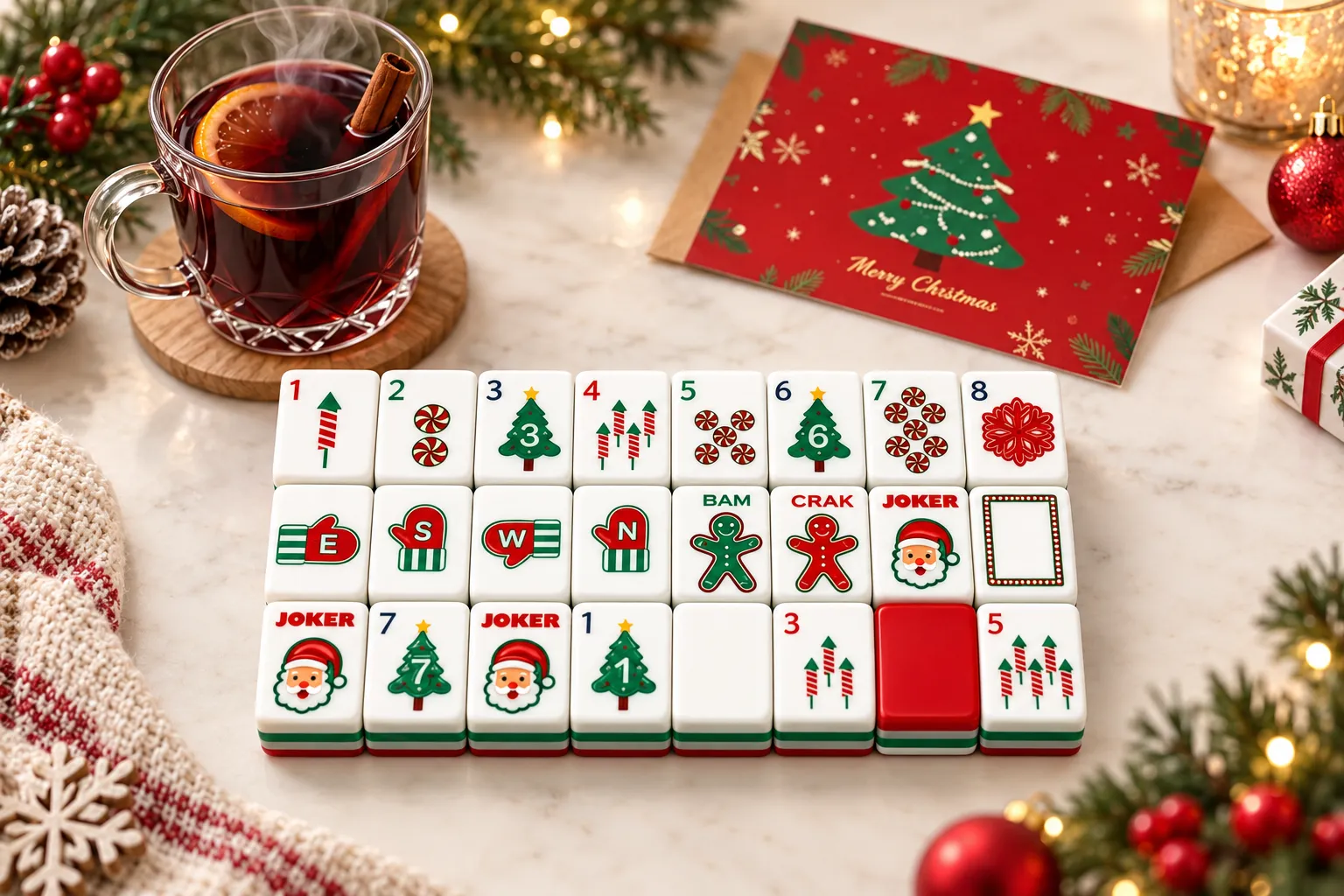
Gift products often benefit from strong visual presentation.
A glossy or polished finish can create an attractive unboxing experience.
However, premium does not always mean shiny.
A well-executed matte finish can also feel luxurious.
22. Consider Club or Frequent-Use Products
For club use, durability may matter more than decorative appearance.
Consider finishes that:
- Are easy to clean
- Hide minor handling marks
- Remain comfortable during repeated play
The ideal mahjong tile finish depends on how frequently the product will be used.
23. Ask About Cleaning Requirements
Different finishes may require different care.
Ask the supplier whether the tiles should be:
- Wiped with a dry cloth
- Cleaned with a damp cloth
- Avoided with alcohol-based cleaners
Care instructions can also be included with the retail product.
24. Confirm Finish Before Packaging Design
Product photography and packaging artwork may depend on the final tile appearance.
For example, the packaging photo should accurately represent whether the tiles are:
- Glossy
- Matte
- Transparent
- Marbled
Approve the finish before completing final marketing assets.
25. Confirm MOQ
Specialty finishes may have different MOQs.
A standard factory finish may be available at a lower quantity.
Custom surface treatments may require:
- Higher MOQ
- Additional setup
- Longer production time
Wholesale buyers should confirm this before selecting the final finish.
26. Understand Additional Cost
Some mahjong tile finish options may increase production cost.
Possible additional costs may come from:
- Surface treatment
- Polishing
- Additional coating
- Special material
- Sample development
Ask whether the finish is included in the standard unit price.
27. Request a Sample
A physical sample is one of the most important steps.
Evaluate:
- Gloss level
- Colour
- Feel
- Scratch visibility
- Fingerprints
- Artwork clarity
- Edge quality
It is difficult to judge finish accurately from photographs alone.
28. Compare Multiple Finishes Side by Side
If you are unsure, ask for two or more finish samples.
For example:
- Glossy
- Matte
- Semi-gloss
Comparing them under the same lighting can make the decision much easier.
29. Keep the Approved Sample
Once the mahjong tile finish is approved, keep the physical sample as a reference for mass production.
This gives both buyer and supplier a clearer quality benchmark.
30. Inspect Finish During Quality Control
Before shipment, inspect random tiles for:
- Consistent gloss
- Scratches
- Cloudiness
- Surface marks
- Edge quality
The final production should match the approved sample as closely as reasonably possible.
Mahjong Tile Finish Wholesale Checklist
Before confirming production, check:
- Tile material
- Gloss level
- Surface texture
- Colour
- Artwork clarity
- Fingerprint visibility
- Scratch visibility
- Edge finish
- Rack compatibility
- Cleaning requirements
- MOQ
- Sample approval
Working With HUHU Mahjong
HUHU Mahjong works with retailers, distributors, clubs and private-label brands developing Mahjong products for international markets.
Buyers can discuss:
- Tile materials
- Glossy finishes
- Matte finishes
- Custom tile colours
- Tile backs
- Custom artwork
- Racks
- Packaging
- MOQ
- Samples
The available finish options and costs depend on the material and customisation requirements.
Final Thoughts
Choosing a mahjong tile finish should balance appearance and practical use.
Wholesale buyers should consider:
- Reflection
- Readability
- Colour
- Surface feel
- Scratch visibility
- Photography
- Product positioning
A glossy finish may suit a colourful statement set, while matte or satin surfaces may work better for a softer, understated product.
The best approach is to compare physical samples and approve the final mahjong tile finish before mass production.
About the Author
HUHU Team
We share industry insights, product knowledge, and manufacturing updates to help global clients better understand mahjong production and OEM solutions.