OEM/ODM MANUFACTURING FOR GLOBAL BRANDS
- View Our Alibaba Store
- info@huhumahjong.com
- +86 13326907761
Mahjong Tile Material Guide for Wholesale Buyers
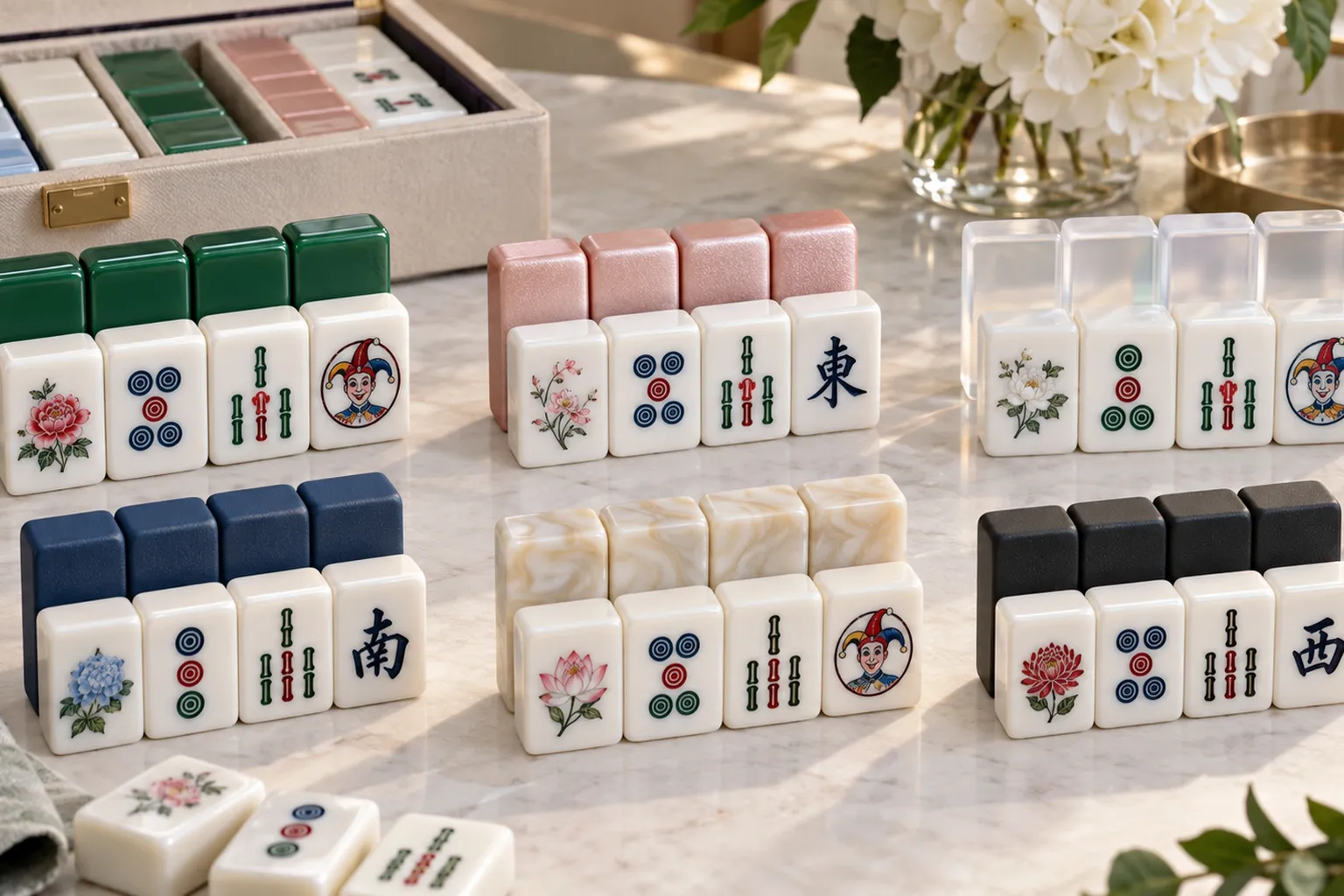
For retailers, distributors and private-label brands, choosing the right mahjong tile material is an important part of product development.
The material affects more than appearance. It can influence tile weight, durability, surface finish, colour options, packaging, shipping cost and the overall feel of the final product.
This guide explains what wholesale buyers should consider when comparing mahjong tile material options for standard and custom orders.
Why Mahjong Tile Material Matters
The right mahjong tile material can affect:
- Weight
- Durability
- Surface feel
- Colour
- Transparency
- Scratch resistance
- Tile thickness
- Packaging weight
- Shipping cost
- Retail positioning
For B2B buyers, material selection should be confirmed before finalising artwork, packaging and sample approval.
1. Melamine Mahjong Tiles
Melamine is a common mahjong tile material for practical and durable products.
Possible advantages include:
- Good durability
- Smooth surface
- Stable colour
- Consistent dimensions
- Suitable for regular use
Melamine can work well for standard wholesale Mahjong sets and some private-label projects.
2. Acrylic Mahjong Tiles
Acrylic is often chosen for more decorative or colourful products.
Acrylic mahjong tile material may allow:
- Transparent backs
- Translucent colours
- Marbled effects
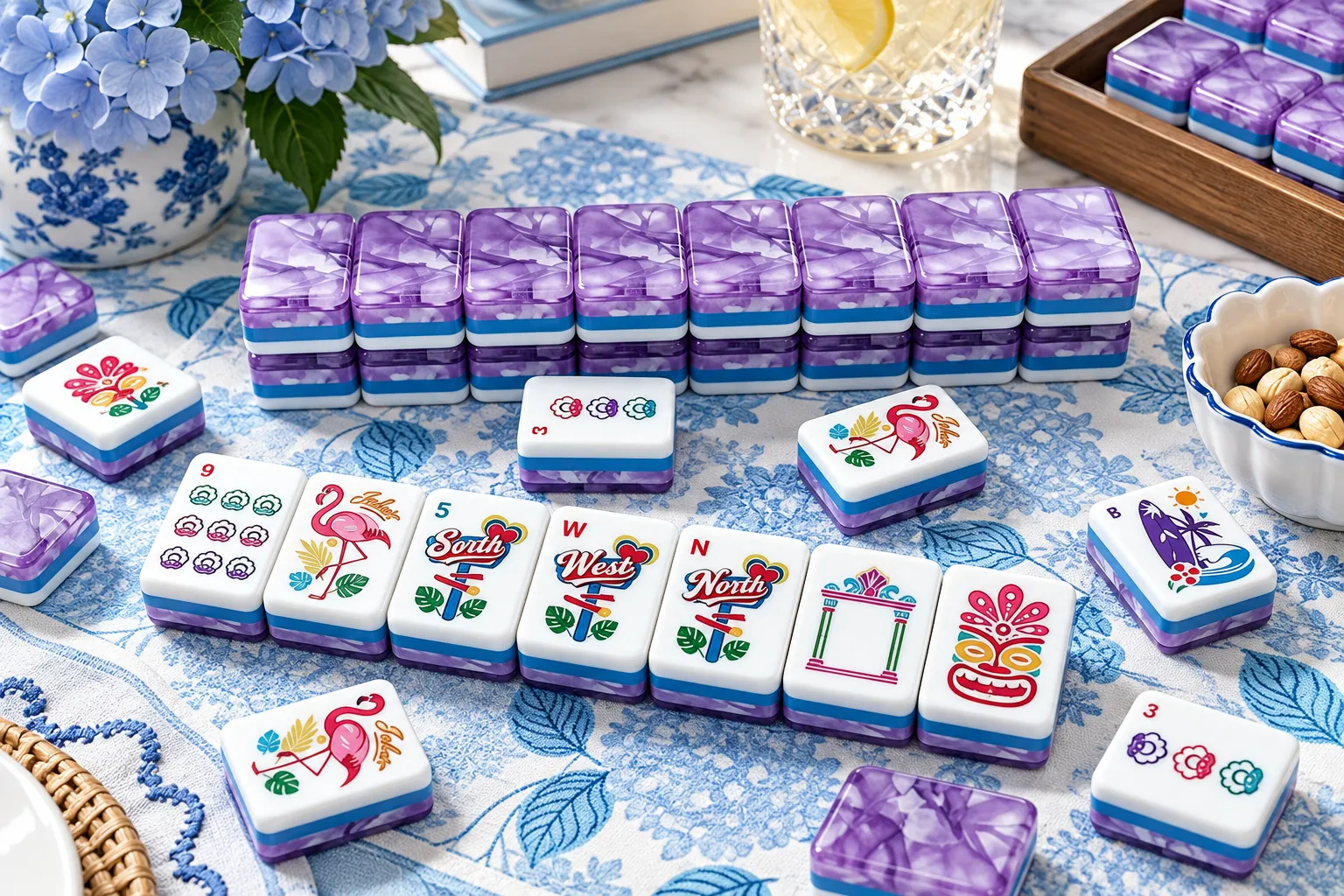
- Layered designs
- Bright finishes
This can be useful for American Mahjong sets, lifestyle collections and gift-focused products.
3. Resin Mahjong Tiles
Resin can offer more flexibility for decorative effects depending on the production method.
Possible features may include:
- Custom colour effects
- Decorative layers
- Unique patterns
- Premium appearance
However, the final result depends heavily on the specific production process.
4. Compare Tile Weight
Different mahjong tile material options can create different weights.
A heavier tile may feel more substantial, but it can also increase:
- Set weight
- Carry case weight
- Master carton weight
- Shipping cost
Wholesale buyers should compare the weight of the complete set, not just one tile.
5. Consider Hand Feel
Material changes how a tile feels during play.
A tile may feel:
- Smooth
- Dense
- Lightweight
- Glossy
- Matte
The best mahjong tile material depends on the intended customer experience.
For premium products, physical sample comparison is especially useful.
6. Check Surface Finish Options
Different materials may support different finishes.
Possible options include:
- Glossy
- Matte
- Satin
- Frosted
- Polished
The finish should be tested together with the selected material.
A glossy acrylic tile can look very different from a glossy melamine tile.
7. Consider Scratch Visibility
Scratch visibility can vary by material and finish.
Transparent or glossy surfaces may show light scratches more easily.
Matte or opaque surfaces may hide small marks better.
During sample approval, inspect the mahjong tile material under strong and normal lighting.
8. Consider Transparency
If the product design requires:
- Clear backs
- Translucent colours
- Layered backs
acrylic may be a more suitable option.
Traditional opaque products may be better suited to melamine or other solid materials.
9. Consider Marbled Effects
Some custom Mahjong products use marbled backs.
The final appearance may vary slightly from tile to tile.
Before approving this mahjong tile material style, confirm how much natural variation is expected.
For some brands, variation is part of the design.
For others, consistency is more important.
10. Check Colour Matching
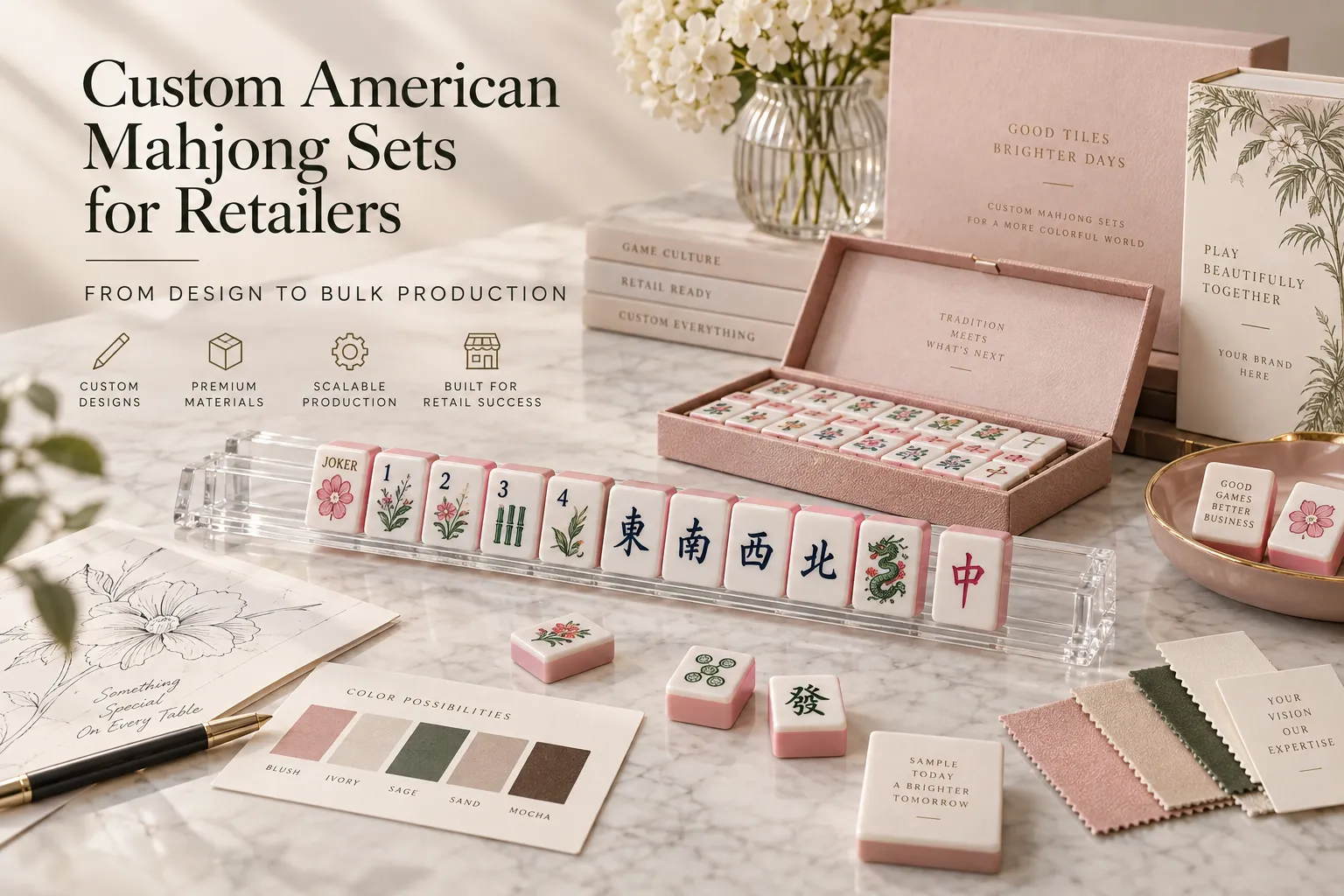
Custom colour projects should use clear references.
These may include:
- Pantone codes
- Physical samples
- Existing product colours
The same colour can look different depending on the mahjong tile material and finish.
This is why colour approval should happen on a physical sample.
11. Consider Tile Thickness
Material selection can affect the final thickness of the tile.
This is important for:
- Rack compatibility
- Storage trays
- Packaging
- Hand feel
If the product uses layered construction, confirm the total finished thickness.
12. Test Rack Compatibility
American Mahjong products often use racks.
After selecting the mahjong tile material, test the final tile sample with the actual rack.
Check:
- Groove fit
- Stability
- Viewing angle
- Spacing
A change in material or thickness can affect rack compatibility.
13. Consider Edge Quality
The edges should feel smooth and consistent.
Check for:
- Rough areas
- Sharp corners
- Visible seams
- Uneven polishing
The edge finish is especially important for premium products.
14. Check Corner Shape
Different materials can produce slightly different corner styles.
Possible shapes include:
- Square
- Softly rounded
- More curved
The final corner shape should match the intended product style and feel comfortable in the hand.
15. Consider Artwork Method
The mahjong tile material may affect how artwork is applied.
Possible methods include:
- Printing
- Engraving
- Colour-filled engraving
- Layered printing
- Inlay
The artwork method should be chosen together with the material.
16. Check Artwork Clarity
Detailed artwork should remain sharp on the final material.
Check:
- Fine lines
- Small numbers
- Logos
- Flowers
- Jokers
- Borders
If the artwork is too detailed for the material or production method, it may lose clarity.
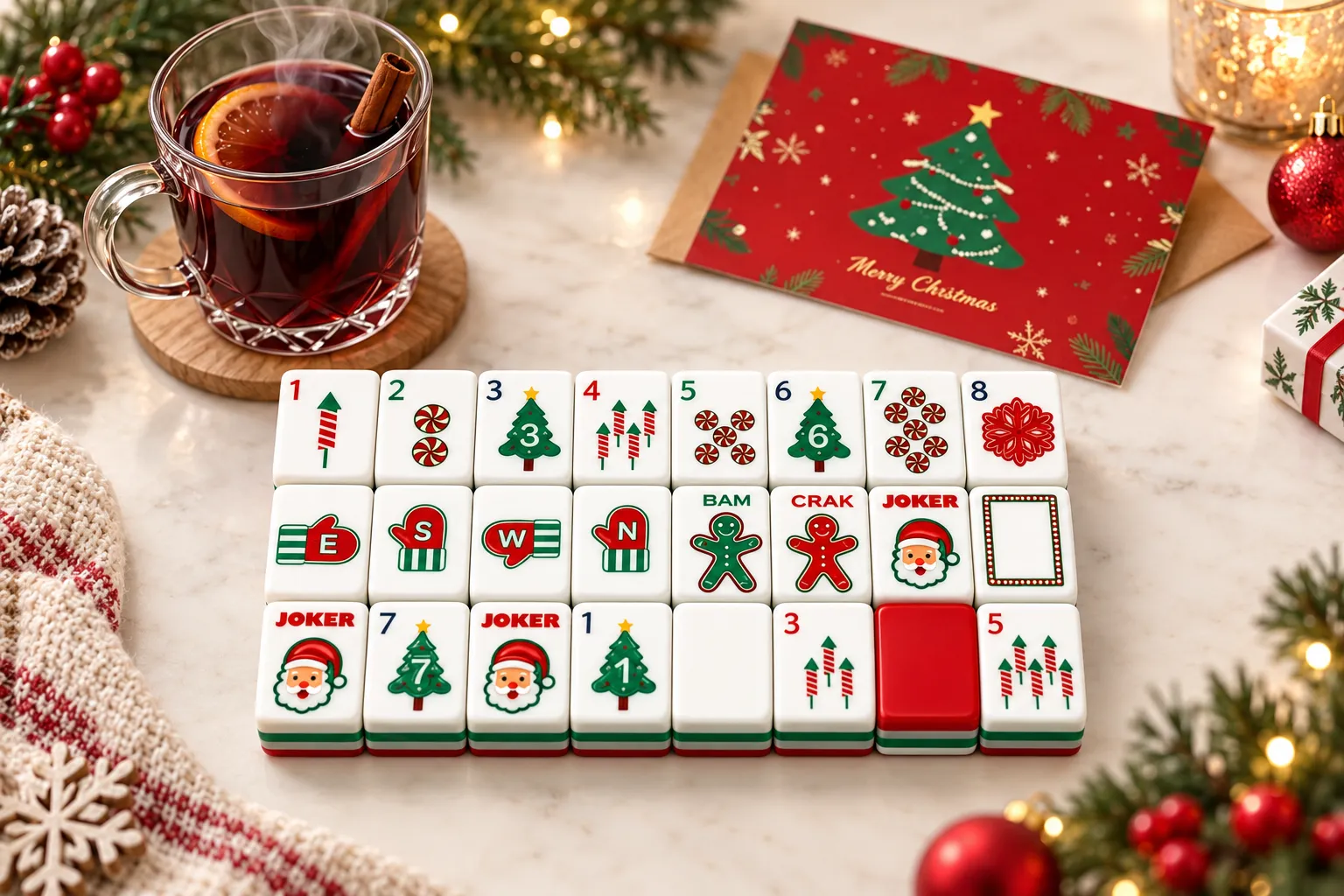
17. Consider Custom Tile Backs
The selected material can affect tile back options.
Custom backs may include:
- Solid colour
- Transparent colour
- Marbled effect
- Printed pattern
- Logo
The mahjong tile material should support the desired back design.
18. Check Tile Back Bonding
For layered construction, inspect the connection between the body and back layer.
Look for:
- Gaps
- Uneven seams
- Glue marks
- Misalignment
This is especially important for acrylic-backed tiles.
19. Consider Durability
Wholesale buyers should think about how often the product will be used.
For example:
Club Use
May require:
- Strong durability
- Easy cleaning
- Consistent dimensions
Gift Products
May prioritise:
- Appearance
- Colour
- Premium finish
Travel Sets
May prioritise:
- Lower weight
- Compact size
The right mahjong tile material depends on the product purpose.
20. Consider Cleaning
Different materials may have different care requirements.
Ask whether the tiles should be:
- Wiped with a dry cloth
- Wiped with a damp cloth
- Avoided with alcohol-based cleaners
Care instructions can be included with the final retail product.
21. Consider American Mahjong
American Mahjong products often place more emphasis on:
- Decorative tile backs
- Flowers
- Jokers
- Colour
- Lifestyle design
Acrylic and other decorative mahjong tile material options can work well for this market.
However, readability and rack compatibility should still come first.
22. Consider Traditional Mahjong Markets
Some markets may prefer more traditional opaque tiles.
In these cases, buyers may prioritise:
- Durability
- Classic appearance
- Consistent weight
- Traditional colour combinations
Material choice should match local customer expectations.
23. Match Material to Product Positioning
Different materials can support different retail levels.
Entry-Level
Practical material with standard colours and finish.
Mid-Range
Improved finish, more colour options and better packaging.
Premium
Decorative mahjong tile material, custom backs, custom artwork and upgraded packaging.
The material should match the expected retail price.
24. Think About Packaging Weight
Heavy tiles require stronger packaging.
When selecting mahjong tile material, consider:
- Box strength
- Tray strength
- Handle strength
- Master carton weight
A premium heavy set may need more robust packaging.
25. Think About Shipping Cost
Shipping cost can increase significantly with heavier materials.
Ask for:
- Net weight per set
- Gross weight per set
- Units per carton
- Carton dimensions
The cheapest tile material is not always the cheapest option once freight is included.
26. Confirm MOQ
MOQ may vary by material.
Standard materials and colours may support lower quantities.
Special mahjong tile material options may require:
- Higher MOQ
- Special colour runs
- Additional setup
- New tooling
Confirm this before finalising the design.
27. Understand Sample Cost
Custom material samples may require extra development cost.
Possible charges may include:
- Colour matching
- Material preparation
- Tooling
- Printing setup
- Sample production
Ask what is included before approving development.
28. Request Physical Samples
A physical sample is one of the best ways to compare mahjong tile material options.
Check:
- Weight
- Feel
- Colour
- Finish
- Transparency
- Thickness
- Edge quality
Photos alone cannot fully show how the material feels.
29. Compare Materials Side by Side
If you are unsure which material to choose, request multiple sample options.
For example:
- Melamine
- Acrylic
- Resin
Compare them under the same lighting and with the same tile dimensions.
This makes differences easier to judge.
30. Keep the Approved Sample
Once the material is approved, keep the final physical sample as a reference.
This can help compare future mass production with the agreed mahjong tile material and finish.
Mahjong Tile Material Wholesale Checklist
Before confirming production, check:
- Material type
- Weight
- Thickness
- Surface finish
- Colour
- Transparency
- Tile back
- Artwork quality
- Edge finish
- Rack compatibility
- Packaging weight
- MOQ
- Sample approval
Working With HUHU Mahjong
HUHU Mahjong works with retailers, distributors, clubs and private-label brands developing Mahjong products for international markets.
Buyers can discuss:
- Mahjong tile material
- Tile size
- Tile backs
- Custom colours
- Custom artwork
- Surface finish
- Racks
- Packaging
- MOQ
- Samples
Available materials and customisation options depend on the final product design and order quantity.
For custom projects, final artwork may need to be supplied in Adobe Illustrator .AI format.
Final Thoughts
Choosing the right mahjong tile material requires a balance between appearance, usability and cost.
Wholesale buyers should consider:
- Weight
- Durability
- Finish
- Colour
- Thickness
- Rack compatibility
- Packaging
- Shipping cost
- MOQ
The best approach is to compare physical samples before mass production.
A carefully selected mahjong tile material can help create a product that looks right, feels comfortable and fits the intended retail market.
About the Author
HUHU Team
We share industry insights, product knowledge, and manufacturing updates to help global clients better understand mahjong production and OEM solutions.