OEM/ODM MANUFACTURING FOR GLOBAL BRANDS
- View Our Alibaba Store
- info@huhumahjong.com
- +86 13326907761
What Wholesale Buyers Should Confirm Before Custom Mahjong Production
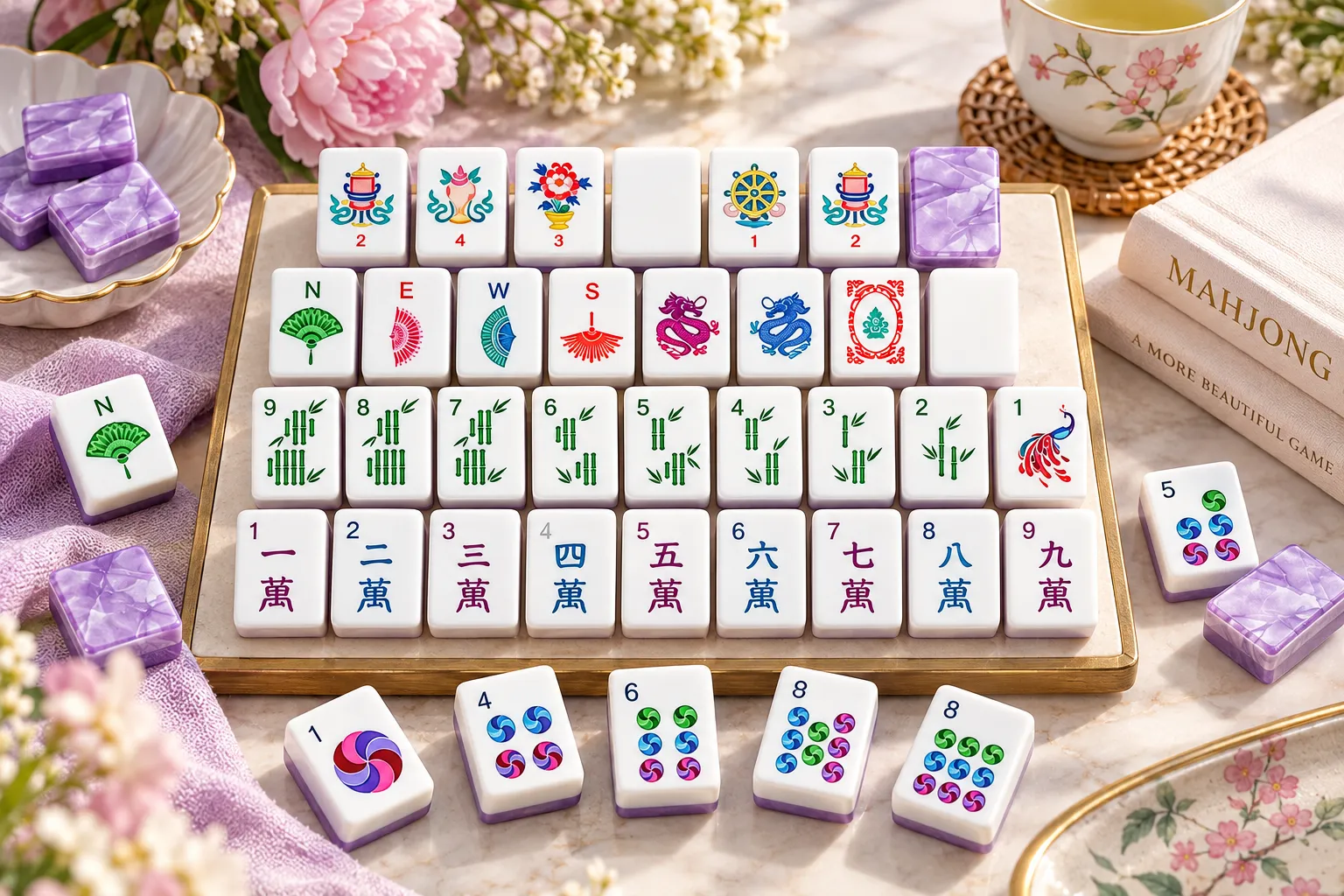
Custom Mahjong production involves more than choosing a colour or adding a logo.
For retailers, distributors, clubs and private-label brands, a successful custom project depends on confirming the right specifications before production begins.
From tile size and artwork to packaging, MOQ and lead time, every detail should be agreed clearly in advance.
This guide explains what wholesale buyers should confirm before starting custom mahjong production.
1. Confirm the Mahjong Version
The first step in custom mahjong production is deciding which type of Mahjong the product is designed for.
Common versions include:
- American Mahjong
- Chinese Mahjong
- Hong Kong Mahjong
- Japanese Riichi Mahjong
- Taiwanese Mahjong
Different versions may require different:
- Tile quantities
- Jokers
- Flowers
- Winds
- Dragons
- Racks
- Accessories
The product configuration should match the intended market.
2. Confirm the Complete Tile Configuration
Before artwork begins, confirm exactly how many of each tile are required.
The specification should list:
- Dots
- Bamboo
- Characters
- Winds
- Dragons
- Flowers
- Jokers
- Blank tiles
- Spare tiles
This is especially important for custom mahjong production, because one missing or incorrect tile can affect the usability of the whole set.
3. Confirm Mahjong Tile Size
The exact tile dimensions should be confirmed before final artwork and packaging.
Buyers should provide or approve:
- Height
- Width
- Thickness
Tile size can affect:
- Artwork layout
- Rack compatibility
- Set weight
- Packaging dimensions
- Shipping cost
Do not rely only on terms such as “small”, “medium” or “large”.
Use exact measurements in millimetres.
4. Confirm Tile Material
Different materials can create different appearances and price levels.
Depending on the project, options may include:
- Melamine
- Acrylic
- Resin
The selected material affects:
- Weight
- Surface finish
- Colour
- Durability
- Production cost
For custom mahjong production, it is useful to compare physical samples before final approval.
5. Confirm Tile Colour
The tile body and tile back colours should be clearly defined.
This may include:
- Standard factory colours
- Custom colours
- Transparent colours
- Marbled effects
- Layered colours
If exact brand colours are important, provide Pantone or other colour references.
Screen images alone may not accurately represent the final production colour.
6. Confirm the Tile Back Design
Tile backs can be an important part of a custom product.
Possible options include:
- Solid colour
- Custom logo
- Printed pattern
- Marbled effect
- Transparent layer
- Decorative artwork
The tile back design should be confirmed before sample production.
7. Prepare Final Artwork
Artwork is one of the most important parts of custom mahjong production.
Reference files such as JPG or PNG can be useful during discussion, but final production artwork may need to be supplied in Adobe Illustrator .AI format.
Final artwork should clearly show:
- Tile face
- Tile category
- Tile number
- Artwork size
- Colour
- Front design
- Back design
All final files should be organised and easy to review.
8. Outline Fonts
If the artwork contains fonts, convert them to outlines before sending the final production file.
This helps avoid:
- Missing fonts
- Font replacement
- Layout changes
Before outlining fonts, check all spelling and text carefully.
Once converted, text is more difficult to edit.
9. Use Clear File Names
Large projects can include many artwork files.
Use clear file names such as:
Dots_1-9.ai
Bamboo_1-9.ai
Characters_1-9.ai
Winds.ai
Dragons.ai
Flowers.ai
Jokers.ai
Clear file organisation can reduce mistakes during custom mahjong production.
10. Confirm Artwork Position
The artwork should be positioned consistently on each tile.
Check:
- Top and bottom spacing
- Left and right spacing
- Border position
- Number position
- Logo position
A design may look correct on a computer screen but still need adjustment when applied to the actual tile size.
11. Check Number and Symbol Accuracy
Every tile should be reviewed carefully.
Check:
- Number
- Suit
- Colour
- Direction
- Symbol
- Quantity
For example, make sure:
- 5 really shows five symbols
- 7 is arranged correctly
- 8 contains eight symbols
- 9 contains nine symbols
This is critical in custom Mahjong artwork.
12. Confirm Joker Design
American Mahjong projects may include custom Jokers.
Confirm:
- Number of Jokers
- Joker artwork
- Text
- Colour
- Border style
The Joker should be easy to recognise while still matching the overall set design.
13. Confirm Flower Tiles
Flower tiles often use more detailed artwork.
Before production, confirm:
- Number of Flower tiles
- Individual artwork
- Colour
- Labels or numbers
- Orientation
Each Flower should match the approved design.
14. Confirm Winds and Dragons
Winds and Dragons should be checked separately.
Confirm:
- East
- South
- West
- North
- Red Dragon
- Green Dragon
- White Dragon
If English letters are included, confirm their placement and spelling.
15. Confirm Rack Requirements
If racks are included, confirm:
- Rack length
- Material
- Colour
- Groove size
- Pusher design
The rack should be tested with the final tile dimensions.
For American Mahjong, rack compatibility is especially important.
16. Confirm Pusher Design
Pushers should be confirmed together with the racks.
Check:
- Length
- Colour
- Connection method
- Storage method
- Compatibility
A pusher should not interfere with the tile groove.
17. Confirm Other Accessories
The final specification should list all accessories.
These may include:
- Dice
- Wind indicators
- Mahjong mat
- Storage trays
- Reference cards
- Rule booklet
- Carry case
This helps avoid misunderstandings later.
18. Confirm Packaging Type
Packaging should be planned before production is finalised.
Possible options include:
- Printed cardboard box
- Rigid box
- Fabric bag
- Carry case
- Wooden box
The packaging needs to fit the complete product, not just the tiles.
19. Confirm Internal Packaging
Internal trays and compartments should be designed around the final components.
Check space for:
- Tiles
- Racks
- Pushers
- Dice
- Printed materials
- Other accessories
Good internal packaging helps protect the product during shipping.
20. Prepare Packaging Artwork
Custom packaging artwork may also need to be supplied in .AI format.
Confirm:
- Dieline
- Bleed
- Safe area
- Logo
- Product name
- Colours
- Barcode
- Required text
Packaging files should be approved separately from tile artwork.
21. Confirm Logo Placement
If the product includes a logo, confirm exactly where it will appear.
Possible positions include:
- Tile backs
- Jokers
- Racks
- Pushers
- Mahjong mat
- Carry case
- Outer packaging
Logo size and colour should be included in the approved artwork.
22. Confirm the Customisation Scope
Not every custom order requires the same amount of development.
A buyer may want:
- Logo only
- Custom tile backs
- Custom Jokers
- Full tile face artwork
- Custom racks
- Custom packaging
- Complete private-label development
The MOQ and quotation may vary depending on the customisation scope.
23. Confirm MOQ
MOQ should be confirmed before final development.
For custom mahjong production, MOQ may depend on:
- Material
- Colour
- Artwork
- Tile backs
- Packaging
- Accessories
- Tooling
Some existing fixed-colour products may support a lower MOQ, while fully customised projects usually require a higher quantity.
24. Confirm Sample Cost
Custom samples are normally part of a paid development process.
The sample cost may depend on:
- Artwork
- Printing
- Engraving
- Colour matching
- Packaging
- Accessories
Ask what is included in the sample charge before proceeding.
25. Confirm Sample Lead Time
Sample production can take time.
The schedule may include:
- Artwork review
- File adjustment
- Sample production
- Shipping
- Buyer feedback
- Revision
Build enough time into the project before planning a launch date.
26. Approve a Physical Sample
A physical sample should normally be approved before mass production.
Check:
- Tile size
- Tile weight
- Material
- Colour
- Artwork
- Tile back
- Rack fit
- Packaging
- Accessories
Do not approve mass production based only on digital images.
27. Compare the Sample With the Final Artwork
The physical sample should be compared directly with the approved production file.
Check:
- Artwork size
- Position
- Colour
- Number
- Symbol
- Orientation
Any required changes should be completed before final approval.
28. Confirm Final Sample Version
If several revisions are made, clearly identify which sample is the final approved version.
For example:
Final Sample – Version 3
This helps prevent an older design from being used by mistake.
29. Avoid Artwork Changes After Approval
Once mass production begins, artwork changes can cause delays and additional cost.
Before approval, make sure:
- All text is final
- All colours are final
- Tile quantities are correct
- Packaging is correct
- Logo placement is correct
A careful final review can save time later.
30. Confirm Production Lead Time
Before placing the order, confirm the expected mass production schedule.
Lead time may depend on:
- Order quantity
- Customisation level
- Packaging
- Material
- Production season
Do not assume every custom project has the same production time.
31. Confirm Required Delivery Date
Tell the supplier if you have a target date.
For example:
- Retail launch
- Exhibition
- Holiday season
- Distributor delivery
- Promotional event
The required delivery date should be discussed before the order is confirmed.
32. Confirm Shipping Destination
Provide the final delivery location early.
This can affect:
- Freight method
- Shipping cost
- Carton requirements
- Delivery time
For international orders, provide the destination country and city when requesting a quotation.
33. Confirm Packaging Dimensions
Once packaging is finalised, request:
- Individual package dimensions
- Net weight
- Gross weight
- Units per carton
- Master carton dimensions
- Master carton weight
These details are useful for calculating landed cost.
34. Confirm Shipping Method
Depending on the quantity and delivery schedule, shipping may include:
- Express courier
- Air freight
- Sea freight
The best method depends on:
- Order size
- Weight
- Volume
- Required delivery date
35. Confirm Payment Terms
Before production begins, both parties should clearly understand:
- Deposit requirement
- Balance payment
- Payment method
- Payment timing
Keep payment terms documented with the order.
36. Confirm the Final Quotation
The final quotation should match the approved project scope.
Check that it includes the correct:
- Tile specification
- Quantity
- Customisation
- Accessories
- Packaging
- Sample details
- Shipping terms if applicable
Do not rely on an early estimate after the design has changed.
37. Confirm Quality Inspection Requirements
For larger wholesale orders, define what should be checked before shipment.
Possible inspection points include:
- Tile quantity
- Tile dimensions
- Printing
- Colour
- Rack quantity
- Packaging
- Accessories
- Carton condition
This can help identify problems before shipping.
38. Keep One Final Specification Sheet
It is useful to create one final document containing all approved details.
The final specification sheet can include:
- Product name
- Tile size
- Material
- Tile configuration
- Artwork version
- Colours
- Accessories
- Packaging
- Quantity
- Delivery details
This becomes the main reference for custom mahjong production.
Custom Mahjong Production Checklist
Before approving production, confirm:
- Mahjong version
- Tile configuration
- Tile dimensions
- Material
- Colours
- Tile backs
- Artwork
- Logo
- Racks
- Pushers
- Accessories
- Packaging
- MOQ
- Sample
- Production lead time
- Delivery date
- Shipping destination
- Payment terms
- Quality inspection requirements
Working With HUHU Mahjong
HUHU Mahjong works with retailers, distributors, clubs and private-label brands developing Mahjong products for international markets.
Custom projects can include:
- Custom Mahjong tiles
- Custom tile backs
- Custom Jokers
- Custom racks
- Mahjong mats
- Private-label packaging
- Custom accessories
The MOQ and quotation depend on the specific customisation requirements.
For final custom production, artwork may need to be supplied in Adobe Illustrator .AI format.
Final Thoughts
Successful custom mahjong production starts with clear specifications.
The more information confirmed before production, the easier it is to avoid:
- Artwork mistakes
- Incorrect tile quantities
- Colour issues
- Packaging problems
- Production delays
Wholesale buyers should confirm the complete product, approve a physical sample and keep one final specification sheet before mass production begins.
A clear approval process can make custom mahjong production more efficient and help ensure the final product matches the original design requirements.
About the Author
HUHU Team
We share industry insights, product knowledge, and manufacturing updates to help global clients better understand mahjong production and OEM solutions.