OEM/ODM MANUFACTURING FOR GLOBAL BRANDS
- View Our Alibaba Store
- info@huhumahjong.com
- +86 13326907761
Mahjong Product Sourcing Guide for Retailers and Distributors
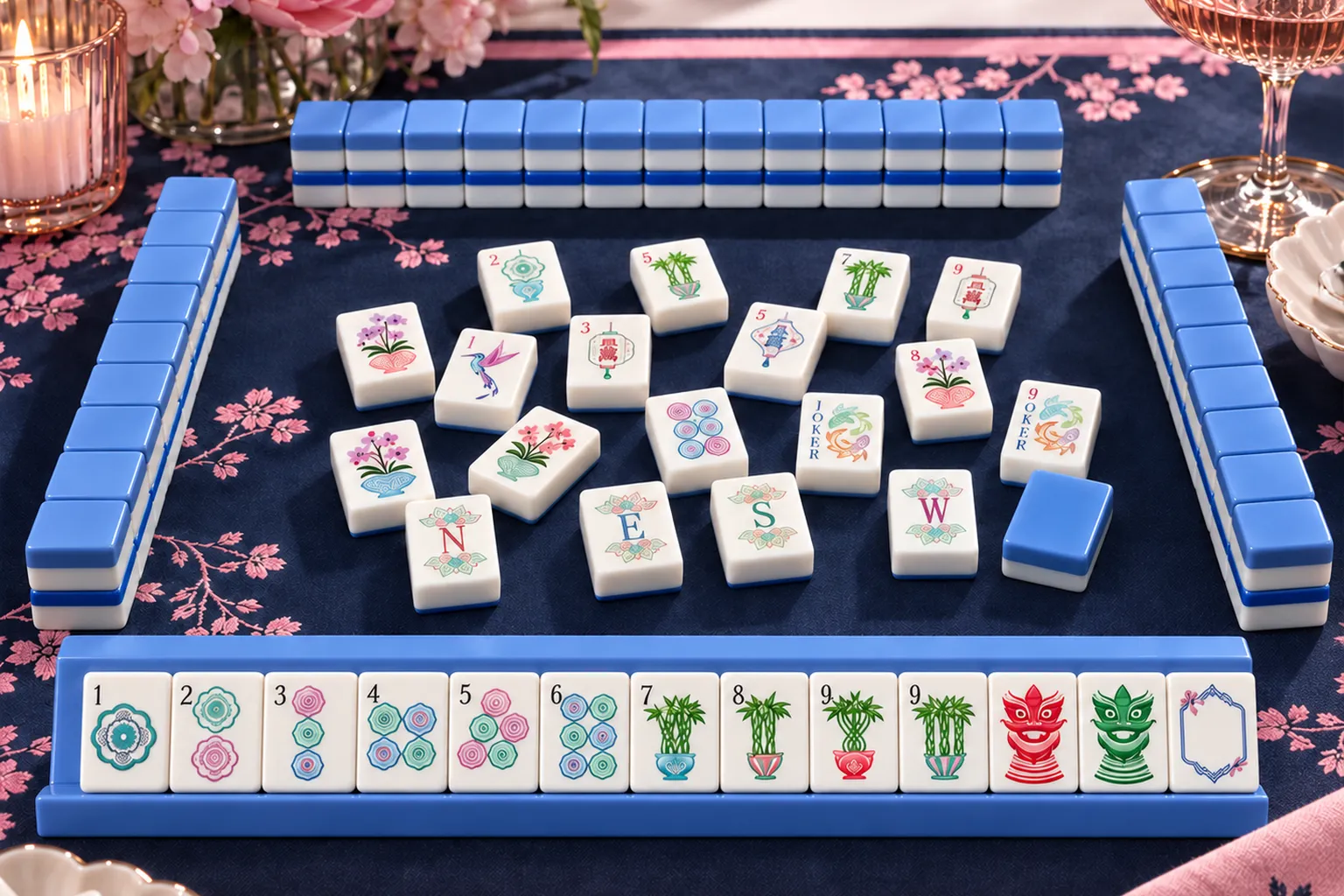
For retailers, distributors and private-label brands, sourcing mahjong products involves much more than comparing unit prices.
Tile configuration, materials, accessories, packaging, MOQ, samples and shipping all affect the final product and landed cost.
A clear sourcing process can help buyers reduce unnecessary revisions, control costs and build a product range that suits the intended market.
This guide explains the main points B2B buyers should consider before placing a wholesale order.
1. Identify Your Target Market
Before requesting a quotation, decide which type of game your customers play.
Common versions include:
- American Mahjong
- Chinese Mahjong
- Hong Kong Mahjong
- Japanese Riichi Mahjong
- Taiwanese Mahjong
Each version may require different tile quantities, symbols and accessories.
For example, American Mahjong products may include Jokers, racks and pushers, while other versions may use a different configuration.
2. Confirm the Complete Tile Configuration
A supplier needs to know exactly what should be included in the set.
Confirm the quantity of:
- Dots
- Bamboo
- Characters
- Winds
- Dragons
- Flowers
- Jokers
- Blank tiles
- Spare tiles
Do not rely only on the phrase “standard set.”
A written configuration reduces misunderstandings and makes quotation and production more accurate.
3. Choose the Right Tile Size
Tile dimensions can affect:
- Handling
- Readability
- Rack compatibility
- Packaging
- Product weight
- Shipping cost
Wholesale buyers should confirm:
- Height
- Width
- Thickness
Using an existing factory size can sometimes reduce development cost and simplify production.
4. Compare Tile Materials
Material affects the appearance, weight and durability of the finished product.
Possible options may include:
- Melamine
- Acrylic
- Resin
Acrylic can be useful for colourful or translucent designs, while other materials may be better suited to traditional or high-volume products.
Physical samples are useful when comparing options.
5. Consider Tile Weight
Tile weight influences both customer experience and freight cost.
A heavier set may feel more substantial, but it can also increase:
- Carry case weight
- Master carton weight
- Freight charges
Ask the supplier for the net and gross weight of the complete set rather than judging only one tile.
6. Review the Artwork Carefully
Artwork should be clear, accurate and easy to recognise.
Check:
- Numbers
- Suit symbols
- Colours
- Winds
- Dragons
- Flowers
- Jokers
For custom mahjong products, every tile design should be reviewed before sample production.
Incorrect symbols or quantities can affect the usability of the entire set.
7. Decide Between Standard and Custom Products
Standard products may be suitable for buyers who want:
- Faster ordering
- Existing designs
- Lower development requirements
- Market testing
Custom products may be better for brands that need:
- Exclusive artwork
- Custom colours
- Private-label branding
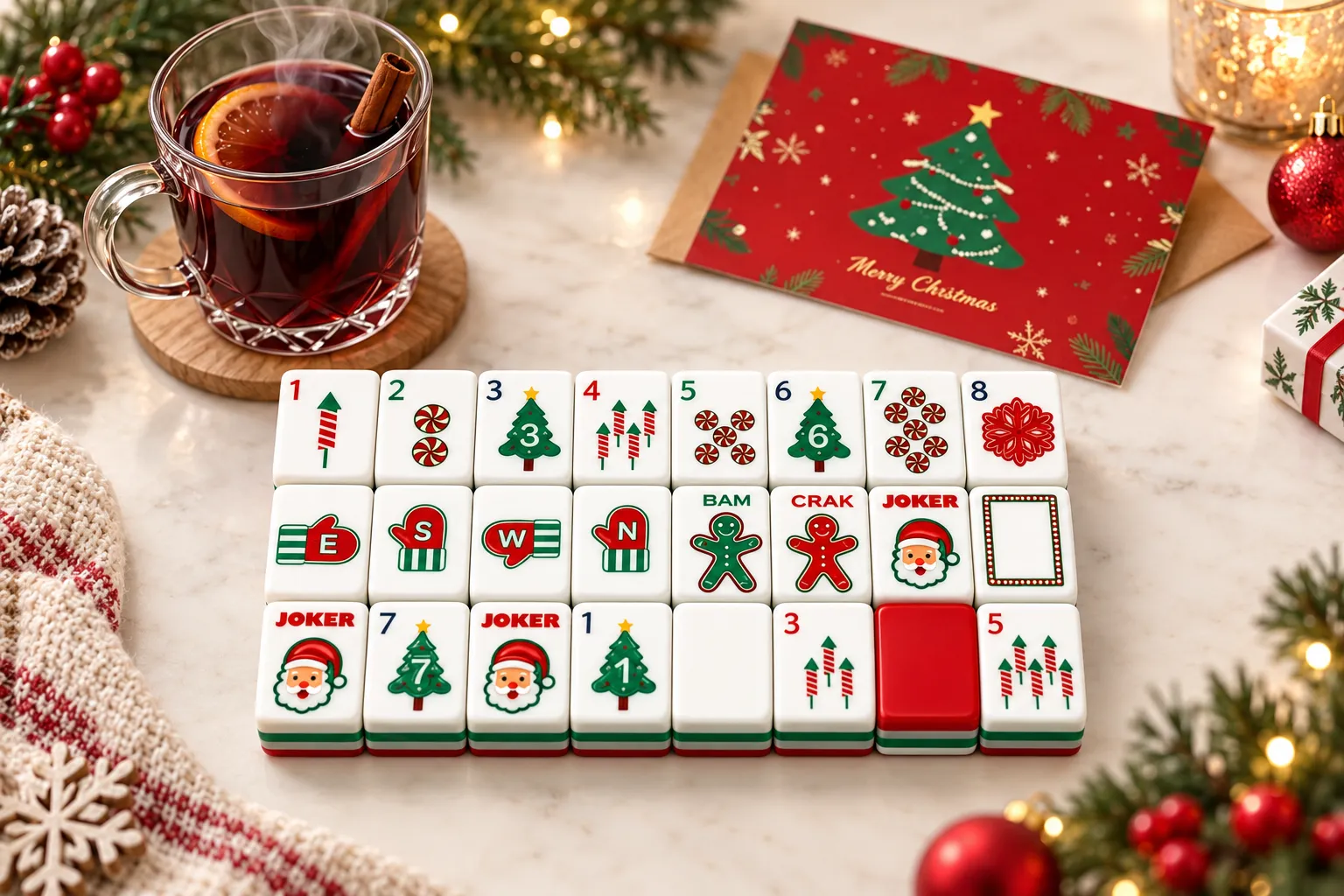
- Custom Flowers and Jokers
- Custom tile backs
The right choice depends on order quantity, budget and launch strategy.
8. Prepare Custom Artwork Properly
Reference images such as JPG or PNG files can help communicate an idea during early discussions.
For final custom production, artwork may need to be provided in Adobe Illustrator .AI format.
Final files should clearly show:
- Tile face artwork
- Tile backs
- Colours
- Quantities
- Final dimensions
Fonts should also be outlined where required.
Proper artwork preparation can reduce delays.
9. Choose the Tile Back
Tile backs can significantly influence the overall look of the product.
Options may include:
- Solid colours
- Transparent backs
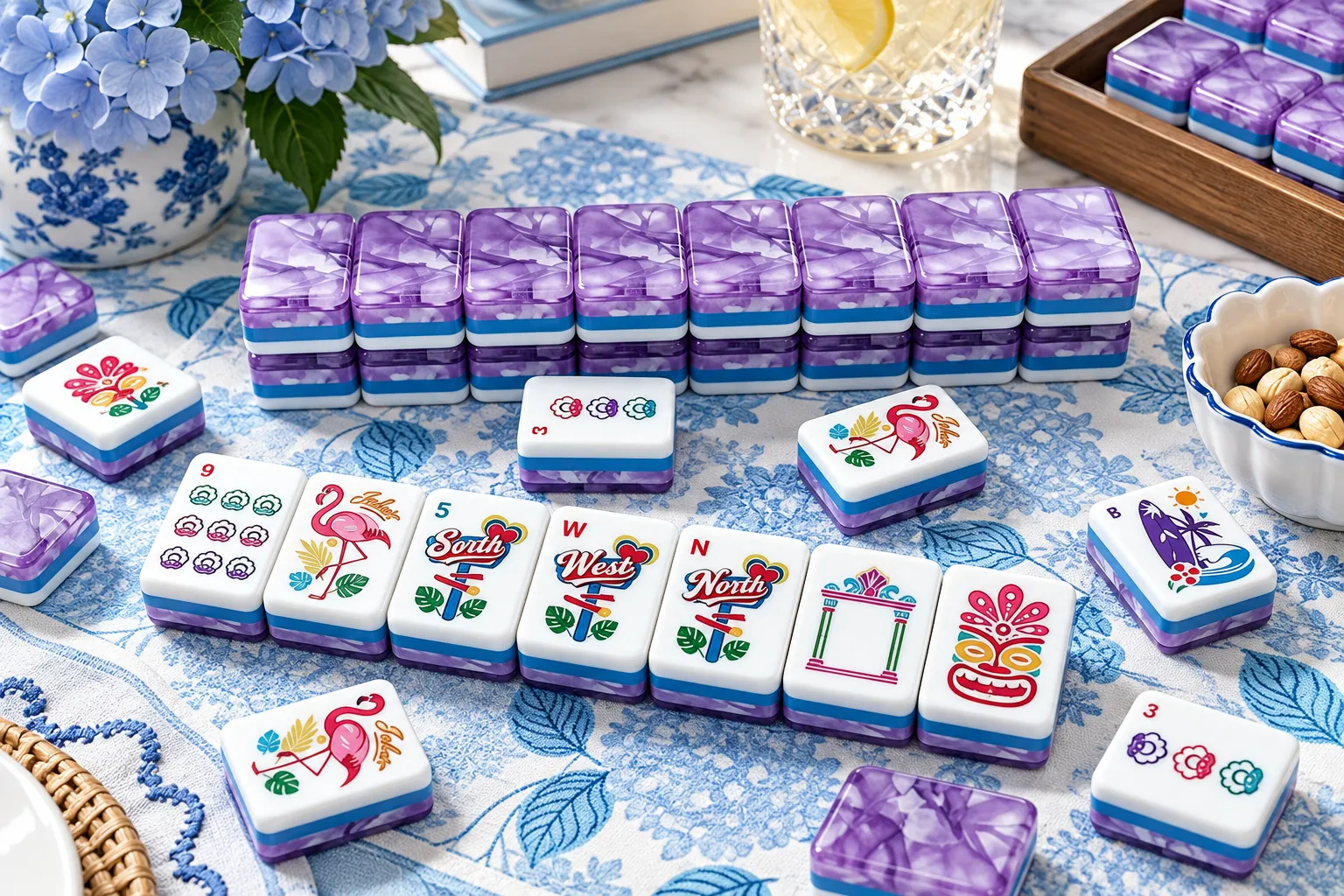
- Marbled backs
- Layered colours
- Custom graphics
- Logos
The backs should remain visually consistent so that individual tiles cannot be identified when face down.
10. Coordinate the Colour Palette
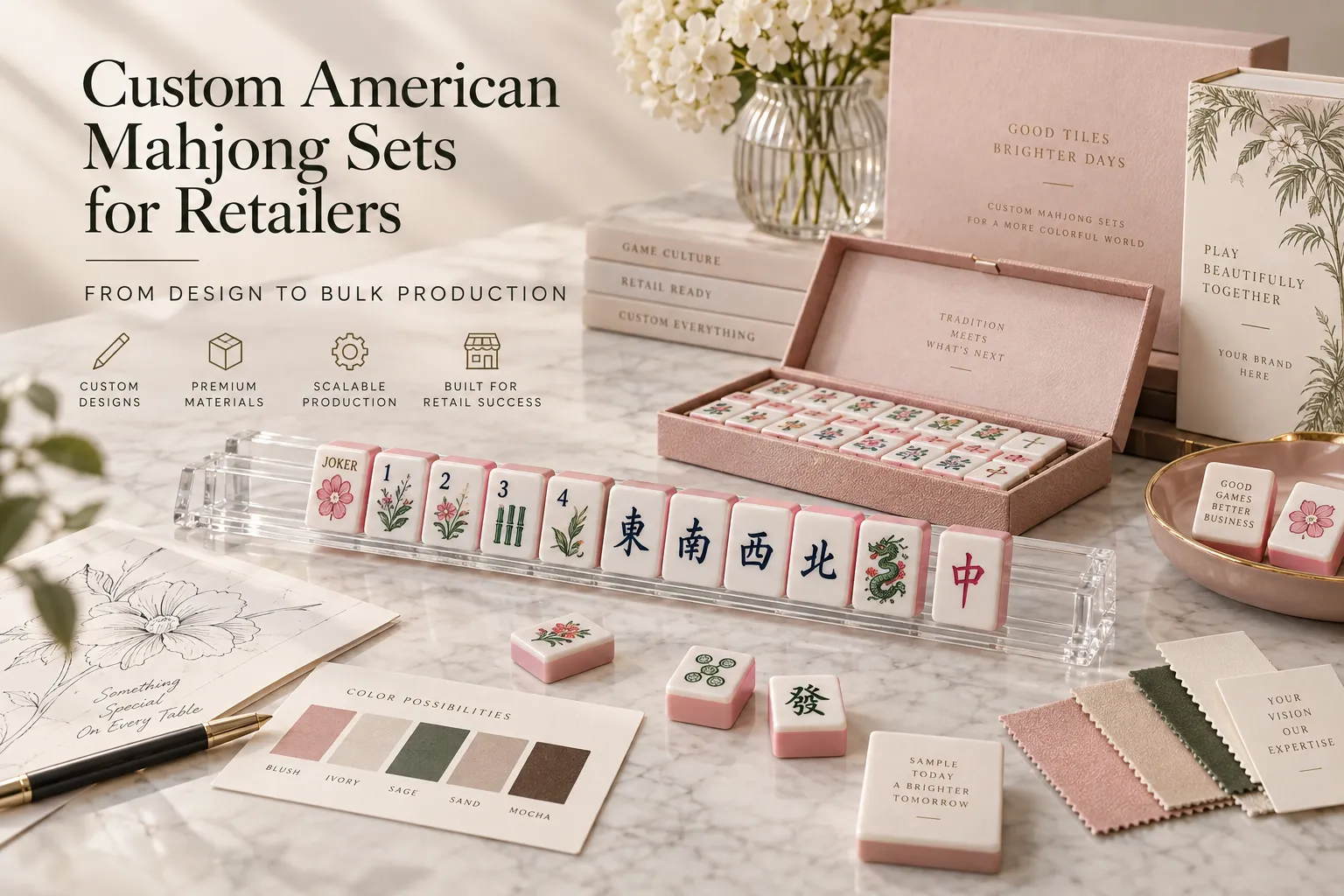
Private-label buyers may want the colours of the tiles to coordinate with:
- Racks
- Pushers
- Mahjong mats
- Carry cases
- Packaging
Using a limited colour palette often creates a cleaner product than using too many unrelated colours.
For precise colour matching, a physical sample should be approved.
11. Select Suitable Racks
American Mahjong products commonly use racks.
Check:
- Rack length
- Groove width
- Groove depth
- Material
- Colour
- Pusher compatibility
The final production tiles should be tested directly with the intended rack.
12. Decide Which Accessories Are Necessary
A wholesale set may include:
- Racks
- Pushers
- Dice
- Mahjong mat
- Wind indicators
- Reference cards
- Rule booklet
- Carry case
More accessories can increase perceived value, but they also increase cost, weight and packaging volume.
Include accessories that make sense for the target customer.
13. Plan Packaging Around the Complete Product
Packaging should be designed after the full product configuration is confirmed.
It needs to fit:
- Tiles
- Racks
- Pushers
- Dice
- Printed materials
- Other accessories
Poorly planned packaging can increase freight cost or allow pieces to move during transport.
14. Consider the Sales Channel
Retail and ecommerce may require different packaging priorities.
Physical retail may focus on:
- Shelf presentation
- Branding
- Barcode placement
Ecommerce may require stronger protection against:
- Drops
- Compression
- Courier handling
The packaging should match how the product will actually be sold.
15. Confirm MOQ Early
MOQ can vary depending on:
- Material
- Colour
- Artwork
- Tile back
- Packaging
- Accessories
- Tooling
Existing designs or fixed-colour products may sometimes support lower quantities than fully customised projects.
Confirm MOQ before investing heavily in artwork development.
16. Understand Customisation Costs
Customisation is normally a paid service.
Possible charges may include:
- Artwork setup
- Colour matching
- Printing
- Engraving
- Sample development
- Custom packaging
- Tooling
A detailed product brief helps the supplier provide a more accurate quotation.
17. Request a Physical Sample
Before approving mass production, review a physical sample.
Check:
- Tile dimensions
- Weight
- Artwork
- Colours
- Tile backs
- Surface finish
- Rack fit
- Accessories
- Packaging
A physical sample can reveal issues that are difficult to see in digital images.
18. Compare the Sample With the Specification
The approved sample should match the final product specification.
Compare:
- Material
- Dimensions
- Artwork
- Colour
- Tile quantity
- Accessories
- Packaging
Any necessary changes should be completed before mass production begins.
19. Confirm Production Lead Time
A custom project may include several stages:
- Requirement confirmation
- Artwork review
- Sample production
- Sample shipping
- Revisions
- Mass production
- Quality inspection
- Shipping
Custom projects generally require more time than existing standard products.
Plan backwards from the intended launch date.
20. Provide the Shipping Destination
When requesting a quotation, provide the destination country and city if possible.
Shipping cost depends on:
- Quantity
- Product weight
- Carton dimensions
- Freight method
This information helps create a more realistic landed-cost estimate.
21. Calculate Landed Cost
Do not compare suppliers only by unit price.
The total cost may include:
- Product
- Customisation
- Packaging
- Freight
- Import duties
- Taxes
- Warehouse receiving
- Fulfilment
A slightly higher-priced product may still have a better landed cost if the packaging and shipping are more efficient.
22. Inspect the Order Before Shipment
Quality inspection should include:
- Tile quantity
- Dimensions
- Artwork
- Colour
- Surface finish
- Tile backs
- Accessories
- Packaging
For larger wholesale orders, random checks across multiple cartons provide a better view of production consistency.
23. Plan for Replacement Pieces
Retailers may want to keep spare:
- Jokers
- Flowers
- Numbered tiles
- Custom pieces
For private-label mahjong products, ordering replacement pieces together with the original production run can make after-sales service easier.
24. Keep Final Production Records
For successful products, keep copies of:
- Final
.AIartwork - Approved colours
- Tile dimensions
- Packaging artwork
- Accessory specifications
- Approved sample information
This can make future reorders faster and more consistent.
25. Build a Product Range
Retailers do not need to rely on one product only.
A simple range might include:
Entry-Level
Practical tiles and simple packaging.
Mid-Range
Upgraded racks, colours and storage.
Premium
Custom artwork, decorative tile backs and premium packaging.
Offering different levels gives customers more choice and helps retailers test demand at several price points.
Mahjong Sourcing Checklist
Before placing a wholesale order, confirm:
- Game version
- Tile configuration
- Tile dimensions
- Material
- Weight
- Artwork
- Tile back
- Colour
- Racks
- Accessories
- Packaging
- MOQ
- Sample requirements
- Production lead time
- Shipping destination
- Inspection requirements
Working With HUHU Mahjong
HUHU Mahjong works with retailers, distributors, clubs and private-label brands sourcing mahjong products for international markets.
Projects can include:
- Standard tile sets
- Custom tile artwork
- Custom tile backs
- Custom Flowers and Jokers
- Racks and pushers
- Mahjong mats
- Carry cases
- Private-label packaging
MOQ and pricing depend on the product configuration and level of customisation.
For custom production, final artwork may need to be supplied in Adobe Illustrator .AI format.
Final Thoughts
Successful mahjong sourcing starts with a clear specification and realistic commercial plan.
Wholesale buyers should consider more than the factory unit price.
Material, tile size, artwork, accessories, packaging, freight and quality control all influence the final result.
The best approach is to define the requirements clearly, approve a physical sample and inspect the finished order before shipment.
A structured sourcing process can make future reorders easier and help retailers build a more consistent product range.
About the Author
HUHU Team
We share industry insights, product knowledge, and manufacturing updates to help global clients better understand mahjong production and OEM solutions.