OEM/ODM MANUFACTURING FOR GLOBAL BRANDS
- View Our Alibaba Store
- info@huhumahjong.com
- +86 13326907761
Mahjong Wholesale Order Quantity: How Much Should Retailers Buy First?
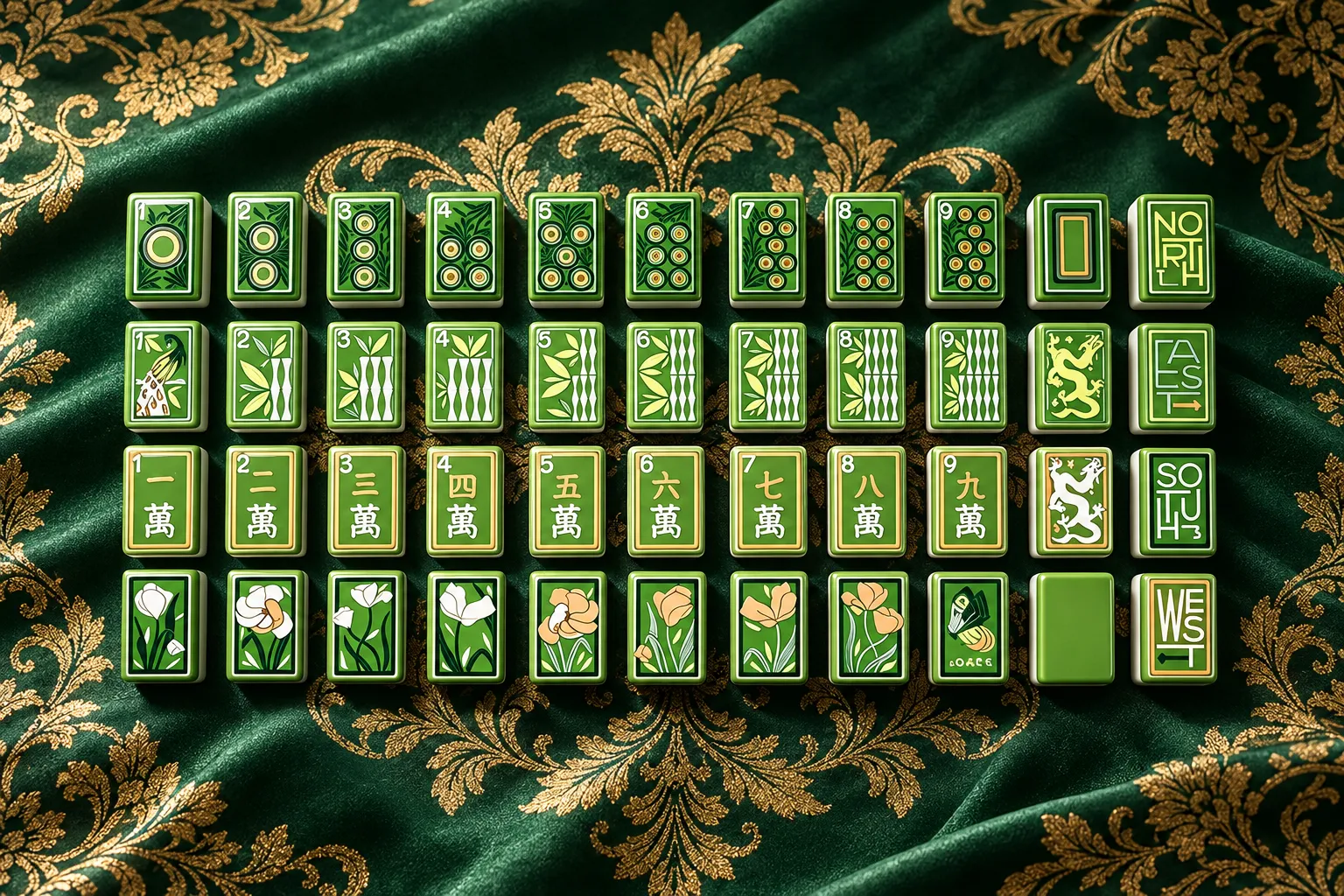
For retailers, distributors and private-label brands, deciding how much to buy in a first mahjong wholesale order can be difficult.
Ordering too little may lead to stockouts and missed sales. Ordering too much can tie up cash, increase storage costs and leave you with slow-moving inventory.
A successful mahjong wholesale order should balance MOQ, expected sales, lead time, product mix and available cash.
This guide explains how retailers can plan order quantities more carefully and reduce inventory risk.
Why Mahjong Wholesale Order Quantity Matters
The size of a mahjong wholesale order affects much more than unit price.
It can influence:
- Cash flow
- Inventory risk
- Freight cost
- Warehouse space
- Product variety
- Reorder timing
- Launch flexibility
A lower unit price is not always a better deal if the additional stock takes too long to sell.
1. Start With Your Sales Channel
Before deciding quantity, consider where the products will be sold.
Ecommerce
Online retailers may prefer a smaller initial order while testing customer demand.
Physical Retail
Stores may need enough units for shelf display plus additional stock in storage.
Distribution
Distributors supplying multiple shops may need a larger mahjong wholesale order.
Clubs and Events
Club or event buyers may have a fixed quantity requirement rather than ongoing retail demand.
Your order quantity should reflect the actual sales model.
2. Separate Test Orders From Full Launch Orders
A test order should not be planned the same way as a full product launch.
A test order helps you understand:
- Customer interest
- Best-selling colours
- Accepted retail price
- Packaging feedback
- Sales speed
Once you have reliable data, the next mahjong wholesale order can be larger and more targeted.
3. Consider Existing Products for Initial Testing
Existing designs can help retailers reduce risk.
They may allow you to test the market without immediately investing in:
- Custom artwork
- Custom colours
- New packaging
- Special tooling
Some existing fixed-colour products may also support lower quantities than fully customised products.
This can be useful for a first mahjong wholesale order.
4. Confirm MOQ Before Planning Inventory
MOQ should be confirmed early.
MOQ may depend on:
- Tile material
- Tile colour
- Artwork
- Tile backs
- Packaging
- Accessories
- Customisation level
A standard product and a custom product may have very different minimum quantities.
Do not finalise a purchasing plan until you understand the MOQ for the exact product you want.
5. Do Not Buy More Only for a Lower Unit Price
A larger mahjong wholesale order may reduce the cost per set, but that does not automatically make it more profitable.
Before increasing quantity, ask:
- How quickly can I sell the extra units?
- How much storage will they require?
- Is the design seasonal?
- Could customer preferences change?
- Will I need cash for advertising or other products?
A slightly higher unit price can sometimes be safer than excessive inventory.
6. Estimate Monthly Sales
If you already sell related products, review your sales history.
Estimate:
- Average monthly sales
- Peak periods
- Slow periods
- Promotional demand
If the product is completely new, use conservative assumptions.
A realistic forecast gives you a better starting point for your mahjong wholesale order.
7. Build a 30-Day Sales Forecast
Estimate how many sets you expect to sell during the first month.
Consider:
- Website traffic
- Conversion rate
- Existing customer base
- Advertising budget
- Retail locations
- Social media audience
Do not assume the launch will immediately reach its maximum sales potential.
8. Extend the Forecast to 60 and 90 Days
Next, estimate demand over 60 and 90 days.
This gives you a better view of whether the planned mahjong wholesale order is likely to sell within a reasonable period.
A retailer usually does not need to hold many months of inventory from the first day.
9. Understand Reorder Lead Time
Order quantity and lead time should be planned together.
A reorder may include:
- Production
- Quality inspection
- International shipping
- Customs clearance
- Final delivery
If the complete process takes several weeks, you need enough inventory to continue selling while the reorder is in transit.
10. Calculate a Reorder Point
Do not wait until stock is almost gone.
A simple approach is:
Average weekly sales × reorder lead time + safety stock
For example, if you sell 10 sets per week and a reorder takes six weeks, you should normally reorder well before inventory falls below 60 sets.
This is especially important after your first mahjong wholesale order begins selling consistently.
11. Keep Safety Stock
Safety stock protects against:
- Unexpected demand
- Freight delays
- Production delays
- Damaged units
- Customer replacements
The right amount depends on your average sales and supply-chain reliability.
12. Avoid Too Many Designs in One Order
Offering variety is useful, but too many variants can spread inventory too thinly.
For example, ordering ten colours may create:
- More SKUs
- More warehouse complexity
- More slow-selling stock
- Harder forecasting
A focused mahjong wholesale order with fewer strong designs may be easier to manage.
13. Allocate More Stock to Stronger Colours
If you already know which colours customers prefer, do not divide quantity equally.
A possible allocation might be:
- 40% best-selling colour
- 30% second choice
- 20% third choice
- 10% experimental colour
Use your own sales data whenever possible.
14. Use Small Quantities for New Colours
When MOQ allows, use smaller quantities to test new colours or patterns.
If they sell well, increase them in the next order.
This approach can make a mahjong wholesale order more flexible without creating too much inventory risk.
15. Plan Seasonal Products Differently
Seasonal sets need more careful quantity planning.
Examples include:
- Christmas collections
- Spring florals
- Summer designs
- Holiday gift sets
These products have a shorter selling window.
Ordering too much may leave inventory that needs to be discounted after the season ends.
16. Work Backwards From Seasonal Launch Dates
For seasonal products, calculate the latest possible order date by working backwards from launch.
Allow time for:
- Sample approval
- Production
- Inspection
- Shipping
- Photography
- Marketing preparation
A seasonal mahjong wholesale order that arrives late can lose much of its sales potential.
17. Consider Retail Price
Higher-priced products may sell more slowly.
If you are introducing a premium set, you may want a smaller first order until customer demand is proven.
Lower-priced products may support larger volumes.
Order quantity should reflect the expected sales velocity at the intended price point.
18. Match Inventory to Marketing Activity
If you are planning a strong launch with:
- Meta ads
- Influencer campaigns
- Email marketing
- Retail promotions
- Social media content
you may need more stock.
A quieter launch may justify a smaller mahjong wholesale order.
Inventory and marketing should support each other.
19. Separate Sellable Stock From Marketing Stock
Not every set will be sold.
You may need units for:
- Product photography
- Influencers
- Retail displays
- Trade shows
- Sales samples
Add these units separately when calculating your required quantity.
20. Reserve Stock for Customer Service
It can be useful to keep extra units or spare tiles for:
- Shipping damage
- Missing pieces
- Customer replacements
- Quality issues
This stock should not be counted as normal sellable inventory.
21. Check Warehouse Capacity
Before increasing order quantity, request:
- Individual box dimensions
- Units per master carton
- Master carton dimensions
- Gross carton weight
Then estimate how much storage space the order will require.
A large mahjong wholesale order can occupy more warehouse space than expected.
22. Consider Third-Party Storage Fees
If you use a fulfilment warehouse, additional inventory may increase:
- Monthly storage charges
- Receiving fees
- Handling fees
These costs should be included when comparing different order quantities.
23. Protect Cash Flow
Inventory ties up cash.
Money used for stock is no longer available for:
- Advertising
- New products
- Website improvements
- Packaging
- Influencer marketing
Your first mahjong wholesale order should leave enough working capital to support the actual launch.
24. Compare Total Cost, Not Only Unit Cost
Suppose one quotation offers:
- 100 sets at a higher unit price
- 500 sets at a lower unit price
The 500-set option is only better if the additional inventory can be sold efficiently.
Compare:
- Total purchase amount
- Freight
- Storage
- Expected sell-through time
- Cash-flow impact
This gives a more realistic picture.
25. Consider Freight Efficiency
Larger orders may reduce freight cost per unit.
For example, sea freight may become more efficient as volume increases.
However, do not increase a mahjong wholesale order only to improve freight efficiency.
The total amount of inventory still needs to make commercial sense.
26. Request Carton Details Before Ordering
Before approving the order, ask for:
- Units per carton
- Number of cartons
- Carton dimensions
- Gross weight
- Total shipment volume
This helps you estimate shipping and storage more accurately.
27. Use First-Order Sales Data
Once the product launches, track:
- Weekly sales
- Best-selling designs
- Best-selling colours
- Returns
- Customer questions
- Stock remaining
This information should guide the next mahjong wholesale order.
28. Increase Strong Sellers
If one design consistently sells faster, increase its share in the next order.
Do not automatically repeat the same product mix.
Purchasing should become more data-driven with every reorder.
29. Reduce Slow-Selling Products
If a design sells slowly, consider:
- Ordering less
- Replacing it
- Running a promotion
- Discontinuing it
This releases inventory budget for products with stronger demand.
30. Monitor Weeks of Stock Remaining
A simple inventory measure is:
Current stock ÷ average weekly sales
If you have 80 sets remaining and sell 10 per week, you have approximately eight weeks of stock.
Compare this with the supplier’s reorder lead time.
This can help determine when the next mahjong wholesale order should be placed.
31. Keep Product Specifications for Reorders
Maintain records of:
- Tile size
- Material
- Artwork
- Tile backs
- Colours
- Accessories
- Packaging
This makes repeat orders easier and helps maintain consistency between batches.
32. Plan Custom Products More Carefully
Fully customised products may require:
- Higher MOQ
- Custom samples
- Artwork approval
- Longer production time
Because the investment is higher, buyers should have stronger confidence in demand before placing a large custom mahjong wholesale order.
33. Consider a Hybrid Product Launch
A retailer can combine:
- Existing products for faster sales
- One custom design for brand differentiation
This can reduce risk while still giving the collection something exclusive.
34. Review Inventory Monthly
Track:
- Opening inventory
- Units received
- Units sold
- Samples used
- Damaged units
- Closing inventory
Regular review makes future purchasing more accurate.
Mahjong Wholesale Order Planning Checklist
Before placing an order, confirm:
- Sales channel
- Estimated monthly demand
- MOQ
- Product mix
- Colour allocation
- Launch date
- Lead time
- Reorder point
- Safety stock
- Sample units
- Replacement stock
- Warehouse capacity
- Freight cost
- Cash available
Working With HUHU Mahjong
HUHU Mahjong works with retailers, distributors and private-label brands sourcing Mahjong products for international markets.
To discuss a mahjong wholesale order, buyers can provide:
- Product or design required
- Estimated quantity
- Colour preferences
- Customisation requirements
- Packaging requirements
- Destination country and city
This information helps determine suitable production options, MOQ and quotation.
Some existing fixed-colour products may support lower quantities, while fully customised products may require a different MOQ depending on the specification.
Final Thoughts
The right mahjong wholesale order quantity should balance sales potential with inventory risk.
Consider:
- Customer demand
- MOQ
- Lead time
- Product mix
- Freight
- Storage
- Cash flow
For a first order, controlled testing can often be more useful than buying a very large quantity simply to achieve a lower unit price.
Once you have real sales data, future purchasing becomes easier.
A carefully planned mahjong wholesale order can help retailers maintain stock availability while reducing unnecessary inventory and financial pressure.
About the Author
HUHU Team
We share industry insights, product knowledge, and manufacturing updates to help global clients better understand mahjong production and OEM solutions.