OEM/ODM MANUFACTURING FOR GLOBAL BRANDS
- View Our Alibaba Store
- info@huhumahjong.com
- +86 13326907761
How to Reduce the Cost of a Custom Mahjong Order Without Lowering Quality
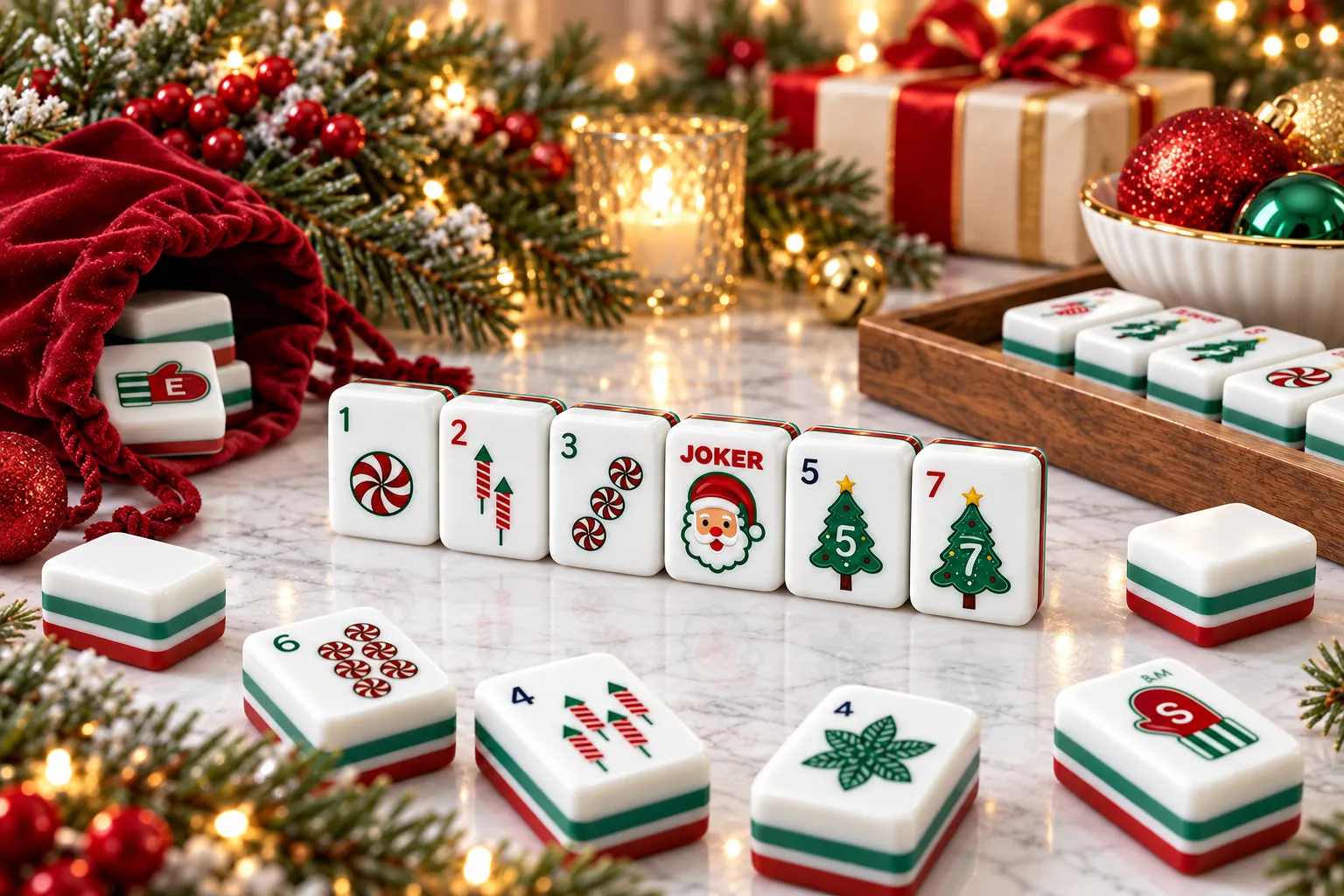
For retailers, distributors and private-label brands, a custom mahjong order can involve many different cost factors.
Tile material, size, artwork, custom colours, tile backs, accessories, packaging, MOQ and shipping can all affect the final price.
The goal should not simply be to choose the cheapest option. A better approach is to reduce unnecessary complexity while protecting the parts of the product that customers actually notice and value.
This guide explains how wholesale buyers can reduce the cost of a custom mahjong order without lowering overall product quality.
Why Custom Mahjong Order Costs Vary
Two Mahjong products can look similar but have very different production costs.
The price of a custom mahjong order may depend on:
- Tile material
- Tile dimensions
- Tile quantity
- Artwork complexity
- Custom colours
- Tile back design
- Racks and pushers
- Mahjong mats
- Carry cases
- Retail packaging
- MOQ
- Shipping method
Before trying to reduce cost, buyers should first understand which features are actually driving the quotation.
1. Start With a Clear Product Specification
A clear specification can prevent unnecessary revisions and quotation changes.
Before requesting pricing, confirm:
- Mahjong version
- Tile size
- Tile material
- Tile configuration
- Artwork requirements
- Accessories
- Packaging
- Estimated quantity
- Shipping destination
The more complete the information, the easier it is to quote a custom mahjong order accurately.
2. Use an Existing Tile Size When Possible
A custom tile size may require additional development or tooling.
If an existing standard size already works for your target market, using it can help reduce:
- Tooling cost
- Development time
- Sample cost
- Production risk
You can still customise artwork, colour and packaging while using an existing tile format.
3. Avoid Unnecessary Tooling
New moulds can add significant cost to a custom mahjong order.
Before requesting a completely new shape or size, ask whether an existing mould can achieve a similar result.
For many retail products, customers care more about:
- Artwork
- Colour
- Tile feel
- Packaging
than a small change in physical dimensions.
4. Keep the Tile Material Practical
Premium materials can create a distinctive look, but not every product needs the most expensive option.
Compare materials based on:
- Durability
- Weight
- Appearance
- Finish
- Target retail price
A well-made standard material may be more appropriate for a mid-range product than an unnecessarily complex premium construction.
5. Limit the Number of Custom Colours
Colour matching can increase development complexity.
If your custom mahjong order uses many unique colours across:
- Tile backs
- Racks
- Pushers
- Mats
- Packaging
production may require more setup and sample approval.
Using a tighter colour palette can reduce complexity while creating a more consistent brand look.
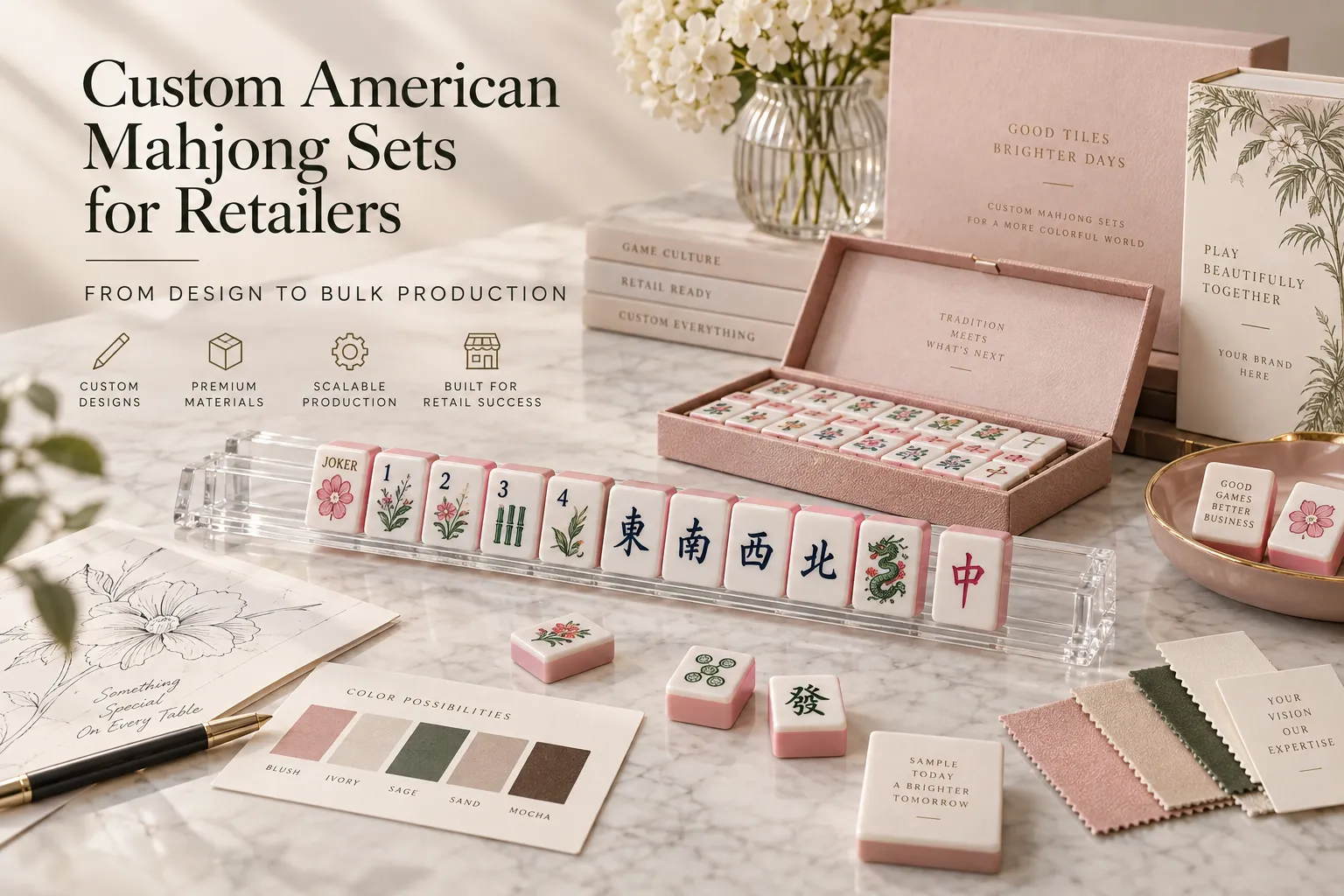
6. Use Existing Colours Where They Fit
Some existing fixed colours may support lower order quantities or simpler production.
Instead of developing a new custom colour, consider whether an existing:
- Blue
- Green
- Red
- Pink
- Purple
option works with your brand.
This can be especially useful for initial market testing.
7. Simplify the Tile Back
A highly complex tile back may increase cost.
For example, a custom mahjong order with:
- Multi-layer construction
- Special transparency
- Custom marbling
- Printed logo
- Specialty finish
may cost more than a simple solid or existing decorative back.
If the front artwork is already distinctive, the back can often be simpler.
8. Customise the Most Visible Tiles First
You do not always need to redesign every tile.
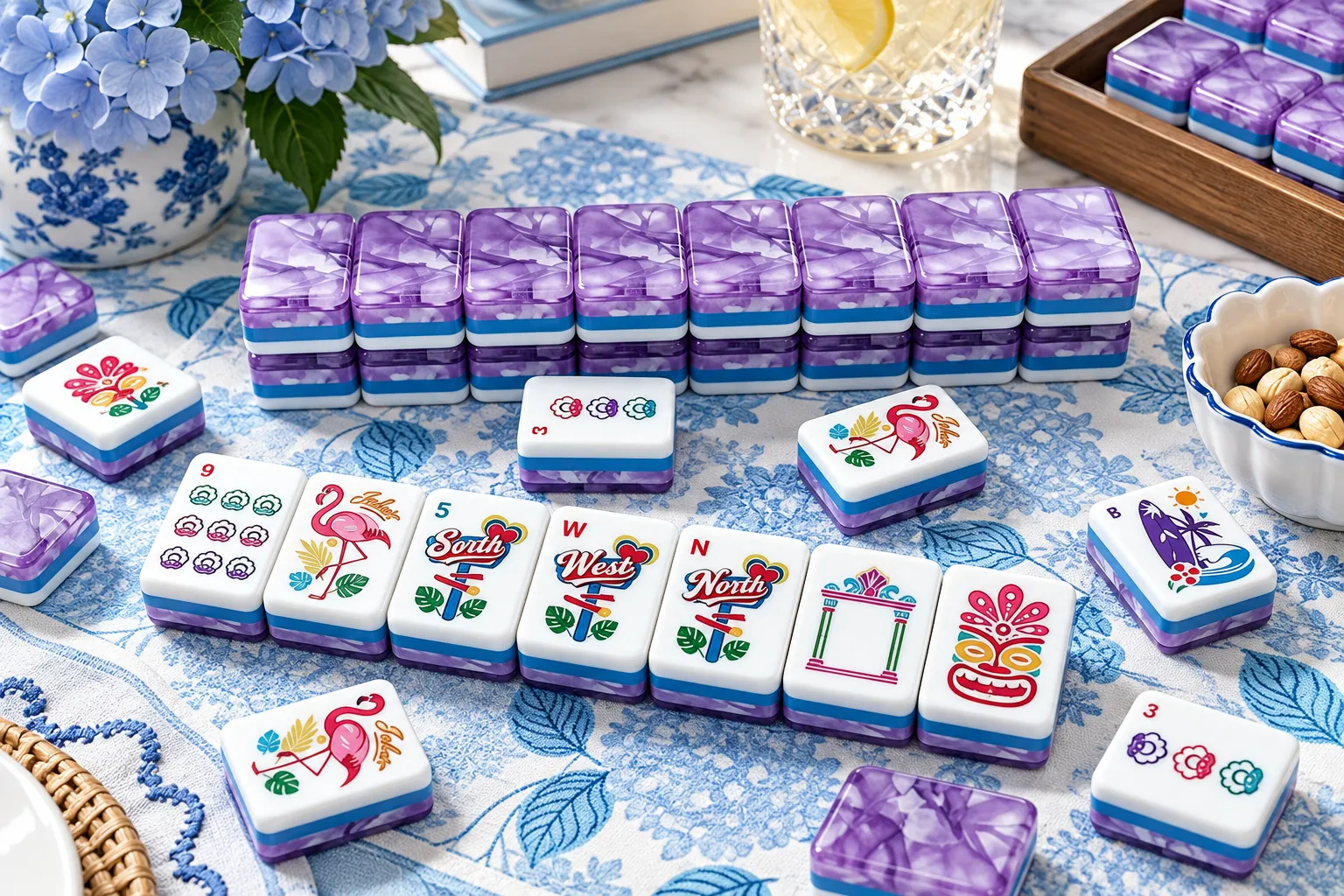
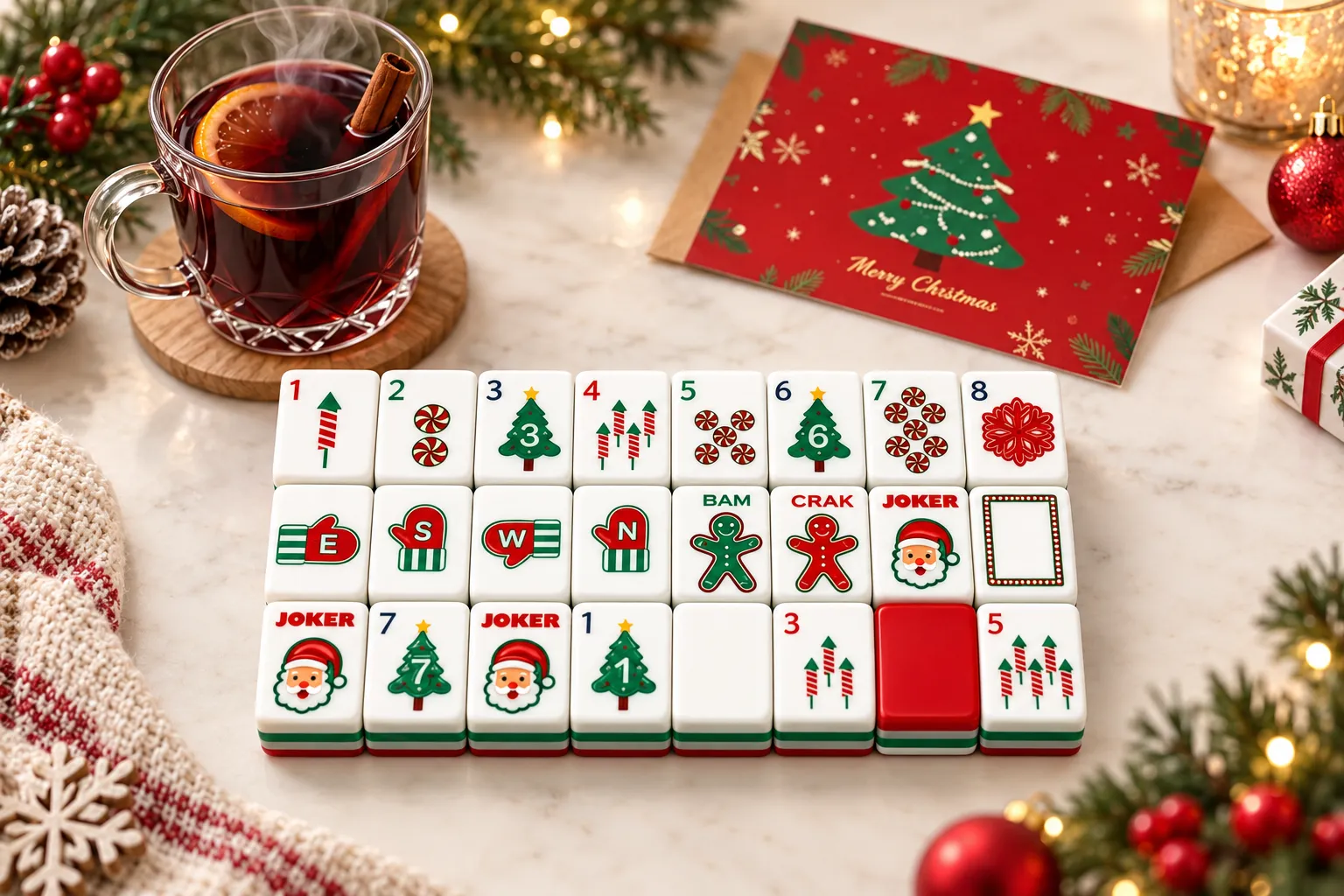
For American Mahjong, strong branding can sometimes come from customising:
- Jokers
- Flowers
- Tile backs
while keeping more traditional numbered suits.
This can reduce artwork development while still giving the set a distinctive identity.
9. Keep Artwork Production-Friendly
Extremely detailed artwork may require more adjustment during production.
Good artwork for a custom mahjong order should be:
- Clear
- Readable
- Scalable
- Easy to reproduce
Simpler artwork can often look better on the final tile than overly complicated illustrations.
10. Prepare Final Artwork Correctly
Poorly prepared files can create extra revision time.
For final production, artwork may need to be supplied in Adobe Illustrator .AI format.
Files should include:
- Final tile faces
- Tile backs
- Correct colours
- Outlined fonts
- Clear file names
- Final approved versions
Clean artwork helps reduce delays and unnecessary design work.
11. Avoid Repeated Artwork Revisions
Every round of changes can extend the project.
Before sending final artwork, confirm internally:
- Spelling
- Numbers
- Symbols
- Logo position
- Colours
- Tile quantities
A well-prepared custom mahjong order can move through sampling much faster.
12. Use Standard Racks Where Possible
Custom rack colours, materials or moulds can increase cost.
If a standard rack already fits the tiles and product positioning, use it.
You can still create a coordinated look by choosing a rack colour that complements the tile backs.
13. Keep Pushers Simple
Pushers are functional accessories.
Unless they are a major part of your brand concept, a standard pusher may be enough.
Custom pusher tooling or complex branding may add cost without significantly increasing retail value.
14. Decide Which Accessories Customers Really Need
A custom mahjong order does not always need every available accessory.
Before adding:
- Mahjong mat
- Extra trays
- Score pieces
- Wind indicators
- Premium bag
ask whether the target customer actually needs them.
Removing low-value accessories can reduce:
- Product cost
- Packaging volume
- Shipping weight
15. Build Different Product Tiers
Instead of putting every premium feature into one product, consider multiple versions.
Standard Version
Tiles, dice and basic storage.
Mid-Range Version
Tiles, racks, pushers and improved packaging.
Premium Version
Custom tiles, racks, mat and premium carry case.
This allows retailers to control the cost of each custom mahjong order more effectively.
16. Simplify Packaging
Packaging can become surprisingly expensive.
Possible cost drivers include:
- Rigid boxes
- Magnetic closures
- Custom hardware
- Complex inserts
- Large carry cases
A simpler box with good internal protection may offer better value.
17. Reduce Empty Packaging Space
Oversized packaging increases:
- Material use
- Carton volume
- Shipping cost
- Warehouse space
Design packaging around the actual dimensions of the complete set.
Efficient packaging can reduce the landed cost of a custom mahjong order without changing the product itself.
18. Use Standard Inserts
Fully custom internal trays can add development cost.
If an existing insert already fits the tile size and accessories, consider using it.
The customer usually cares more about whether the product arrives safely than whether every internal compartment is completely unique.
19. Keep Printed Materials Simple
Rule booklets and reference cards can add value, but they do not always need premium printing.
A clear, well-designed quick-start guide may be enough.
For some products, a QR code linking to online instructions can reduce printed material.
20. Consider a Branded Sleeve Instead of a Fully Custom Box
For a market test, buyers may use an existing box with a custom printed sleeve or label.
This can create branding without investing immediately in fully custom packaging.
It can be a useful middle ground for a smaller custom mahjong order.
21. Order Enough Units to Improve Unit Cost
Order quantity can strongly affect unit pricing.
Some setup costs are spread across the total quantity.
A larger order may reduce the cost per set, but buyers should still avoid ordering more inventory than they can realistically sell.
The goal is to find the right balance between:
- MOQ
- Unit cost
- Inventory risk
22. Do Not Increase Quantity Only for a Lower Price
A lower unit price is not useful if too much stock remains unsold.
Before increasing a custom mahjong order, consider:
- Expected sales
- Warehouse space
- Cash flow
- Product seasonality
A slightly higher unit cost may be better than excessive inventory.
23. Use Standard Products for Market Testing
If you are unsure whether a design will sell, begin with an existing product where possible.
This can help test:
- Colour preference
- Retail price
- Customer demand
- Sales channel
Once you have real sales data, you can invest in a more customised product with greater confidence.
24. Use a Hybrid Customisation Strategy
A product does not need to be either completely standard or completely custom.
A hybrid custom mahjong order may use:
- Existing tile size
- Existing material
- Custom tile backs
- Custom Flowers
- Custom Jokers
- Branded packaging
This can create a distinctive product while avoiding unnecessary development costs.
25. Do Not Skip the Physical Sample
Skipping samples may appear to save money, but it can create much larger costs later.
A physical sample allows you to check:
- Tile colour
- Artwork
- Size
- Finish
- Rack compatibility
- Packaging
Correcting a problem during sampling is usually easier than fixing an entire production batch.
26. Approve One Final Sample
After revisions, clearly identify the final approved sample.
Keep it as the reference for mass production.
This helps reduce misunderstandings during the custom mahjong order process.
27. Avoid Changes After Sample Approval
Late changes can increase:
- Lead time
- Sample cost
- Production cost
- Risk
Before approval, make sure the design is truly final.
28. Plan the Order Early
Rush production can reduce your options.
If you have a fixed launch date, begin development early enough for:
- Artwork
- Sampling
- Revisions
- Mass production
- Inspection
- Shipping
More planning gives buyers more flexibility when controlling cost.
29. Compare Shipping Methods
Freight can represent a significant part of the landed cost.
Possible options include:
- Courier
- Air freight
- Sea freight
The best option depends on:
- Quantity
- Weight
- Carton volume
- Delivery deadline
Do not compare suppliers based only on product unit price.
30. Reduce Product Weight Where Practical
A heavy premium set may be appropriate for some markets, but unnecessary weight can increase shipping costs.
Consider the combined weight of:
- Tiles
- Racks
- Case
- Packaging
Small reductions can become significant across a large wholesale order.
31. Optimise Master Carton Packing
Ask how many units fit into each master carton.
Efficient carton packing can reduce:
- Freight volume
- Handling
- Warehouse space
Packaging efficiency should be considered as part of the custom mahjong order design.
32. Calculate Landed Cost, Not Just Factory Price
The real cost includes more than production.
Consider:
- Product
- Customisation
- Packaging
- Freight
- Duties
- Taxes
- Warehouse receiving
- Fulfilment
A product with a slightly higher factory price may have a lower landed cost if it packs more efficiently.
33. Keep Quality Where Customers Notice It
Cost reduction should not mean reducing quality everywhere.
Protect the features customers notice most:
- Tile consistency
- Artwork clarity
- Smooth edges
- Correct tile quantity
- Strong packaging
- Reliable racks
Reduce complexity rather than essential quality.
34. Do Not Cut Quality Control
Skipping inspection is one of the worst ways to reduce cost.
Quality issues can lead to:
- Returns
- Refunds
- Negative reviews
- Replacement costs
- Lost distributor trust
Quality inspection should remain part of every custom mahjong order.
35. Keep Reorder Specifications
Once you develop a successful product, keep records of:
- Final
.AIartwork - Colours
- Material
- Tile dimensions
- Packaging
- Approved sample
This can reduce development work on future reorders.
36. Reuse Successful Components
A new collection does not need completely new components every time.
For example, you may reuse:
- Tile size
- Rack design
- Packaging structure
and change only:
- Artwork
- Tile back colour
- Printed packaging
This can reduce development cost while keeping the collection fresh.
Custom Mahjong Order Cost Checklist
Before approving the project, review:
- Tile size
- Material
- Custom colours
- Tile backs
- Artwork
- Accessories
- Packaging
- MOQ
- Sample cost
- Production lead time
- Product weight
- Carton dimensions
- Freight method
- Inspection
Working With HUHU Mahjong
HUHU Mahjong works with retailers, distributors and private-label brands developing Mahjong products for international markets.
For a more accurate quotation, buyers can provide:
- Estimated quantity
- Mahjong version
- Tile size
- Custom artwork requirements
- Colour requirements
- Accessories
- Packaging
- Shipping destination
The MOQ and cost of a custom mahjong order depend on the specific customisation requirements.
Final custom artwork may need to be supplied in Adobe Illustrator .AI format.
Final Thoughts
Reducing the cost of a custom mahjong order does not have to mean lowering quality.
The most effective approach is usually to simplify the parts that add cost without adding enough customer value.
Consider:
- Using existing tile sizes
- Limiting custom colours
- Simplifying accessories
- Optimising packaging
- Choosing the right quantity
- Planning shipping early
At the same time, protect the features that affect the customer experience.
A carefully planned custom mahjong order can achieve a strong balance between quality, branding and landed cost.
About the Author
HUHU Team
We share industry insights, product knowledge, and manufacturing updates to help global clients better understand mahjong production and OEM solutions.