
OEM/ODM MANUFACTURING FOR GLOBAL BRANDS
- View Our Alibaba Store
- info@huhumahjong.com
- +86 13326907761
Custom Mahjong Sets: What Buyers Need to Prepare Before Production
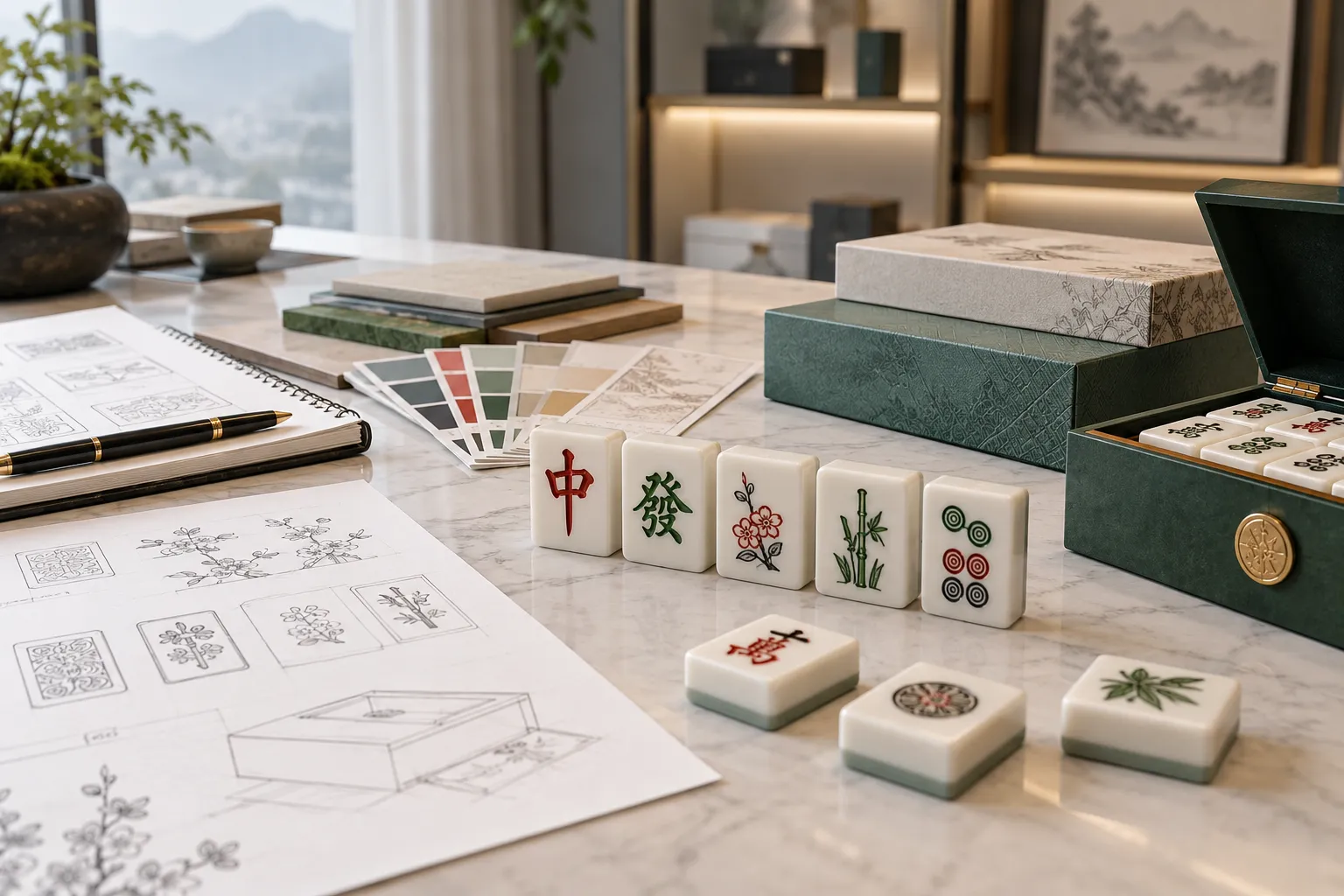
Ordering custom Mahjong sets gives retailers, clubs, event businesses and private-label brands the opportunity to create products that are different from standard market offerings.
However, custom manufacturing requires more preparation than purchasing an existing design.
Before a supplier can confirm MOQ, pricing and production lead time, buyers usually need to provide several important details.
The clearer the information is at the beginning, the easier it becomes to evaluate the project accurately and avoid unnecessary changes later.
For buyers planning custom Mahjong production, the following checklist explains what should ideally be prepared before moving into sampling and mass production.
1. Start With a Clear Design Direction
The first step for custom Mahjong sets is deciding what kind of product you want to create.
Some buyers already have complete artwork, while others only have a reference image or general idea.
Both are useful, but they represent different stages of development.
A design direction may include:
- Theme
- Colour palette
- Tile artwork
- Tile back style
- Logo
- Packaging style
- Target customer
For example, a club may want a branded set using its own logo and colours, while a retailer may want a seasonal collection with completely original artwork.
The more clearly the design direction is defined, the easier it is for the manufacturer to understand the project.
2. Prepare Production-Ready Artwork
Artwork quality is one of the most important parts of producing custom Mahjong sets.
Reference photos and screenshots can help communicate the idea, but final manufacturing normally requires higher-quality artwork.
For production, vector artwork is usually preferred because it can be resized and adjusted without losing clarity.
For HUHU Mahjong custom projects, the ideal production file is an Adobe Illustrator .AI vector file.
This helps maintain:
- Clean lines
- Accurate proportions
- Consistent symbols
- Better printing quality
- Easier production adjustments
If the buyer does not yet have an .AI file, that does not necessarily mean the project cannot move forward.
However, artwork preparation or redrawing may require additional design work, which can affect the final quotation.
You can learn more about custom production through the HUHU Mahjong OEM & Custom page.
3. Confirm the Tile Size
Tile size should be confirmed before production because it affects both manufacturing and packaging.
Different customers may prefer different dimensions depending on:
- Playing style
- Target market
- Storage requirements
- Product positioning
A larger tile may feel more premium, while a smaller format may be easier to pack and transport.
When ordering custom Mahjong sets, buyers should avoid assuming that every manufacturer uses exactly the same tile dimensions.
The final size should be confirmed in writing before artwork and packaging are finalized.
4. Choose the Tile Back Colour
The tile back is one of the most visible parts of a Mahjong set.
For custom projects, buyers may choose from different colours or develop a specific look that matches their brand.
Popular directions may include:
- Solid colours
- Transparent layers
- Multi-layer colour combinations
- Brand-specific colours
- Seasonal colours
The back colour can have a strong influence on the overall appearance of the finished product.
For this reason, colour references should be as specific as possible.
If exact colour matching is important, provide a clear colour reference or Pantone value where possible.
5. Estimate the Order Quantity
Before requesting a quotation for custom Mahjong sets, buyers should provide an approximate quantity.
This is important because MOQ and pricing are often closely related to production volume.
A manufacturer may offer different production solutions for:
- Small trial orders
- Medium wholesale quantities
- Large private-label orders
Without an estimated quantity, it can be difficult to provide an accurate price.
Even if the final number is not confirmed, giving a rough range such as 50, 100, 300 or 500 sets can help the supplier evaluate the project.
6. Understand That Design Complexity Affects Cost
Not all custom designs require the same production process.
A simple logo application may cost less than a completely original tile collection.
Pricing may be affected by:
- Number of custom faces
- Artwork complexity
- Number of colours
- Tile material
- Printing method
- Tile back design
- Packaging
- Accessories
This is why buyers should be careful when asking for a price before the design has been reviewed.
The supplier needs to understand the actual production requirements before giving a reliable quotation.
For custom Mahjong sets, a more complex design may also require additional sampling or testing.
7. Decide Whether You Need Custom Packaging
Packaging is an important part of private-label and retail products.
Some buyers only need standard packaging, while others want a completely branded presentation.
Custom packaging may include:
- Printed retail boxes
- Gift boxes
- Storage bags
- Branded inserts
- Instruction cards
- Custom labels
If packaging is part of the project, it should be discussed early.
Packaging dimensions may depend on tile size, accessories and how the set will be arranged inside the box.
For buyers creating premium custom Mahjong sets, packaging can significantly influence the final retail experience.
8. Decide Which Accessories Are Required
A Mahjong set may include more than tiles.
Depending on the buyer’s market, accessories may include:
- Racks
- Mats
- Dice
- Storage bags
- Scorecards
- Chips
- Instruction materials
Retailers should decide whether they want to sell a complete ready-to-play package or only the tiles.
This decision can affect pricing, packaging and shipping weight.
You can review existing products and accessories on the HUHU Mahjong Products page.
9. Prepare Reference Images If the Artwork Is Not Finished
Not every buyer begins with finished artwork.
If you are still developing your design, reference images can still be very useful.
They can help communicate:
- Preferred style
- Colour direction
- Tile back appearance
- Pattern ideas
- Packaging inspiration
However, reference images should be treated as inspiration rather than final production files.
Before mass production, the manufacturer will still need clear approved artwork.
This step is particularly important for buyers creating their first custom Mahjong sets.
10. Plan for Sampling
Sampling is an important stage before mass production.
A sample allows the buyer to review:
- Tile size
- Colour
- Artwork placement
- Printing
- Surface finish
- Packaging
For custom projects, buyers should not rush this stage.
If changes are needed, it is much easier to make them before the full production quantity is completed.
A clear sample approval process can significantly reduce risk.
11. Review the Sample Carefully
When the sample arrives, do not only check whether it “looks good.”
Review it systematically.
Check:
- Are all tile designs correct?
- Are colours consistent?
- Is the tile size correct?
- Are edges smooth?
- Is the back colour accurate?
- Is the packaging correct?
- Are all accessories included?
For custom Mahjong sets, small details can make a big difference to the finished product.
Buyers should send clear feedback before approving production.
12. Confirm the Final Specification in Writing
Before mass production begins, the final specification should be confirmed clearly.
This may include:
- Artwork version
- Tile dimensions
- Tile material
- Back colour
- Quantity
- Packaging
- Accessories
- Production schedule
A written specification helps reduce misunderstandings between buyer and supplier.
For B2B orders, this is especially important because the same specification may need to be repeated in future orders.
13. Allow Enough Time for Production
Custom manufacturing normally takes longer than ordering existing products.
A typical process may include:
- Design discussion
- Artwork preparation
- Quotation
- Sample production
- Sample review
- Final approval
- Mass production
- Quality inspection
- Packing
- Shipping
If you need the products for a specific retail launch, holiday or event, start the project early.
Giving the supplier enough time helps reduce unnecessary pressure and increases the chance of a smoother production process.
14. Consider Shipping Before Finalizing Packaging
Shipping cost can be affected by carton size, product weight and total quantity.
For larger B2B orders, packaging decisions can influence the final landed cost.
Before approving packaging, buyers may want to consider:
- Carton dimensions
- Number of sets per carton
- Total shipment weight
- Air vs sea freight
- Destination country
This is especially important for international custom Mahjong sets, where custom boxes may be larger than standard packaging.
15. Work With a Supplier That Communicates Clearly
Custom production usually involves more communication than standard wholesale orders.
During the project, buyers may need to discuss:
- Artwork revisions
- Tile colours
- Samples
- Packaging
- Quantity
- Shipping
Clear communication can save a significant amount of time.
A professional supplier should explain what information is still needed and confirm major changes before production.
A Simple Checklist Before Requesting a Quote
Before asking for a final quotation for custom Mahjong sets, try to prepare the following:
- Design or reference artwork
.AIvector file if available- Preferred tile back colour
- Tile dimensions
- Estimated quantity
- Packaging requirements
- Accessories
- Destination country
Providing these details allows the supplier to evaluate the project more accurately.
Custom Mahjong Production With HUHU Mahjong
HUHU Mahjong works with retailers, wholesalers, clubs, distributors and private-label brands that want to develop custom Mahjong sets.
Customisation options can include:
- Tile artwork
- Custom backs
- Colours
- Logos
- Tile sizes
- Packaging
- Accessories
- Private-label branding
If your design is already prepared, sending the .AI artwork together with the tile size, colour and estimated quantity can help speed up the quotation process.
If you are still developing the concept, reference images can be used to discuss the direction first.
For custom manufacturing enquiries, visit the HUHU Mahjong Contact page.
Conclusion
Creating custom Mahjong sets is a collaborative process between the buyer and manufacturer.
The best results usually come from clear preparation before production begins.
By confirming artwork, tile size, back colour, quantity, packaging and accessories early, buyers can receive more accurate quotations and reduce unnecessary revisions.
For businesses building a new Mahjong collection, taking time to prepare these details can make the entire journey from design concept to finished product much smoother.
About the Author
HUHU Team
We share industry insights, product knowledge, and manufacturing updates to help global clients better understand mahjong production and OEM solutions.