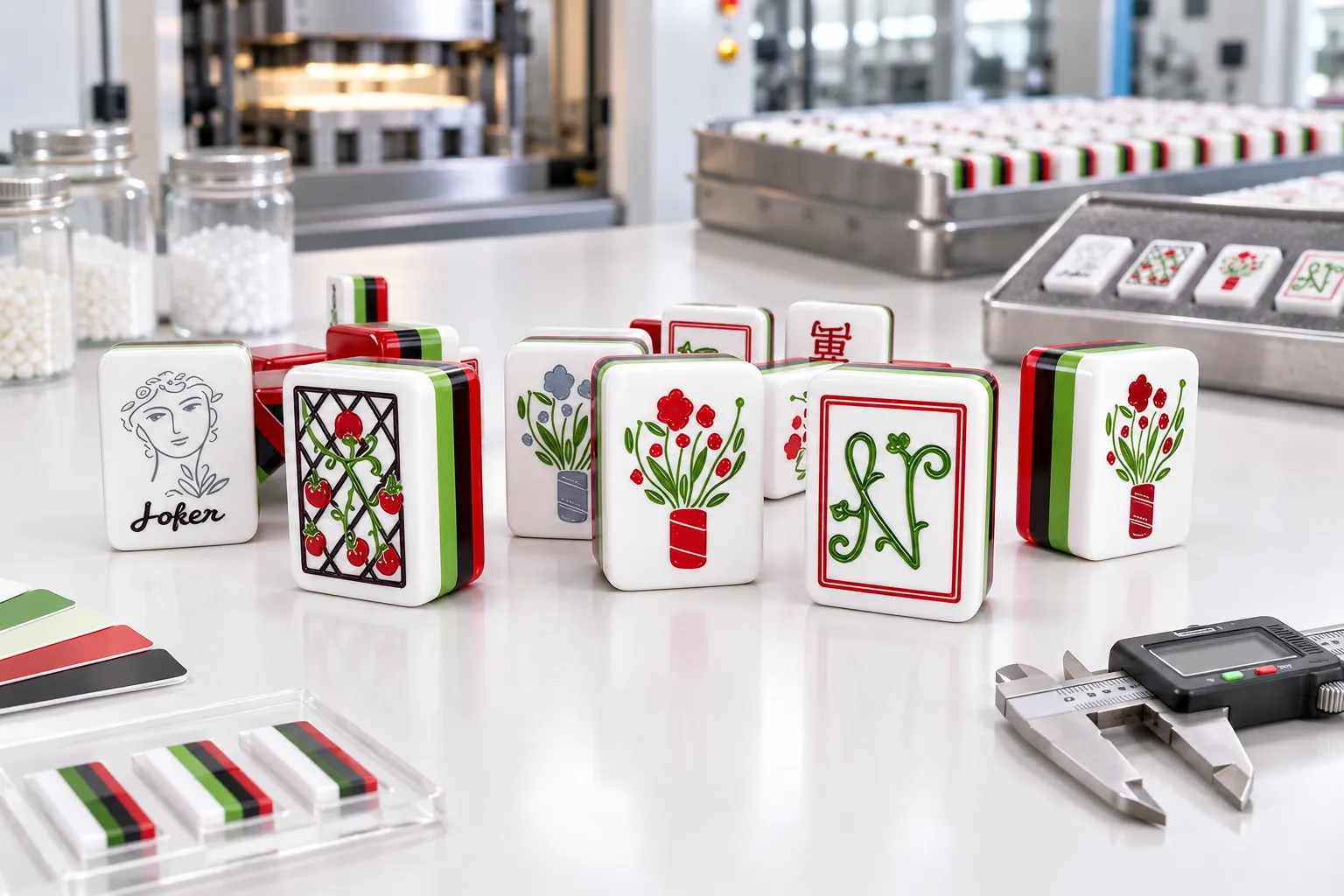

OEM/ODM MANUFACTURING FOR GLOBAL BRANDS
- View Our Alibaba Store
- info@huhumahjong.com
- +86 13326907761
Mahjong Tournament Equipment Checklist: What Organisers Need
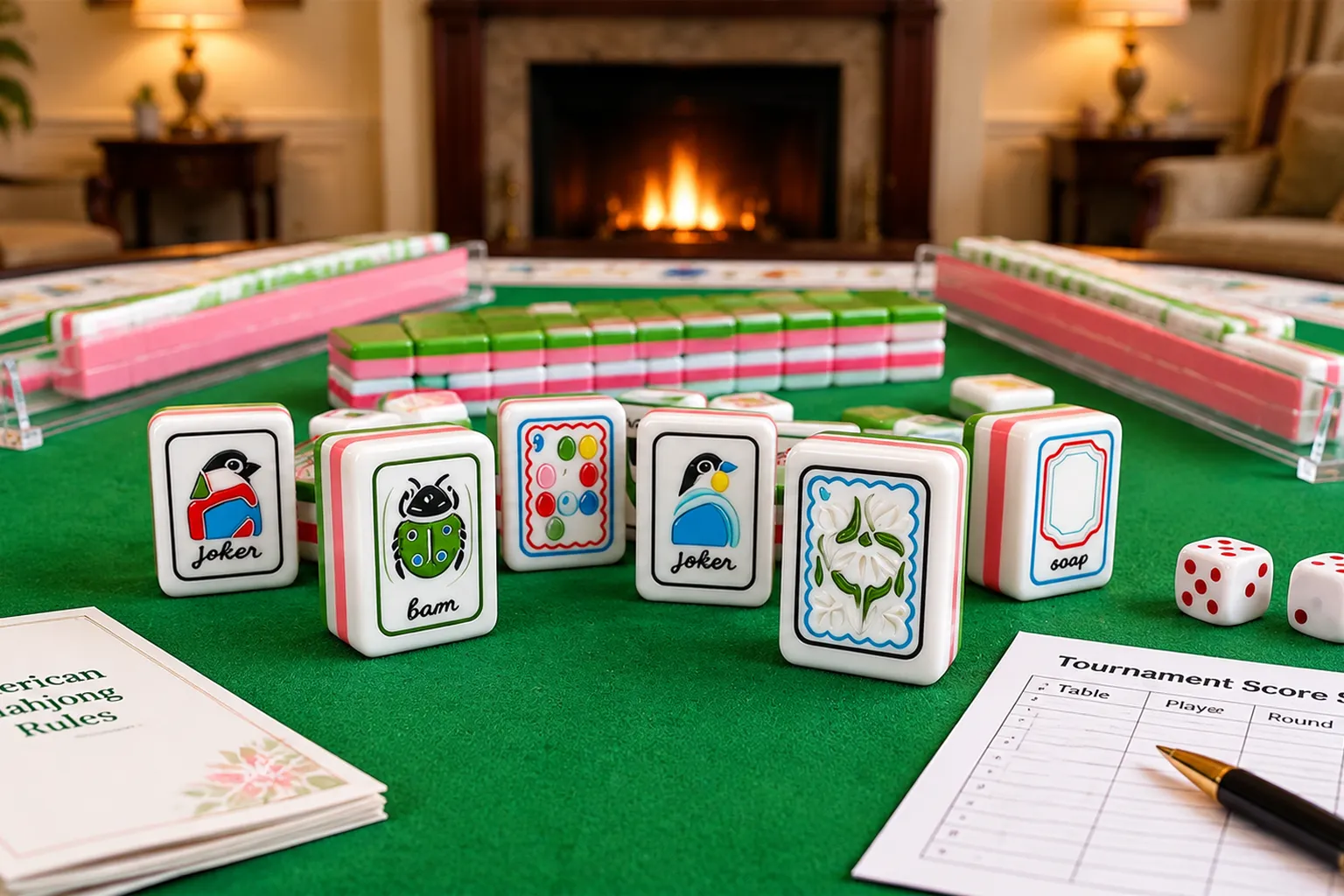
Planning a successful Mahjong event takes more than booking a venue and inviting players. Organisers need the right sets, accessories, playing surfaces and event materials, prepared in the right quantities and checked before players arrive.
This Mahjong Tournament Equipment Checklist is designed for clubs, event organisers, community groups and businesses arranging American Mahjong sessions or competitions. It helps you plan each table, prepare spare items and keep equipment organised before, during and after the event.
The exact requirements depend on the Mahjong version and event format. Confirm the rules first, then use this Mahjong Tournament Equipment Checklist to build a plan that matches your players and venue. Keep the checklist specific to the event rather than relying on a generic equipment list.
1. Confirm the Mahjong Format Before Buying Equipment
Start by confirming which version of Mahjong will be played. Different regional versions can use different tile configurations, accessories and playing procedures. Do not assume every set is interchangeable.
For an American Mahjong event, check that the selected sets match the agreed format and include all required tiles. If the event follows National Mah Jongg League rules, consult the National Mah Jongg League’s official game information. The League publishes standard hands and rules cards, which are updated annually. Confirm which edition applies to your event before printing instructions or briefing players.
This step keeps your Mahjong Tournament Equipment Checklist accurate and helps prevent last-minute substitutions that could confuse participants. Add the chosen rule set and edition to the first page of the Mahjong Tournament Equipment Checklist so staff can refer to the same information.
2. Calculate the Number of Complete Sets
For a standard four-player table, plan one complete Mahjong set for each active table. Divide the number of players by four and round up if the total does not divide evenly.
For example:
- 8 players need 2 active tables and 2 complete sets.
- 16 players need 4 active tables and 4 complete sets.
- 24 players need 6 active tables and 6 complete sets.
- 32 players need 8 active tables and 8 complete sets.
These examples assume everyone plays at the same time. If the event includes demonstrations, teaching tables or practice areas, include those in the count. Record the final table count in your Mahjong Tournament Equipment Checklist before confirming the order.
Consider whether a reserve set is appropriate for your event size and access to replacements. A clearly labelled spare set can be useful if a tile or component goes missing, but the number of reserves should reflect your budget and event plan rather than an arbitrary rule.
3. Check Every Set and Its Accessories
Before the event, inspect each set and confirm that its contents match the selected game format. For American Mahjong, check the full tile configuration and the accessories supplied with the product.
Depending on the set and event format, useful accessories may include:
- Four player racks.
- Pushers, where used.
- Dice.
- Chips or counters, if required.
- A suitable storage case or container.
- Instructions or reference materials for participants.
Do not assume every set includes the same accessories. Confirm the contents with the supplier and check each kit before assigning it to a table.
When planning the Mahjong Tournament Equipment Checklist, record the contents of one approved set and use it as the reference for checking the others. You can review HUHU Mahjong’s product range when sourcing complete sets and accessories.
4. Prepare the Playing Surface and Table Layout
A consistent playing surface helps create a tidy and comfortable setup. Before ordering mats or covers, measure the tables and check how much space players need for tiles, racks and other accessories.
When choosing a mat or table cover, consider:
- Dimensions and fit on the table.
- Surface feel and ease of moving tiles.
- Whether it stays in place during play.
- How it can be cleaned and stored.
- Whether the design suits the event’s presentation.
Arrange tables with enough room for players to sit down, move comfortably and access the playing area. Keep walkways clear for organisers and participants. Add the measurements and layout notes to the Mahjong Tournament Equipment Checklist so the setup team can prepare consistently.
For events with several tables, consistent mats and layouts can make the venue look more organised. HUHU’s product collection includes Mahjong sets and accessories that can be considered when planning a coordinated setup.
5. Bring Spare Components and a Simple Repair Kit
Small problems can interrupt a game if no replacement is available. Keep a reserve kit with the event organiser rather than distributing every spare item across the tables. Make this reserve kit a named section in the Mahjong Tournament Equipment Checklist.
Depending on the products in use, the kit may include:
- Compatible spare tiles.
- Extra dice.
- Replacement racks or pushers.
- Spare chips or counters.
- Cleaning cloths.
- Labels and small storage bags.
Make sure replacement tiles match the exact set design and format. Mixing visually different tiles into a set can create confusion, so check compatibility before the event.
6. Prepare Registration, Seating and Scorekeeping Materials
Equipment planning also includes the materials that help the event run smoothly. The exact requirements depend on the competition format, but organisers may need:
- A participant registration list.
- Table and seat assignments.
- Name badges or player numbers.
- Printed schedules.
- Score sheets and pens, if the format uses them.
- Rule summaries or event instructions.
- A designated place to submit results.
If scores are recorded digitally, test the device, software and internet connection before participants arrive. Keep a backup process available in case technology fails.
Give players clear instructions about where to register, how to find their table and how results should be submitted. Add these administrative items to the Mahjong Tournament Equipment Checklist as well as the physical game equipment.
7. Label, Store and Transport the Equipment
When multiple sets are used, components can become mixed unless each kit has a clear identity. Label each set and its storage container with the same number. Record which set is assigned to each table.
Before the first round:
- Check each kit against a contents list.
- Record missing or damaged components.
- Assign one person to manage spare equipment.
- Keep unused sets in a secure, clearly marked area.
After the event, collect each set, check it again and return components to the correct container. For travelling events, use suitable cases and separate smaller accessories into labelled pouches or compartments.
A repeatable packing and return process makes the next Mahjong Tournament Equipment Checklist easier to complete and reduces the chance of missing items.
8. Consider Custom Equipment for Branded Events
Some clubs, sponsors and businesses want equipment that reflects their event or organisation. Depending on the project, custom options may include tile colours, artwork, logos, racks, mats, cases or coordinated gift sets.
Customisation should be planned early. Confirm product specifications, artwork, quantities and the sample approval process before setting the event date. Allow time for design review, sampling, production and delivery. If branded items are part of the event, include approval dates and delivery deadlines in the Mahjong Tournament Equipment Checklist.
HUHU supports OEM and ODM product development for brands and organisations. Learn about the HUHU production process or browse custom manufacturing case studies for examples of project work.
9. Final Pre-Event Equipment Check
Use this final Mahjong Tournament Equipment Checklist shortly before the venue opens:
- Confirm the Mahjong format and rules being used.
- Match the number of complete sets to the active tables.
- Check tiles and accessories in every set.
- Confirm mats or table covers fit the tables.
- Put spare components in a labelled organiser kit.
- Prepare registration, seating and scorekeeping materials.
- Check table numbers and player assignments.
- Test any digital scoring tools.
- Confirm walkways and storage areas are clear.
- Assign a person to handle equipment issues during play.
A short test setup with volunteers can reveal missing items or layout problems before players arrive. Keep a printed or digital copy of the Mahjong Tournament Equipment Checklist with the event lead during setup.
Frequently Asked Questions
How many Mahjong sets do I need for a tournament?
For a standard four-player table, plan one complete set per active table. Calculate the number of tables from the number of players, then consider whether a reserve set is useful for your event.
What should be included in a Mahjong event equipment kit?
The kit should match the game format. It may include a complete tile set, racks, pushers where used, dice, chips or counters, a playing surface and suitable storage.
Should every tournament table use the same equipment?
Using consistent sets and accessories helps create a uniform playing experience. If different products are used, confirm that they are compatible with the rules and event format.
Where can organisers find current American Mahjong rules?
For events using National Mah Jongg League rules, consult the League’s official information and confirm which annual card applies to the event.
Can Mahjong equipment be customised for a club or sponsored event?
Custom options may be available for tiles, colours, artwork, logos, accessories and packaging. Requirements, quantities and lead times should be confirmed with the manufacturer before the event.
Conclusion
A well-prepared event depends on more than having enough Mahjong sets. Organisers also need compatible accessories, suitable playing surfaces, clear player information, spare components and a reliable system for checking equipment in and out.
Use this Mahjong Tournament Equipment Checklist as a starting point, then adapt it to the rules, venue and size of your event. After the event, update the Mahjong Tournament Equipment Checklist with any missing or damaged items. Planning the details early helps organisers reduce last-minute problems and give players a more consistent experience.
If your club or organisation is sourcing Mahjong sets or developing a branded equipment collection, contact HUHU Mahjong to discuss product requirements, customisation and manufacturing options.
About HUHU Mahjong
HUHU Mahjong provides Mahjong products and OEM/ODM manufacturing support for retailers, distributors, clubs and private-label brands. The team supports product development, customisation, sampling, production and delivery for international customers.
About the Author
HUHU Team
We share industry insights, product knowledge, and manufacturing updates to help global clients better understand mahjong production and OEM solutions.