
OEM/ODM MANUFACTURING FOR GLOBAL BRANDS
- View Our Alibaba Store
- info@huhumahjong.com
- +86 13326907761
Mahjong Wholesale Assortment Planning: How Retailers Choose the Right Product Mix

Building a successful American mahjong business involves more than finding attractive products. Retailers also need to decide which styles to offer, how many designs to stock and how to balance affordable sets with premium collections.
This is where mahjong wholesale assortment planning becomes important. A well-planned product range helps businesses serve different customer preferences without investing too heavily in products that may sell slowly.
For example, a new mahjong retailer may want to offer classic tile designs, colourful modern collections and a small selection of premium gift sets. However, stocking too many variations at once can create unnecessary inventory costs.
Effective mahjong wholesale assortment planning helps businesses make more informed purchasing decisions, maintain a consistent product range and prepare for future growth.
In this guide, we explain how retailers, online stores and private label brands can build a practical American mahjong product assortment for wholesale purchasing.
What Is Mahjong Wholesale Assortment Planning?
Mahjong wholesale assortment planning is the process of selecting the products, designs, price points and quantities that a retailer intends to sell.
Rather than ordering every available mahjong design, businesses choose a balanced selection based on their target customers and sales goals.
A product assortment may include standard American mahjong sets, premium gift collections, carrying cases, racks, pushers and other accessories.
The purpose is to offer enough variety to attract customers while keeping inventory manageable.
A small online shop may begin with several carefully selected products. An established retailer may carry a broader range of colours, materials and designs.
There is no single product mix that works for every business.
The best assortment depends on customer preferences, available purchasing budget, retail positioning and expected demand.
Why Mahjong Wholesale Assortment Planning Matters for Retailers
Choosing the right product range can have a direct impact on how efficiently a retail business operates.
When a store offers too few designs, customers may struggle to find products that match their preferences.
However, carrying too many similar collections can tie up money in inventory and make stock management more complicated.
Mahjong wholesale assortment planning helps retailers find a balance between variety and inventory efficiency.
It also supports a clearer shopping experience.
Customers can compare products more easily when a retailer offers distinct styles rather than numerous nearly identical options.
For example, a business could organise its American mahjong collection around classic designs, contemporary styles and premium gifting products.
Each category would serve a different customer preference while maintaining a consistent brand identity.
Understand Your Target Mahjong Customers
Before selecting wholesale products, it is important to understand who will be purchasing them.
Different customer groups may have different expectations regarding design, price, accessories and packaging.
Beginner Mahjong Players
Beginners often look for products that are easy to understand and convenient to use.
They may value clear tile markings, practical storage and a complete selection of essential accessories.
A beginner-focused collection should make it easy for customers to understand what is included.
Retailers should also clearly distinguish between American mahjong sets and other mahjong styles.
Experienced American Mahjong Players
Experienced players may pay closer attention to tile dimensions, materials, weight and design details.
Some customers prefer classic symbols, while others enjoy collecting modern artwork and distinctive colour combinations.
Retailers serving experienced players should provide clear product specifications and detailed photographs.
Gift Buyers
Mahjong sets are also purchased as gifts for birthdays, holidays and special occasions.
Gift buyers often place additional importance on packaging, presentation and visual appeal.
A premium carrying case or decorative gift box may be particularly attractive to these customers.
Mahjong Clubs and Social Groups
Clubs and organised groups may purchase multiple sets for regular games or events.
Their priorities can include durability, readability, consistent specifications and practical pricing.
Understanding these different customer groups is an important first step in mahjong wholesale assortment planning.
Start With a Core Collection of American Mahjong Sets
A strong retail assortment usually begins with a core collection.
These are the products that represent the store’s primary offering and are expected to remain available over time.
For a new American mahjong retailer, the core collection might feature a selection of classic and modern designs.
The exact number of products depends on the business’s budget and target market.
Starting with a manageable range makes it easier to observe customer preferences before expanding.
A core collection should also be consistent in quality.
Even when the artwork and packaging differ, customers should be able to expect accurate product descriptions and reliable manufacturing standards.
When discussing mahjong wholesale assortment planning with suppliers, retailers should ask which designs are suitable for ongoing availability and repeat purchasing.
Balance Classic and Modern Mahjong Designs
Design variety is one of the most important aspects of choosing an American mahjong product range.
Some customers prefer traditional symbols and understated colours. Others are drawn to bright, playful or contemporary designs.
A balanced assortment can appeal to both groups.
Classic Mahjong Collections
Classic American mahjong designs often feature familiar symbols, traditional colours and straightforward presentation.
These products may appeal to customers who prefer a timeless appearance.
Retailers can position classic collections as versatile options for regular play.
Modern and Colourful Collections
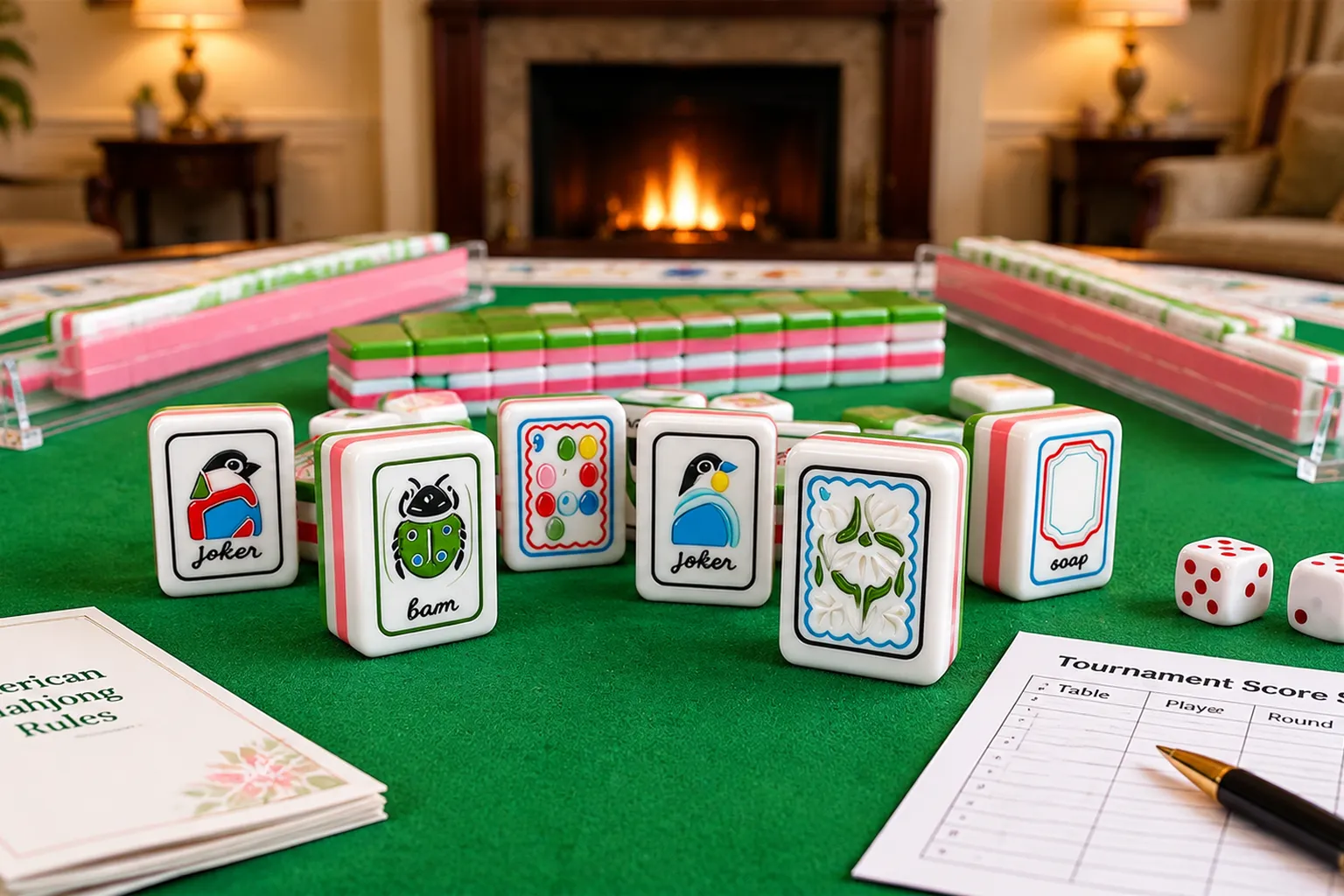
Modern American mahjong sets may use pastel colours, bold patterns, floral artwork or distinctive decorative themes.
These products can help a retailer create a recognisable visual identity.
They may also be suitable for lifestyle marketing and social media photography.
However, retailers should evaluate actual customer interest rather than selecting designs based only on current trends.
Premium and Decorative Collections
Premium collections may feature distinctive artwork, coordinated accessories and more elaborate packaging.
These products can give customers additional options when shopping for gifts or special occasions.
Including a small number of premium designs may help broaden a retailer’s offering without requiring every product to target the same price range.
A thoughtful mix of these categories supports more effective mahjong wholesale assortment planning.
Choose the Right Price Range for Your Mahjong Store
Price positioning affects which products customers consider and how they compare different sets.
Retailers should decide whether their business will focus on affordable products, premium collections or a combination of both.
Entry-Level Products
Entry-level mahjong sets can appeal to customers making their first purchase.
They should offer a practical combination of quality, clear product information and suitable accessories.
Retailers should avoid reducing product quality simply to reach a lower selling price.
Mid-Range Mahjong Sets
Mid-range products may provide more design options, upgraded carrying cases or additional accessories.
For some retailers, this category may become an important part of the core assortment.
The ideal product specification depends on the expectations of the target customer.
Premium Mahjong Collections
Premium sets can appeal to collectors, gift buyers and customers interested in distinctive designs.
Packaging, material selection and artwork may play a greater role in this category.
Mahjong wholesale assortment planning should consider the difference between wholesale cost and final retail pricing, including shipping, fulfilment and other business expenses.
A product with a higher selling price does not automatically generate a better profit if its costs are also significantly higher.
How Many Mahjong Designs Should a New Retailer Stock?
One of the most common questions from new retailers is how many different mahjong collections they should offer.
There is no universal answer.
The appropriate number depends on the business’s budget, customer base and storage capacity.
A new store may benefit from launching with a limited assortment and expanding after collecting sales data.
For example, a retailer could begin with a few clearly differentiated designs rather than ordering many similar products.
This makes it easier to identify which colours, styles and price points attract customers.
When evaluating mahjong wholesale assortment planning, businesses should distinguish between the number of products listed and the number of units purchased.
A store may carry several different designs but keep relatively small quantities of each.
Another business may focus on fewer designs with larger stock levels.
Both approaches can work depending on the customer demand and supply arrangements.
Include Mahjong Accessories in Your Product Assortment
A complete mahjong retail business does not necessarily need to sell only tile sets.
Accessories can provide useful additions to the product range.
Common American mahjong accessories include racks, pushers, carrying cases, dice and storage products.
These items may appeal to customers who already own a mahjong set.
For example, a player may want a different carrying case or additional accessories for regular games.
Accessories can also be offered alongside complete sets when the product specifications are compatible.
However, retailers should verify dimensions and compatibility before recommending accessories for particular tile collections.
In mahjong wholesale assortment planning, accessory selection should reflect actual customer needs rather than simply increasing the total number of products available.
Plan Your Mahjong Product Range Around Customer Demand
Customer preferences should guide purchasing decisions whenever possible.
Retailers can use sales history, customer enquiries and website analytics to identify which products attract attention.
For a new business without sales history, market research and small-scale product testing may help reduce uncertainty.
Review Customer Enquiries
Customer questions can reveal useful information.
For example, repeated enquiries about pastel-coloured tiles may suggest interest in softer colour palettes.
Questions about larger tiles or carrying cases may indicate opportunities to improve the product selection.
Monitor Sales Performance
Once products are available, retailers should review which collections sell consistently.
Useful information includes sales volume, returns, customer feedback and the time each product remains in stock.
These details can help guide future wholesale purchasing decisions.
Avoid Relying Only on Trends
A visually striking mahjong design may perform well on social media without generating consistent sales.
Retailers should consider whether a trend is relevant to their actual customers.
Successful mahjong wholesale assortment planning combines product appeal with practical sales information.
Seasonal Mahjong Collections and Special Promotions
Seasonal products can add variety to a retail assortment.
For example, a business may introduce limited collections around gifting periods or special events.
However, seasonal purchasing requires careful planning.
Products should arrive early enough for marketing, photography and customer delivery.
Retailers also need to consider what happens to unsold seasonal stock after the promotion ends.
A limited seasonal assortment can help reduce the risk of holding large quantities of products that may become less relevant later.
For private label brands, seasonal designs may require additional time for artwork approval, sampling and manufacturing.
Mahjong wholesale assortment planning should therefore account for production lead times as well as expected selling periods.
Standard Wholesale Sets vs Custom Mahjong Collections
Retailers can build their assortments using standard products, customised collections or a combination of both.
Each approach offers different advantages.
Standard American Mahjong Sets
Standard products can be useful for businesses testing customer demand.
They usually require less design preparation than fully customised products.
Buyers should still confirm the product specifications, available quantities and shipping arrangements.
Custom Mahjong Collections
Custom collections allow brands to develop unique artwork, colours, accessories and packaging.
This can help create a distinctive product identity.
However, custom products generally require more planning and may involve additional manufacturing setup.
Retailers should confirm the minimum order quantity, sampling requirements and production schedule before committing to a custom project.
HUHU Mahjong provides OEM and ODM customisation services for businesses developing their own American mahjong products.
Combining Standard and Custom Designs
Some businesses may begin with standard products while developing their own private label collection.
This approach allows retailers to evaluate customer interest before expanding their customised product range.
The right combination depends on business goals and available investment.
Managing Inventory Across Different Mahjong Designs
Once a retailer selects its product range, inventory management becomes the next challenge.
Different colours, artwork styles and packaging configurations should be identified clearly.
Retailers can use product codes or SKUs to distinguish between variations.
For example, a floral mahjong set in a pink case should be distinguishable from the same collection packaged in a green case.
Clear product identification helps prevent confusion during receiving, storage and fulfilment.
Businesses should also monitor which designs sell quickly and which remain in stock for longer periods.
These insights can support more accurate replenishment decisions.
For growing retailers, mahjong wholesale assortment planning is an ongoing process rather than a one-time decision made before launch.
How to Plan Wholesale Reorders
Reordering is an important part of maintaining a successful retail assortment.
A product may sell well initially, but future demand can change depending on customer preferences and seasonality.
Retailers should review sales performance before placing another wholesale order.
Consider the quantity currently in stock, recent sales activity, expected future demand and estimated supplier lead time.
For custom collections, additional time may be needed for manufacturing and shipping.
A reorder should ideally be planned before stock becomes critically low, but not so early that it creates unnecessary inventory.
When working with a manufacturer, businesses should confirm whether the same materials, colours and artwork specifications can be maintained for future production runs.
Good mahjong wholesale assortment planning also involves keeping records of approved products so repeat orders are easier to manage.
Working With a Mahjong Manufacturer on Product Selection
A manufacturing partner can provide useful information when retailers are developing a new product range.
Before requesting a quotation, buyers should explain the type of business they operate and the products they want to sell.
For example, a retailer may be looking for standard American mahjong sets in several colours.
Another business may want to develop a premium private label collection with customised artwork and packaging.
Clear requirements help the manufacturer explain available options, product specifications and order conditions.
For mahjong wholesale assortment planning, buyers should discuss the intended product mix rather than focusing only on the price of an individual set.
This can help identify opportunities to coordinate accessories, packaging and future orders.
At HUHU Mahjong, we work with retailers, wholesalers and private label brands interested in American mahjong manufacturing.
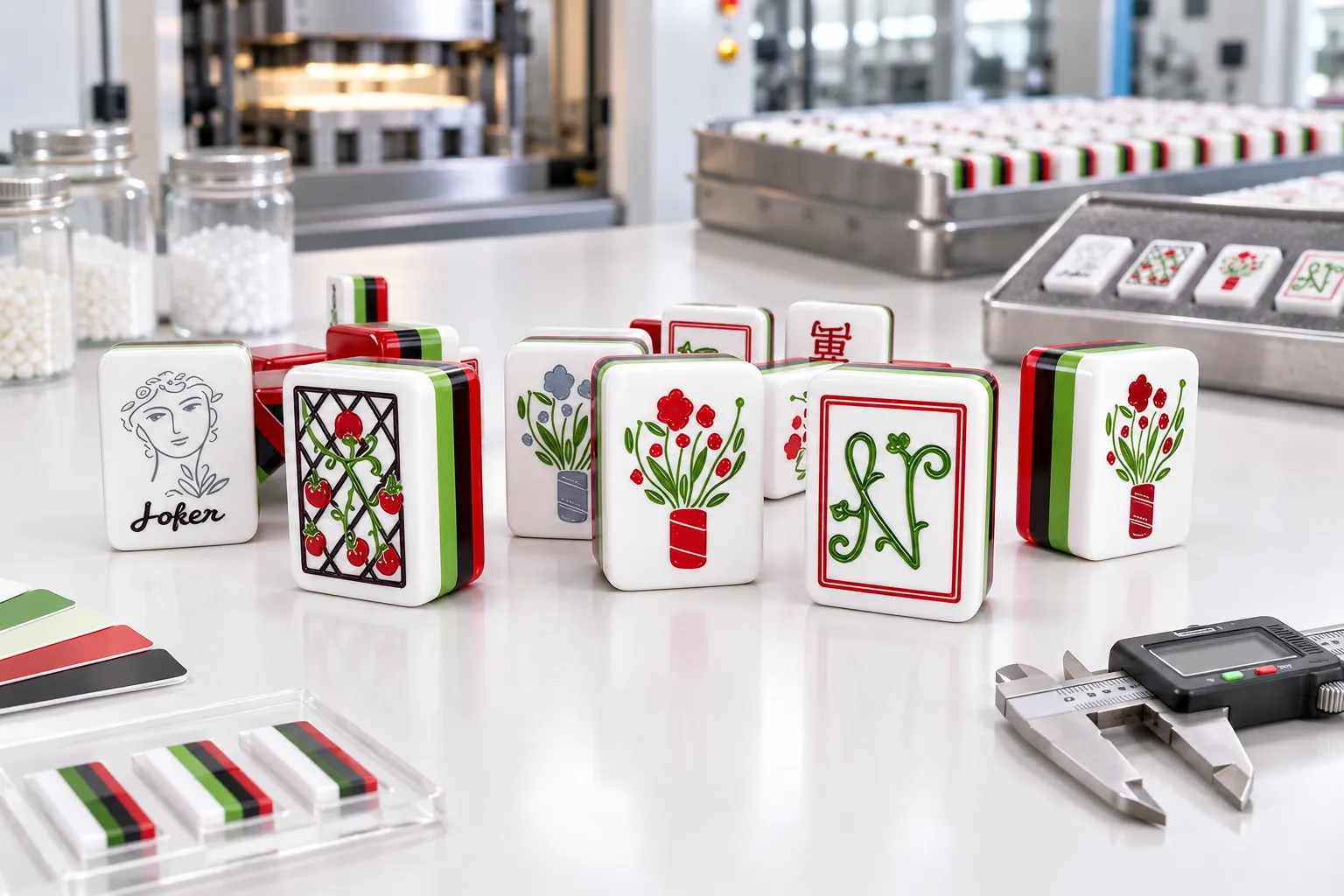
Our production process covers product development, material selection, sample approval, manufacturing and quality control.
Common Mahjong Assortment Planning Mistakes
One common mistake is purchasing too many similar designs.
Although variety is important, several products with nearly identical appearances may not provide meaningful choices for customers.
Another mistake is focusing only on wholesale price.
A lower-cost product may not suit the retailer’s target market if its specifications or presentation do not meet customer expectations.
Retailers may also underestimate the importance of accessories and complementary products.
An attractive assortment should be practical as well as visually appealing.
Poor inventory planning can create additional problems.
Ordering too many slow-moving designs ties up money, while ordering too few popular products can result in missed sales.
Mahjong wholesale assortment planning helps businesses approach these decisions more systematically.
Frequently Asked Questions About Mahjong Wholesale Assortment Planning
What is mahjong wholesale assortment planning?
Mahjong wholesale assortment planning involves selecting the designs, product categories, price ranges and quantities that a retailer intends to offer. The aim is to create a balanced range that reflects customer demand and business goals.
How many American mahjong designs should a new retailer offer?
There is no fixed number. New retailers may benefit from starting with a manageable selection of clearly differentiated designs and expanding based on customer feedback and sales performance.
Should retailers sell both classic and modern mahjong sets?
Offering different design styles can help serve a broader customer base. However, the right balance depends on the retailer’s audience and brand positioning.
Are mahjong accessories worth including in a wholesale assortment?
Accessories can complement complete sets and appeal to existing players. Retailers should confirm compatibility and evaluate demand before purchasing large quantities.
Should I start with standard or custom mahjong sets?
Standard sets can be practical for testing demand, while custom collections offer greater branding and design flexibility. The best option depends on your budget, target market and order requirements.
How often should retailers review their mahjong assortment?
Retailers should review their product range regularly using sales data, inventory levels and customer feedback. More frequent reviews may be useful during busy selling periods.
Can manufacturers help with mahjong wholesale assortment planning?
Manufacturers can explain available designs, product specifications, customisation options and production requirements. Retailers remain responsible for deciding which products best suit their customers.
Final Thoughts on Mahjong Wholesale Assortment Planning
Successful mahjong wholesale assortment planning helps retailers make better purchasing decisions and build a product range that supports long-term business growth.
The goal is not simply to offer as many mahjong designs as possible. It is to select products that meet customer needs, fit the retailer’s brand and can be managed efficiently.
A balanced assortment may include classic American mahjong sets, modern collections, premium gift options and compatible accessories.
By reviewing customer demand, controlling inventory and planning future reorders, retailers can develop a more sustainable approach to wholesale purchasing.
For private label brands, mahjong wholesale assortment planning also provides a foundation for future product development and customised collections.
Looking for American mahjong sets for your retail store or private label brand?
Explore HUHU Mahjong’s OEM and Custom Services or contact our team to discuss standard designs, custom collections, product specifications and wholesale purchasing options.
About the Author
HUHU Team
We share industry insights, product knowledge, and manufacturing updates to help global clients better understand mahjong production and OEM solutions.