
OEM/ODM MANUFACTURING FOR GLOBAL BRANDS
- View Our Alibaba Store
- info@huhumahjong.com
- +86 13326907761
Mahjong Wholesale Reorder Planning: How Retailers Avoid Stockouts and Delivery Delays
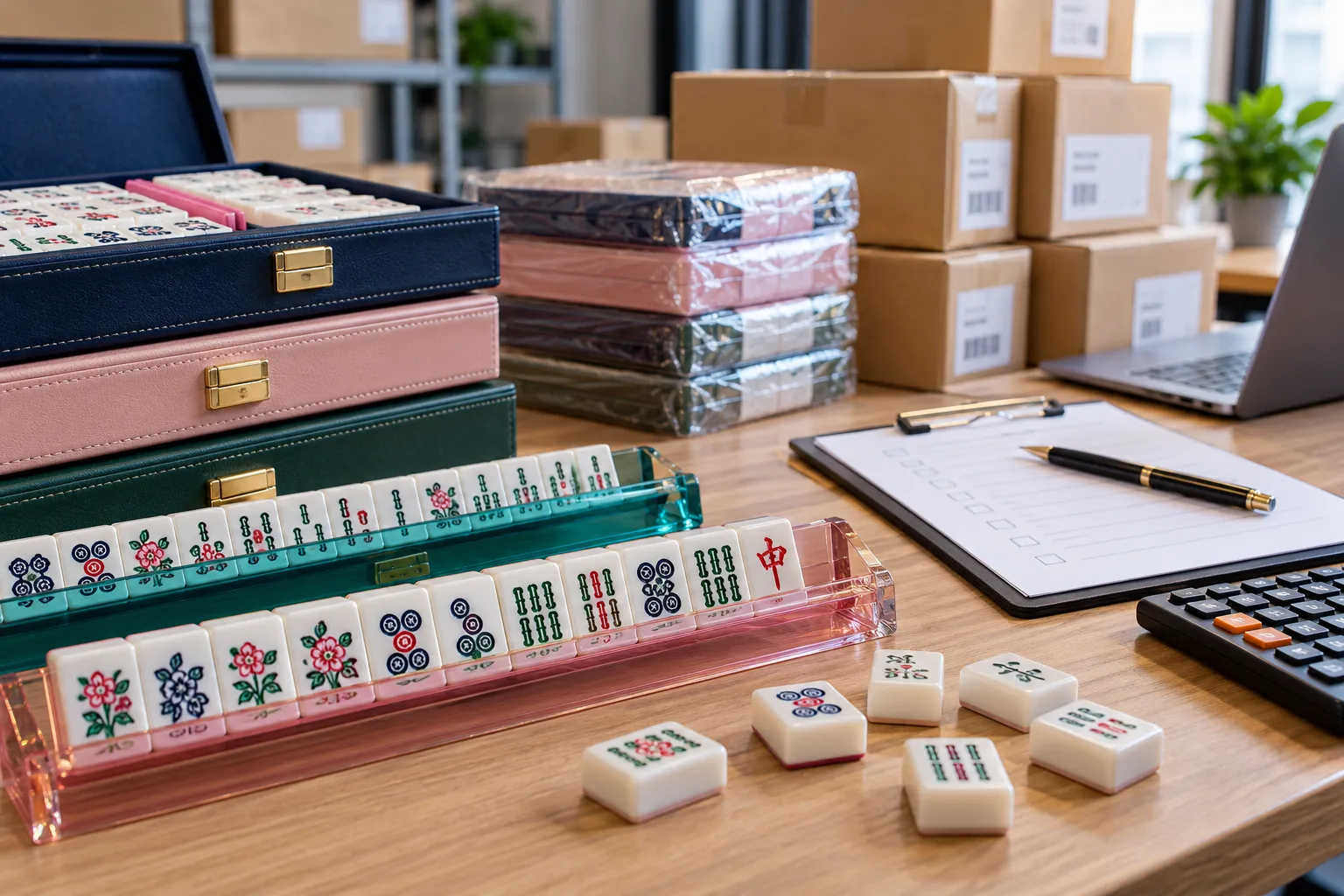
Running a successful American mahjong business involves more than selecting attractive products and placing an initial wholesale order. Once customers begin purchasing your sets, maintaining enough inventory becomes just as important as product quality and design.
A popular mahjong collection can sell faster than expected, particularly during holidays, promotional campaigns or busy gifting seasons. Without a clear restocking strategy, retailers may face unavailable products, delayed customer orders and missed sales opportunities.
This is why mahjong wholesale reorder planning is an important part of managing a retail or private label business.
Good reorder planning helps buyers understand when to contact their supplier, how much inventory to purchase and how production and shipping schedules affect stock availability.
Whether you operate an online store, a boutique retail shop or your own American mahjong brand, preparing for repeat orders can help keep your business running more smoothly.
In this guide, we explain how mahjong wholesale reorder planning works, how to estimate reorder points and how to coordinate with manufacturers to reduce the risk of stockouts.
Why Mahjong Wholesale Reorder Planning Matters
Wholesale purchasing is not always a one-time activity.
Retailers often begin with an initial order to introduce a product collection. After launching, they need to monitor demand and decide when to purchase additional stock.
If a product sells quickly, the retailer may need to reorder before the remaining inventory runs out.
However, placing too many repeat orders can also create problems. Excess inventory requires storage space and ties up money that could be used elsewhere in the business.
Effective mahjong wholesale reorder planning helps retailers balance these two risks.
The goal is to maintain sufficient inventory without purchasing significantly more than customers are likely to need.
For private label brands, reorder planning is especially important because custom mahjong sets may require additional production preparation compared with some standard products.
Planning ahead gives businesses more time to coordinate manufacturing, packaging and delivery.
Understanding American Mahjong Inventory Demand
Before deciding when to reorder, retailers should understand how quickly their products are selling.
This is often described as sales velocity.
For example, a retailer selling 60 mahjong sets over 30 days has an average sales rate of two sets per day.
This figure provides a starting point for inventory planning.
However, sales are rarely identical every day.
A particular design may sell more quickly after a social media promotion, during a holiday period or following a successful product launch.
Mahjong wholesale reorder planning should therefore consider both average sales and changes in customer demand.
Review Historical Sales
If your business already sells American mahjong sets, review recent sales records.
Look at how many units were sold over the previous month or quarter.
Identify which collections sell consistently and which experience occasional spikes.
This helps distinguish popular core products from seasonal or slower-moving designs.
Track Individual Product Variations
Different mahjong collections may have very different sales patterns.
For example, a classic design may generate steady orders throughout the year, while a distinctive gift collection may sell particularly well before holidays.
Retailers should track each important product variation separately.
A pink carrying case and a green carrying case may appeal to different customers, even when they contain similar tiles.
Accurate product-level information makes mahjong wholesale reorder planning more reliable.
When Should Retailers Reorder American Mahjong Sets?
One of the most common purchasing questions is when to place the next wholesale order.
Waiting until a product is almost sold out can be risky, especially when additional manufacturing and international shipping are required.
A better approach is to estimate how much inventory will be sold while the next order is being prepared and delivered.
Retailers should consider their recent sales rate, estimated replenishment lead time and safety stock.
The reorder point is the inventory level at which a new purchase should be initiated.
According to Oracle’s inventory planning guidance, reorder points account for expected demand during lead time and a safety stock allowance.
For mahjong wholesale reorder planning, this approach offers a practical starting point.
However, the calculations should be adjusted as the business gains more accurate sales and supplier information.
How to Calculate a Mahjong Wholesale Reorder Point
A simple reorder point calculation can help retailers decide when to contact their manufacturer.
The basic formula is:
Reorder Point = Average Daily Sales × Replenishment Lead Time + Safety Stock
Average daily sales represents the typical number of products sold each day.
Replenishment lead time is the time between placing an actionable repeat order and having the products available for sale.
Safety stock provides an additional inventory allowance for unexpected demand or supply delays.
Example: Reordering a Popular Mahjong Collection
Imagine a retailer sells an average of three American mahjong sets per day.
For illustration, suppose the complete replenishment process takes 40 days and the retailer maintains an additional safety stock of 30 sets.
The calculation would be:
3 sets per day × 40 days = 120 sets
120 sets + 30 safety stock sets = 150 sets
In this example, the retailer’s reorder point is approximately 150 sets.
This means the business should consider placing a repeat order when its inventory position reaches that level.
The calculation is only an example. Actual demand, production requirements and transit times will vary.
Retailers should also account for stock already on order and customer commitments instead of looking only at the quantity physically available in the warehouse.
The Shopify guide to safety stock and reorder points provides additional background on these calculations.
Using a simple model like this can make mahjong wholesale reorder planning more structured.
Standard vs Custom Mahjong Reorder Lead Times
Not every mahjong product follows the same replenishment process.
The time required to reorder can depend on whether the product is an existing design or a customised collection.
Standard American Mahjong Sets
Standard mahjong sets may be easier to reorder when the supplier already has finished stock or established production specifications.
However, buyers should never assume that a previous design is immediately available.
Stock levels, material availability, packaging and manufacturing schedules can change.
Before confirming a reorder, ask the supplier to verify the available quantity and estimated dispatch date.
Custom American Mahjong Sets
Custom mahjong sets may require more preparation.
A private label collection might include unique tile artwork, specific backing colours, branded carrying cases and custom packaging.
If the manufacturer retains the approved production specifications, a repeat order may require fewer design decisions than the initial project.
However, production scheduling, materials and quality checks still need to be considered.
For businesses developing custom collections, mahjong wholesale reorder planning should begin before inventory becomes critically low.
At HUHU Mahjong, we offer OEM and ODM manufacturing for brands and wholesale buyers seeking standard and customised American mahjong products.
Our OEM and Custom Mahjong Services cover custom artwork, materials, accessories and packaging options.
How Production Lead Time Affects Wholesale Reorders
Production lead time is one of the most important factors in inventory planning.
Even when a retailer knows exactly how many mahjong sets it needs, the products must still be manufactured or prepared.
For custom products, the manufacturing process may involve confirming specifications, checking materials, production scheduling, printing and quality inspection.
The time required depends on the order details.
Buyers should confirm the current production schedule rather than relying only on the lead time quoted for a previous order.
Mahjong wholesale reorder planning should also consider the difference between production completion and actual delivery.
A product may be ready at the factory but still require time for export handling, transportation and local receiving.
For an overview of the manufacturing stages, visit our Mahjong Production Process page.
Planning for International Shipping and Delivery Delays
International wholesale orders require additional coordination.
Shipping time depends on the destination country, transportation method, logistics provider and customs procedures.
For example, air transportation and sea freight can have different cost and transit-time considerations.
A retailer should choose a suitable shipping method based on product urgency, shipment size and budget.
However, shipping estimates are not guarantees.
Customs inspections, port congestion, weather and carrier schedules can affect deliveries.
To make mahjong wholesale reorder planning more dependable, buyers should consider the complete replenishment timeline.
This includes the time needed for production, export preparation, transportation, customs clearance and warehouse receiving.
A shipment should not be treated as available inventory until the products have actually arrived and can be sold.
Why Safety Stock Is Important for Mahjong Retailers
Safety stock is additional inventory held to reduce the risk of running out when demand or replenishment time changes.
For a mahjong retailer, safety stock may be useful when a popular collection experiences unexpected demand.
It can also provide a buffer when a repeat order takes longer than expected.
However, safety stock should not be treated as an arbitrary fixed quantity for every product.
A slower-selling collection may require a different approach from a popular core product.
According to IBM’s overview of safety stock, businesses can use different methods to estimate buffer inventory depending on demand variability and operational needs.
For mahjong wholesale reorder planning, the appropriate safety stock level should reflect the retailer’s own sales history, supplier reliability and tolerance for stockouts.
Holding too much safety stock can increase storage costs.
Holding too little may leave the business vulnerable to unexpected delays.
The goal is to find a practical balance.
Preparing Mahjong Inventory for Holiday Sales
Holiday demand can create additional challenges for retailers selling American mahjong sets.
Mahjong products may be purchased as birthday gifts, holiday presents or special occasion gifts.
Some collections may also receive increased attention during seasonal promotions.
Retailers should therefore review upcoming promotional periods when preparing their wholesale purchase schedule.
For example, a brand planning a holiday marketing campaign should consider whether enough stock will be available throughout the promotion.
Custom products may require earlier planning because artwork, packaging and production arrangements can take additional time.
Mahjong wholesale reorder planning for seasonal sales should be based on realistic demand forecasts rather than assumptions that every design will sell equally well.
It can be helpful to compare the performance of previous seasonal promotions.
For newer businesses without historical data, smaller initial forecasts and careful stock monitoring may reduce unnecessary risk.
Maintaining Consistent Designs Across Repeat Orders
For private label brands, consistency is an important part of product quality.
Customers purchasing the same collection at different times generally expect the product to match its published specifications.
However, artwork versions, colours, materials or packaging details can change between production runs if records are not maintained carefully.
Retailers should therefore keep clear documentation of approved designs.
Useful records include tile dimensions, material specifications, artwork files, backing colours, packaging details and accessory configurations.
When discussing mahjong wholesale reorder planning with a manufacturer, refer to the original product specification and confirm whether any changes are necessary.
This helps reduce confusion when repeating an earlier order.
Keep Approved Artwork Files
Final approved artwork should be clearly identified and stored.
If a collection has undergone design changes, make sure the factory knows which version should be reproduced.
Confirm Materials and Colours
Material availability and production conditions may change.
For products where appearance is particularly important, discuss colour matching and acceptable tolerances before manufacturing.
Check Accessories and Packaging
A repeat order should also confirm the included racks, pushers, dice, carrying cases and packaging materials.
Even small changes can affect how the product is presented and sold.
How Much Inventory Should Retailers Reorder?
Knowing when to reorder is different from deciding how many units to purchase.
The ideal reorder quantity depends on expected sales, available inventory, purchasing budget and supplier requirements.
A retailer should consider how much stock it expects to sell before the next replenishment cycle.
Storage space and cash flow also matter.
Ordering a large quantity may reduce the frequency of purchasing, but it can increase inventory holding costs.
Ordering smaller quantities more often may provide flexibility, although production and shipping costs can affect the economics.
For mahjong wholesale reorder planning, buyers should evaluate the total purchasing cost rather than looking only at the unit price.
For custom products, the supplier’s minimum order quantity may also influence the available options.
Discuss quantity requirements and pricing with the manufacturer before finalising a repeat order.
Managing Reorders for Multiple Mahjong Collections
Retailers often sell more than one American mahjong design.
A product range may include classic sets, modern pastel collections, luxury gift sets and accessories.
Each category may require a different replenishment strategy.
For example, a popular everyday collection may need regular reorders.
A limited seasonal design may require more cautious purchasing.
A premium product with slower sales may benefit from smaller inventory commitments, depending on the available ordering terms.
Mahjong wholesale reorder planning works best when products are reviewed individually rather than treated as one large inventory group.
Retailers can use separate SKUs to identify collections and variations.
This makes it easier to monitor sales and prepare accurate purchase orders.
Working With a Mahjong Manufacturer on Repeat Orders
A reliable manufacturing relationship can make repeat purchasing easier.
When preparing a reorder, buyers should provide clear information about the products they need.
This includes the product name, original order reference, desired quantity and any specific requirements.
If the product uses custom artwork or packaging, confirm the approved version before production.
Buyers should also communicate their target delivery date and destination country.
A manufacturer can then review the current production schedule and discuss available options.
For mahjong wholesale reorder planning, communication should begin early enough to accommodate production and shipping requirements.
At HUHU Mahjong, our OEM and ODM services support brands developing American mahjong products, from initial design through manufacturing and delivery.
Businesses interested in discussing repeat manufacturing can contact our team with their product specifications and purchasing requirements.
Common Mahjong Wholesale Reorder Planning Mistakes
One common mistake is waiting until a product is almost sold out before contacting the supplier.
This leaves little room for production or shipping delays.
Another mistake is assuming that every reorder will take exactly the same amount of time.
Material availability, factory scheduling and logistics conditions can change.
Retailers may also overestimate demand after a short period of strong sales.
A successful promotion does not always mean that the same sales rate will continue indefinitely.
Poor product records can create further problems, especially when several collections have similar designs.
Finally, some businesses focus only on the manufacturer’s production schedule without considering international delivery and warehouse receiving.
Avoiding these mistakes can make mahjong wholesale reorder planning more effective.
How Often Should Retailers Review Inventory?
Inventory should be reviewed regularly, but the appropriate frequency depends on the size and activity of the business.
A smaller retailer may begin with a weekly review of stock levels and recent sales.
A business processing larger volumes may need more frequent monitoring.
Pay particular attention to products approaching their reorder points.
It is also useful to review inventory before launching a marketing campaign or introducing a seasonal promotion.
As the business grows, inventory management software may help track stock movements and purchasing requirements.
However, even a simple spreadsheet can provide value when the information is accurate and updated consistently.
Mahjong wholesale reorder planning is an ongoing process that should adapt to changing customer demand.
Frequently Asked Questions About Mahjong Wholesale Reorder Planning
What is mahjong wholesale reorder planning?
Mahjong wholesale reorder planning is the process of deciding when and how much additional stock to purchase. It considers sales demand, available inventory, supplier lead times and safety stock to reduce the risk of running out.
When should a retailer reorder American mahjong sets?
Retailers should consider reordering when their inventory position approaches the expected demand during replenishment lead time plus their chosen safety stock allowance. The exact point depends on the business’s sales history and supplier arrangements.
Do custom mahjong sets take longer to reorder?
They may, depending on the artwork, materials, packaging and production schedule. Repeat orders can sometimes use previously approved specifications, but current lead times should always be confirmed with the manufacturer.
How much safety stock should a mahjong retailer keep?
There is no universal quantity. Safety stock should reflect product demand, lead-time variability, storage costs and the business’s tolerance for stockouts.
Can retailers reorder the same custom mahjong design?
Repeat production may be possible when the original artwork and specifications are available. Buyers should confirm material availability, colour consistency and any required changes before production.
How does international shipping affect mahjong wholesale reorder planning?
International transportation adds time between production completion and inventory availability. Buyers should account for shipping, customs procedures and warehouse receiving when estimating replenishment lead times.
Should retailers order more mahjong sets before holidays?
Seasonal demand may justify earlier or larger orders, but purchasing decisions should be based on expected sales, historical performance and available budget rather than assumptions alone.
Can a manufacturer help with mahjong wholesale reorder planning?
A manufacturer can provide information about production schedules, current order requirements and available manufacturing options. Retailers should combine this information with their own inventory and sales forecasts.
Final Thoughts on Mahjong Wholesale Reorder Planning
Successful mahjong wholesale reorder planning helps retailers maintain inventory, prepare for customer demand and reduce the risk of unexpected stockouts.
A practical replenishment strategy considers more than the number of products remaining in storage.
Sales velocity, production lead times, safety stock, transportation and product specifications all influence when a repeat order should be placed.
For private label brands, maintaining accurate artwork and manufacturing records can also make reorders easier to coordinate.
By monitoring sales and communicating early with suppliers, retailers can make better purchasing decisions and support a more reliable customer experience.
As your business grows, mahjong wholesale reorder planning should become a regular part of your inventory management process rather than something considered only when products are nearly sold out.
Looking for a manufacturing partner for standard or custom American mahjong sets?
Explore HUHU Mahjong’s OEM and Custom Services or contact HUHU Mahjong to discuss repeat orders, product specifications, wholesale quantities and production arrangements.
About the Author
HUHU Team
We share industry insights, product knowledge, and manufacturing updates to help global clients better understand mahjong production and OEM solutions.