
OEM/ODM MANUFACTURING FOR GLOBAL BRANDS
- View Our Alibaba Store
- info@huhumahjong.com
- +86 13326907761
Mahjong Design Protection: How to Keep Your Custom Designs Safe When Working With a Factory
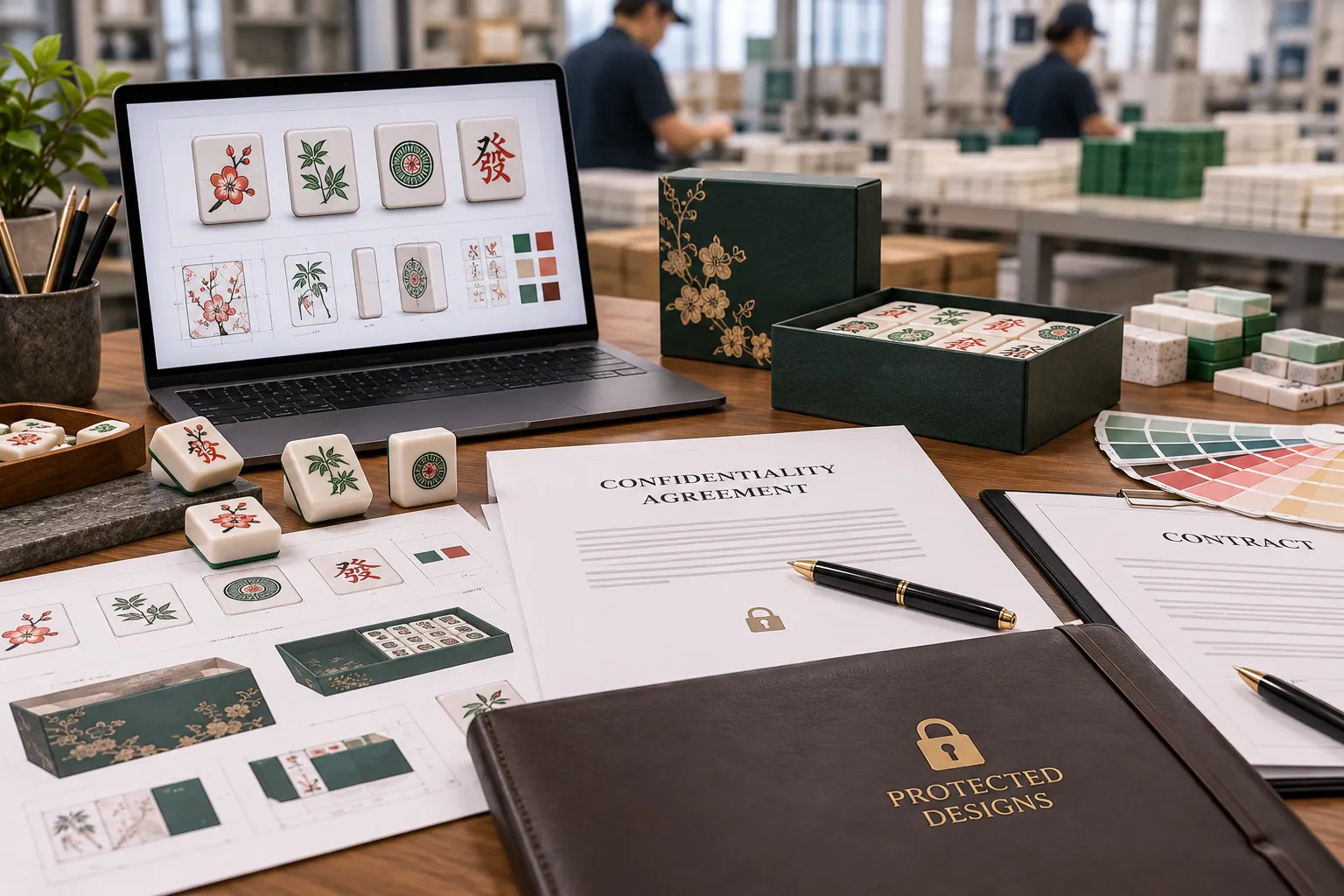
Mahjong design protection is rarely the first thing a brand thinks about when it starts a custom project. The focus is on colours, tile artwork, packaging and price. But a custom mahjong set is a product that took time and money to create, and once your design leaves your computer, you want to be sure it stays yours.
This guide explains practical steps for mahjong design protection when you work with a factory. It covers what counts as your design, which agreements to put in place, how to register your rights, and how to set up the working relationship so your artwork is not reused or copied. It is general business guidance, not legal advice, so for anything high value, speak with an intellectual property lawyer in your market.
Why Mahjong Design Protection Matters for Private Label Brands
A private label brand lives or dies on what makes it different. If your tile artwork, colour palette or packaging can be copied by a competitor next month, your advantage disappears. This is especially true in a growing category, where many new sellers look for designs that already sell.
Mahjong design protection helps in three ways:
- It protects your investment. Custom artwork, sampling and moulds all cost money, and you want the return to be yours.
- It protects your position in the market. A distinctive design builds brand recognition, which is hard to rebuild if a lookalike appears.
- It gives you something to act on. If someone does copy you, clear records and registered rights make it far easier to respond.
Our guide to starting a private label mahjong brand explains how a custom range fits into a brand strategy, and why differentiation matters from the beginning.
What Counts as a Mahjong Design You Can Protect
Before you protect anything, it helps to know what you own. In a custom mahjong project, several elements may carry value.
- Tile artwork: illustrations, patterns, symbols and the overall look of the tile faces and backs.
- Colour combinations and finishes: a distinctive palette, layered effects or special surface treatments.
- Logos and brand names: the marks that identify your products.
- Packaging design: boxes, cases, inserts and printed materials.
- The overall set concept: the combination of tiles, racks, accessories and presentation that makes the product recognisable.
- Technical details: specifications, drawings and development notes that you created.
Different kinds of rights apply to different elements. Copyright often covers original artwork, trademarks cover names and logos, and design rights or patents may cover the appearance or construction of a product. The details vary by country, so it is worth checking how each element is treated in the markets where you plan to sell.
Start Mahjong Design Protection Before You Share Files
The safest moment to protect a design is before it leaves your hands. A few simple habits make a big difference.
- Keep dated originals. Save your original files, sketches and drafts with dates, so you can show when you created them.
- Share only what the supplier needs. For early quotations, send a description or a simplified version. Share the full artwork when you are ready to move to sampling.
- Use a clear sender record. Send files by email or a trackable platform, so there is a record of what was shared and when.
- Mark your files. Add your company name and a copyright notice to files you share.
Our guide to what buyers need to prepare before production covers the wider set of documents a supplier will ask for, which helps you plan what to share and when.
Use a Non-Disclosure Agreement for Mahjong Design Protection
A non-disclosure agreement, often called an NDA, is a written agreement that the other party will keep your information confidential and will not use it for anything other than your project. For mahjong design protection, it is one of the most practical tools available.
A useful NDA usually covers:
- What counts as confidential information, such as artwork, specifications, pricing and development plans.
- How the information may be used, which should be limited to producing your order.
- How long the obligation lasts, often several years.
- What happens if the agreement is broken, such as remedies and governing law.
- Return or deletion of materials when the project ends.
Ask any supplier whether they are willing to sign an NDA before you share detailed artwork. A professional manufacturer will understand the request. If a supplier refuses to discuss it, treat that as useful information about how they work. Our guides to mahjong supplier audits and how to compare suppliers beyond price explain how to evaluate whether a supplier is a safe partner.
Put Ownership and Usage in Writing
An NDA keeps information private, but it does not by itself say who owns the finished design or what the factory may do with it. That is why it helps to put ownership and usage terms into your supply agreement or purchase order.
Consider including clauses that say:
- You own the designs you supply, including artwork, logos and packaging.
- The factory may use your designs only to produce your order.
- The factory will not sell, show or reuse your designs for other customers.
- Moulds, plates and tooling made for your design are used only for your orders, and there is a clear agreement about who owns them and what happens to them if you stop ordering.
- Samples and rejected items will not be sold to third parties.
Moulds and tooling deserve special attention, because they are a physical form of your design. Agree early on who owns them and where they are kept. Our guide to preparing a mahjong purchase order shows how to keep order terms clear and consistent.
Register Your Rights: Trademarks and Designs
Contracts protect you against the people you sign with. Registered rights help protect you against everyone else. Because intellectual property rights are generally territorial, they usually apply only in the countries where you have them. The World Intellectual Property Organization provides general information on how trademarks, designs and patents work across countries.
For mahjong brands, the most common steps are:
- Register your brand name and logo as a trademark in your main selling markets. In some countries, rights go to whoever registers first, so it is wise to file early, rather than waiting until a design is already on sale.
- Consider registering product designs where the appearance of the tiles, set or packaging is distinctive.
- Keep records of original artwork, which can support a copyright claim.
- Check the markets where you manufacture as well as where you sell. Rights in your selling country may not automatically cover the country where products are made.
An intellectual property lawyer can tell you which registrations make sense for your budget and markets. Even a basic trademark filing is often worth the cost for a brand that expects to grow.
Mahjong Design Protection in the Sampling and Approval Stage
Sampling is a point of risk, because designs are shared in detail and physical samples are made. Good habits here are part of mahjong design protection.
- Track every sample. Record how many samples were made, who received them and what happened to the rejected ones.
- Ask for sample versions to be returned or destroyed when a design is not approved.
- Keep the approved sample as your reference, and store it safely.
- Confirm that no one else at the factory receives your artwork unless they need it for your order.
Our guide on why samples matter before a custom order explains the full approval process, and our article on custom mahjong artwork files and Pantone colours shows how to prepare files so there is a clear record of what was approved.
Protect Your Design When Production Ramps Up
Once bulk production begins, more people handle your design, and more materials are produced. A few controls help.
- Control overproduction. Agree in writing that the factory will not produce more than the ordered quantity, and ask how defective and surplus items are handled.
- Keep designs and packaging together. Printed boxes, labels and cartons with your branding should be used only for your order.
- Check the inspection report. A pre-shipment inspection confirms what was produced and packed. See our guide to mahjong quality control for wholesale orders.
- Review documents. Your invoice and packing list should match the order, so there is a clear record of quantities. Our guide to mahjong export documents explains what to check.
Consistency matters here too. If the production design drifts from the approved sample, it becomes harder to say what the real design is. Our article on bulk production consistency explains how to keep batches aligned.
Choose a Supplier With Mahjong Design Protection in Mind
The best protection often comes from choosing a supplier who respects it. When you evaluate a manufacturer, ask practical questions.
- Will you sign an NDA before I share detailed files?
- Do you agree that my designs, moulds and packaging are used only for my orders?
- How do you store and control customer artwork internally?
- How do you handle samples, rejected items and surplus production?
- Can you give references from other private label customers?
- Can I visit or review the factory, in person or by video?
Our guide to how to choose a reliable mahjong manufacturer in China and our article on seven important questions to ask suppliers give you more questions to add to this list.
Mahjong Design Protection Checklist for Buyers
Use this list before you share your first full artwork file:
- Original files saved with dates
- NDA discussed and signed
- Ownership and usage terms written into the agreement or purchase order
- Moulds and tooling ownership agreed
- Trademark filing considered in your main markets
- Samples tracked, with a plan for rejected items
- Overproduction and surplus handling agreed
- Printed packaging controlled
- Inspection report requested
- Documents checked against the order
- Advice from an intellectual property lawyer for high-value projects
Common Mahjong Design Protection Mistakes
- Sending full artwork before any agreement is in place
- Assuming a verbal promise is enough
- Forgetting to agree who owns the moulds and tooling
- Registering a trademark only after the product is already selling
- Sharing files through untracked channels
- Not tracking samples and rejected items
- Letting the factory decide what happens to surplus stock
- Changing the design without updating the records
For more on avoiding errors, read our list of custom mahjong order mistakes.
Mahjong Design Protection FAQ
Do I need an NDA before sharing mahjong artwork?
It is strongly recommended for detailed or original designs. An NDA is a simple way to set clear expectations about confidentiality before files are shared.
Who owns a custom mahjong design made by a factory?
That depends on what is agreed in writing. If you supply the artwork, state clearly that you own it. If the factory helps develop the design, agree on ownership before work begins.
Can I stop a factory from selling my design to others?
You can set this out in your agreement, and registered rights make it easier to enforce. The details depend on the countries involved, so consult an intellectual property lawyer.
Should I register a trademark before I order?
Many brands file early, because in some countries rights go to the first party to register. A lawyer can advise on the right timing for your markets.
What about moulds and tooling?
Agree in writing who owns them, where they are kept, and that they will be used only for your orders.
Does mahjong design protection affect MOQ or lead time?
It does not usually change production itself, but custom designs involve custom sampling. See our guide to custom mahjong sets MOQ, sampling costs and lead times.
Final Thoughts on Mahjong Design Protection
Good mahjong design protection is built from small, practical steps. Keep dated originals, ask for an NDA, put ownership and usage into writing, agree how moulds and surplus are handled, and register your brand in the markets that matter. None of these steps needs to slow a project down, and together they make your design much harder to copy.
If you are planning a custom or private label order, tell us your design concept, target market and quantity. We will discuss your requirements and the next steps for samples. Contact Huhu Mahjong to get started, or explore our custom American mahjong options.
About the Author
HUHU Team
We share industry insights, product knowledge, and manufacturing updates to help global clients better understand mahjong production and OEM solutions.